A Grazing Dairy Calendar for the Northeast and Upper Midwest
A season-by-season calendar for grass-based dairies in the Northeast and Upper Midwest: turnout, spring flush, summer slump, stockpiling, and winter feeding.
Rotational grazing, organic certification, dairy goats and sheep, family cows and farmstead dairies.
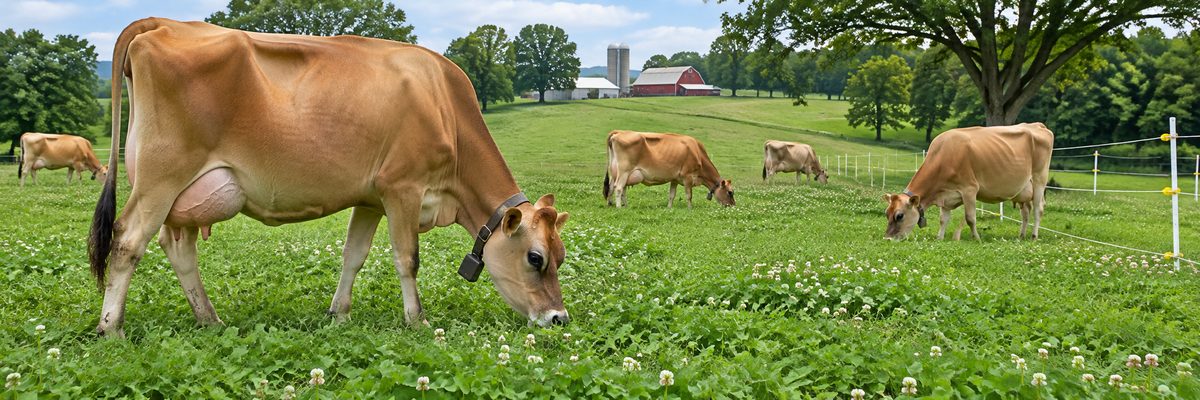
A season-by-season calendar for grass-based dairies in the Northeast and Upper Midwest: turnout, spring flush, summer slump, stockpiling, and winter feeding.
Which cows do well on grass? A plain look at Jerseys, Holsteins, New Zealand genetics and crossbreds, and the traits that matter more than the breed name.
Pick grasses and legumes that suit a milking herd and your climate. Compare common pasture mixes for the Northeast, Upper Midwest, Southeast, Southwest and West Coast.
Lush clover and alfalfa pasture can bloat dairy cows fast. Learn what raises the risk, grazing habits that lower it, warning signs and why to call the vet at once.
A cow share agreement lets members own part of a milking animal and pay for its care. See how herdshares work, what the contract covers and where the law gets murky.
Compare Nubian, Alpine, Saanen, Toggenburg, LaMancha and Nigerian Dwarf goats on milk volume, butterfat and temperament so you can pick the breed that suits your dairy.
Dairy sheep explained: which breeds are available in the US, how much milk a ewe gives, how lambs fit in, and whether the market makes sense for you.
Learn how to make your first batch of farmstead cheese: simple fresh and pressed cheeses, basic equipment, milk choices, and where home cheesemaking ends.
A practical startup checklist for a farmstead creamery: license, plans, equipment, water, waste, labels, insurance and market, in the order to tackle them.
Build a feeding plan for does in milk around good hay, browse and pasture, then add grain and minerals only as needed. Includes a simple look at requirements.
Compare polywire, netting and high-tensile wire for grazing dairy cows, with cost tradeoffs, energizer and grounding basics, and a layout that holds up in real weather.
Compare goat and cow milk on composition, yield, udder anatomy and markets so you can decide which animal fits a small dairy and what each one really delivers.
Size dairy paddocks from herd intake, forage available per acre and move frequency, with a worked example, a quick table and fixes for paddocks that run short or long.
How long a paddock should rest between grazings depends on the plant, not the calendar. Learn the signs of readiness, typical rest ranges by season and region.
Size a small family dairy by income goal, labor, land and milking setup. Get a simple way to work out how many cows you need before you buy a single one.
Work out how many dairy cows your pasture can carry by starting with what the grass grows and what a cow eats. Includes a worked example, regional ranges and checks.
Figure out how much grain and stored feed grazing dairy cows need by estimating pasture intake, balancing energy and fiber, and watching milk, manure and body condition.
Estimate how many gallons a family milk cow gives per day and per lactation, how breed, feed and calf sharing change it, and how to plan around the peak.
The path to USDA organic certification for a dairy: choosing a certifier, writing the plan, the inspection, how long it takes and what keeps you certified.
A step-by-step start for moving a dairy herd from continuous grazing to rotation: map the ground, set paddocks and rest periods, fence, water, and ease the cows in.
How small dairies in the West make irrigated pasture work: water rights, scheduling, grass choices, short seasons, mild coastal systems and mountain valley herds.
Thinking about a house cow? Here is what a family milk cow needs in land, time, feed, breeding and money, plus the surprises first-timers run into.
Plan cow lanes, gates and watering points so grazing cows walk less, stay clean and drink enough. Covers lane surface, width, trough placement and layout mistakes.
Flat barn, swing parlor or bucket milker for a small grazing herd: how each works, what labor and cow flow look like, and what to ask before you spend a dollar.
Separate cream from a family cow's milk and churn it into butter: gravity versus separator, ripening, churning temps, washing, salting, storage and the rules.
How to make consistent yogurt in small farm batches: choosing cultures, heating and incubation temperatures, thickness, cleanliness, and what changes before you sell.
Set up a simple, clean goat milking routine: the stand, udder prep, foremilk check, hand or machine milking, chilling and cleanup, plus mistakes that spoil milk.
Learn a daily hand-milking routine for a family cow: setup, teat prep, technique, teat dip, cleanup and cooling, with hygiene steps that protect the udder and the milk.
How to keep hooves sound and pasture intact in a wet stretch: fix the lanes and gates first, shorten paddock stays, and know when a limp needs the hoof trimmer.
Can a family cow be milked once a day? See when it works, how much milk you give up, how to transition safely, and the udder and mastitis risks to watch.
Get ready for the annual organic dairy inspection: records to pull, barn and pasture items inspectors check, feed paperwork, treatment logs and what happens afterward.
Compare organic and conventional dairy for a small herd: premiums, feed and certification costs, yield, market access and risk, with a quick way to test your own numbers.
Learn how to pasteurize small batches of milk at home with a double boiler or vat, the time and temperature extension services recommend, and how to cool it safely.
How to adapt grazing dairy to hot country: warm-season grasses, winter annuals, heat stress, night grazing, drought planning and cow choice in the South and Southwest.
Raw milk rules change at the state line. Get a plain overview of retail, on-farm and herdshare pathways and who to call before you hand a neighbor a jar.
Weigh the real health risks of raw milk, what lab testing can and cannot tell you, and the hygiene habits that keep contamination down on a small dairy.
Should a grazing dairy calve in a tight spring window or all year? Compare grass-matched milk, labor, breeding pressure and milk check effects before you choose.
How to build a simple cheese aging space on a small budget: temperature, humidity, airflow, shelving, mold control, and what regulators look at.
Keep pasture cows eating and milking through summer heat: how much shade and water they need, where to put it, and when to graze at night instead.
What sheep milk cheese really costs and earns on a small farm: price, volume, seasonality, freezing milk, lamb income, and the numbers to check first.
Organic grain and forage can eat the milk check. Learn where to buy certified feed, how to cut purchases with pasture and hay, and what to verify on every load.
Plan your first dairy does the right way: how many to buy, what fencing holds them, how much shelter they need and the startup costs that catch beginners off guard.
What a first year on a small dairy really involves: choosing a market, permits, cows and equipment, money, daily workload, and the mistakes new dairy farmers repeat.
Save late-summer and fall growth to extend grazing into winter. Learn when to start, which grasses hold up, how fertilizer fits and which cows should eat it.
What the 12-month herd transition and 36-month land rule mean for a dairy going organic, how the two clocks overlap, and what the milk check looks like meanwhile.
What the organic pasture rule requires of dairy cows: a grazing season of at least 120 days, 30 percent of dry matter from pasture, and when cows may be kept in.
How to teach a dairy herd to respect polywire and follow paddock moves: a small training pen, a hot fence they can back away from, and a routine cows can learn.
What organic rules say about treating sick dairy cows: what is allowed, what ends organic status for that cow, why you can't withhold care, and what to record.
Bridge the non-grazing season on a pasture dairy with stored forage, stockpiled grass and a feed inventory built from real cow numbers. Includes a planning table.
What goes into an organic system plan for a dairy, from feed, pasture maps and health care to records and monitoring, and how to keep it current each year.