Grazing, Organic & Small Dairies
Laying Out Cow Lanes and Water for a Grazing Dairy
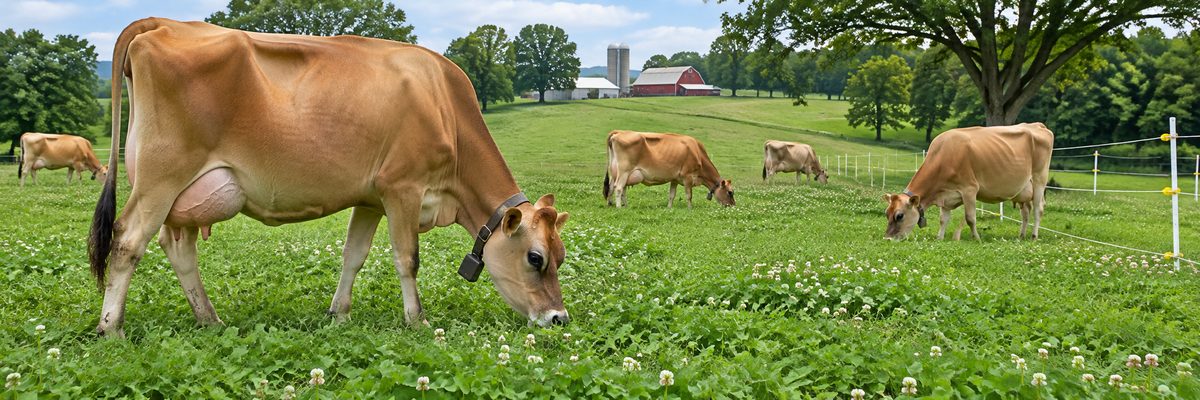
Cows will walk to the parlor twice a day for years, so every extra hundred feet of lane is hundreds of miles over a herd's lifetime and some of it comes out of the milk tank. A good layout gets cows to the paddock, back to the parlor and to water with as little walking, mud and wasted time as you can arrange. A bad one teaches them to hate the gate.
The short version: put the lane down the spine of the farm with paddocks branching off it, surface it so hooves stay dry, and put water close enough to every paddock that cows can drink on the way. Everything else is details, and in a grazing system the details are what you live with.
Start with the parlor and work outward
Sketch the farm from the milking parlor, not from the road. The best systems are shaped like a spine with ribs: a main lane leaving the barn, and paddocks on either side that open into it. A wheel layout, with paddocks radiating from a single point near the barn, can work on small, flat farms, though it tends to put heavy traffic and mud at the hub.
The University of Vermont's checklist in grazing system design considerations says effective lanes should let you reach and move between paddocks without letting cows into ones that are not ready, give equipment access for manure, fertilizer, hay and clipping, be stabilized against erosion, and be surfaced to prevent foot damage, injury and mud. That is a good shopping list.
What a good lane looks like
- Wide enough to walk, not to loiter. Lane width depends on herd size and whether you run equipment on it, and many small dairies end up around 10 to 20 feet. Too narrow and the herd bunches up and bullies the timid cows. Too wide and it gets muddy and costs more to surface.
- Crowned or sloped so water leaves. A lane that holds water becomes a foot rot incubator.
- Surfaced where it matters. Geotextile fabric topped with crushed stone or a similar material is a common approach, and the heavy-traffic stretch near the barn gets it first. Cow feet like firm and forgiving, not sharp.
- Fenced to stay put. Hot wire on both sides, with gates that swing clear and stay shut. Gates that never latch are a rite of passage, but a wire loop with an insulated handle at least stays where you left it.
- Straight enough to move cows without drama. Sharp corners and dead ends slow cows, and cows that are slowed get stressed and are harder to milk.
Mud is the lane's enemy, and the connection with hoof problems is covered in mud, wet paddocks and lameness in grazing herds. If you only have money to surface one stretch, surface the last few hundred feet to the parlor and the area around the waterer.
Water: closer than you think
Cows drink a lot, and a milking cow needs plenty of clean water to make milk. The details are in how much water dairy cows need. In a grazing system the problem is getting it to them where they are standing.
University of Vermont Extension notes that for dairy animals constant access to clean water is critical, that providing water only in the barn or barnyard while cows graze makes them graze less efficiently, and that when drinking water is more than about 900 feet from grazing livestock, herd animals tend to visit it as a group. That strains the water system and beats up the soil around the source, and the more distance, the more time cows spend walking rather than eating. Plan for water within a few hundred feet of wherever cows will be, not at the far end of the farm.
Trough placement choices
| Approach | Strengths | Drawbacks |
|---|---|---|
| Trough in the lane | Serves every paddock that opens to it, easy to service | Heavy traffic can churn mud around it unless it sits on a pad |
| Trough at a shared fence line between two paddocks | Fewer troughs, one pad | Needs a good fence layout so cows from both sides can reach it |
| Portable trough with hose or pipe | Flexible, moves with the herd | More labor, more freeze problems, hoses get run over by something |
| Ponds and streams | No plumbing cost | Pathogen and water quality risk, bank damage, usually not reliable for daily drinking |
Plan the trough on a firm pad of gravel or concrete so cows are not standing in mud to drink. Make it big and fast to refill, because a herd drinks together, especially after milking. A small trough that takes twenty minutes to recover teaches the last cow in line a few new words. The practical choices on setting up waterers for a dairy barn carry over, and freeze protection matters in northern regions.
Layout mistakes to avoid
- A single water point far from the paddocks. Cows will walk to it, and your grass will go to waste.
- Lanes that cross wet low ground. Put them on the highest, driest route even if it is a bit longer.
- Paddocks that dead-end away from the lane. Every paddock should open to a lane so you can move cows without crossing another paddock.
- No access for equipment. You will need to clip, spread and haul at some point.
- One lane gate for everything. A second gate at the paddock end lets the herd leave one way and not squeeze through the same hole they came in.
- Forgetting shade. In hot areas, trees or structures near water and in lanes help, and shade and water for grazing cows in hot weather covers the options.
A simple planning routine
- Draw the farm to scale on paper or a free mapping tool, with the parlor, slopes, wet spots, trees, existing fence and water lines.
- Mark the dry ground, then draw the lane along it.
- Place paddocks along the lane, sized to the herd (see paddock size per cow).
- Add water points so every paddock is within a short walk of a trough.
- Add gates, crossings and an area where cows can wait before milking without trampling a pasture.
- Build the lane and water first, then fence, then move cows.
If you plan to run a small parlor, remember that the layout drives how cows come in and out of it, so plan the parlor and the lanes together.
Quick answers
How far should cows walk to the parlor?
Shorter is better, since every extra step costs grazing time and hoof wear. Many successful grazing dairies keep paddocks within a quarter mile or so of the parlor for the milking herd and put farther ground into dry cow and heifer pasture. Your farm shape will decide.
What is the best lane surface?
Many farms use geotextile fabric topped with crushed stone, with finer material on top for a surface that is easy on hooves. Your local NRCS office or extension agent can tell you what holds up in your soils and climate.
Can cows drink from a creek?
They can, but extension guidance cautions that surface water can carry bacteria and other pathogens and should not be the main daily source. It also damages banks, so many farms fence it off and pipe clean water to a trough instead.