Grazing, Organic & Small Dairies
How Much Milk Does a Family Cow Give in a Year?
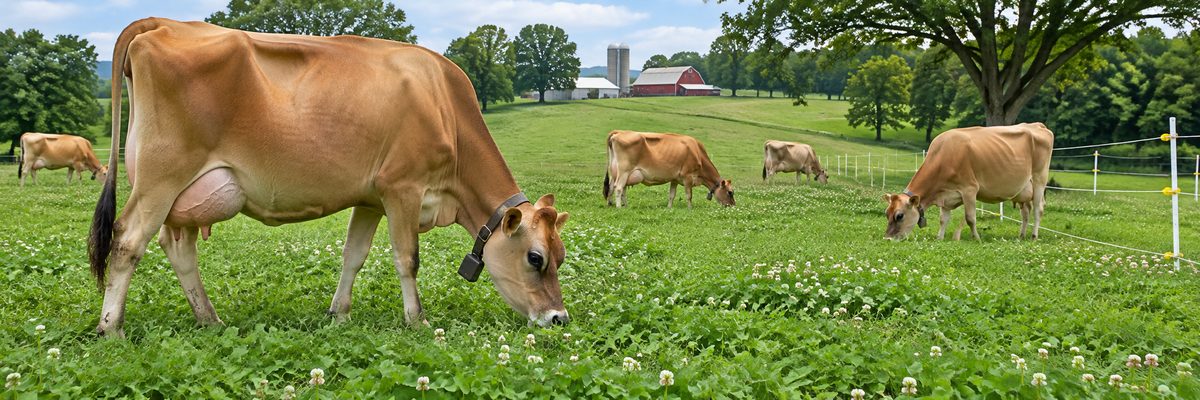
A family cow's milk varies with breed, age, feed, stage of lactation and how you milk her. As a rough guide, a typical Jersey or Guernsey on good pasture often gives somewhere in the range of a couple of gallons to several gallons a day through most of the lactation, with a higher peak early. A small Dexter gives less. A Holstein or Brown Swiss can give much more. Over a lactation that adds up to hundreds of gallons, which is a lot of milk for one household.
Those ranges are general, not guarantees. The only number that really matters is your cow's, and the way to learn it is to measure for a few weeks. Until then, plan for more than you think you'll use, and make friends with someone who owns pigs.
The lactation curve, in plain words
After calving, production climbs for the first several weeks, peaks somewhere in the first couple of months, then declines gradually until she's dried off before the next calf. Knowing the shape helps you plan.
- Early weeks: milk rises quickly. This is also when she's most likely to have health trouble, so see post-calving cow checks for the first 14 days.
- Peak: the most milk of the year. If you're swimming in it, this is the week you notice.
- Mid-lactation: a slow decline. Some cows hold on to production longer than others; that trait is called persistency, and it's welcome in a house cow.
- Late lactation and drying off: production tapers, and she needs her rest. How long a cow's dry period should be explains why a break pays off at the next calving.
Turning gallons into a yearly estimate
Milk is often measured in pounds. A gallon of milk weighs about 8.6 pounds, so a cow giving 43 pounds a day is giving about 5 gallons. To estimate a lactation:
- Weigh or measure what she gives at a few points through the lactation: early, peak, middle and late.
- Average those daily figures.
- Multiply by the number of days she's in milk. Most cows are milked for around ten months, then dried off for roughly two months before calving again.
For example, a cow that averages 2.5 gallons a day over about 300 days gives around 750 gallons. A cow averaging 4 gallons gives around 1,200. Those are arithmetic examples to show the method, not a promise of what your cow will do.
The family's actual use is probably far lower. Households that drink milk, make some butter and cook might use a gallon or two a day, and the rest goes to calves, pigs, chickens, cheese or the neighbors. Making butter from your own cream and making yogurt on the farm are two easy ways to put a surplus to use.
What changes how much she gives
Breed and genetics
Holsteins make the most milk, Jerseys and Guernseys less but richer, Dexters less again. See best breed for a family milk cow for how that plays out. Within a breed, family lines vary a great deal.
Age and number of calvings
A first-calf heifer typically gives less than a mature cow, and production commonly rises for the next few lactations before easing off. A heifer who gives less than you hoped isn't broken. She isn't finished growing.
Feed and water
This is the one you control. A cow can't make milk from nothing, and she's mostly water: milk production demands a lot of clean drinking water. Good pasture, quality hay and a properly balanced ration make a big difference. A forage test helps you see what the hay is really delivering, and dairy mineral program basics explains why minerals matter. In hot climates, particularly the Southeast and Southwest, heat can cut intake and milk, so shade and water come first. See shade and water for grazing cows in hot weather.
Milking frequency
Milking twice a day generally yields more total milk than once. Some families drop to once a day for convenience, accepting less milk. That approach is covered in once-a-day milking for a family cow.
A calf on the cow
If a calf nurses, you share the milk. Some owners let the calf take part of it, which can reduce the amount you milk and also lets you skip a milking now and then. The calf takes a considerable portion, so you'll want to learn how much your cow gives in total, and your vet can advise on calf feeding. For how calves are fed on dairies, see how much milk to feed a dairy calf each day.
Health
Mastitis, lameness, metabolic problems and stress all pull production down. If a cow's milk drops suddenly with no change in feed or weather, look at the udder and call your vet. Milk from a cow under treatment has to be discarded for the withdrawal time your vet gives you.
Keep simple records
You don't need a software program. A notebook in the barn will do. Write down the date, the pounds or gallons at each milking, and anything unusual: weather, new feed, her heat, a visitor with a loud truck. Within a few weeks you'll see a pattern. These notes also help you decide when to breed and when to dry her off. Dairy record keeping: what to track goes into more detail, and the Jersey breed association has resources on records and breed averages at usjersey.com.
Plan around the peak
- If you're making cheese or butter, schedule it for the weeks of heaviest milk.
- If you share milk, line up the people before the cow calves, not after.
- Think about cooling and storage. See cooling and storing milk from a family cow.
- Know the rules before you give away or sell raw milk. State laws vary; start with raw milk laws by state.
Quick answers
How many gallons a day does a Jersey give?
It varies by cow, feed and stage of lactation, but many Jerseys on good pasture give a few gallons a day at their peak and less later in the lactation. Measure your own cow over several weeks for a real number.
How long does a cow give milk after calving?
Usually around ten months, then she's dried off for roughly two months before the next calf. Some cows milk longer and some drop off sooner.
Do I have to breed her every year?
To keep her giving a good amount of milk, yes, she needs to calve again. Some owners stretch the calving interval, but production generally falls as the lactation goes on, and your vet can help you decide what is best for her.