Grazing, Organic & Small Dairies
Winter Feeding Plans for a Pasture-Based Dairy
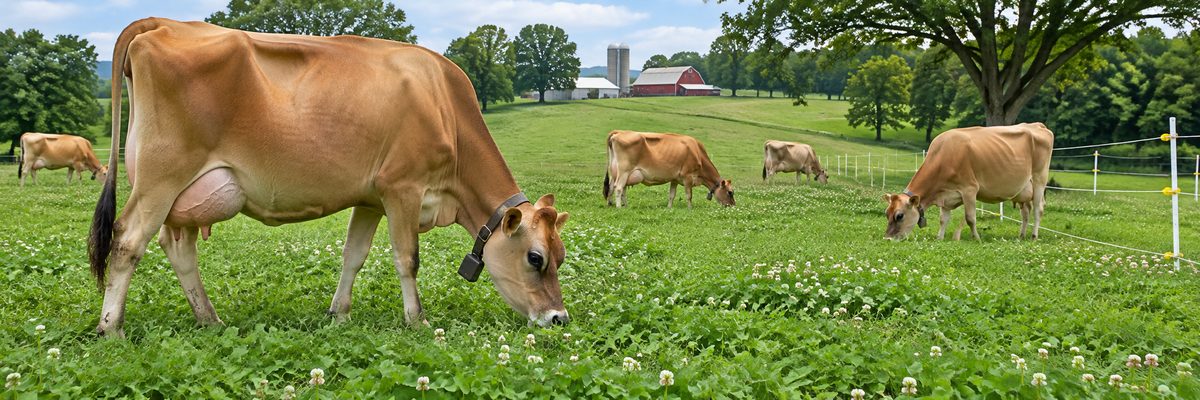
The pasture does the cooking from spring to fall. In winter, you do. A pasture-based dairy that handles the cold months well starts planning in summer, with a hard look at how many days the cows will be off grass, how much dry matter they will eat each day and how much feed is actually sitting in the barn. The farms that struggle in February are usually the ones who guessed in July.
The plan has three parts: a feed budget built from cow numbers and days, a menu of ways to fill it (stored forage, stockpiled pasture, purchased feed), and a layout that keeps cows clean and feed from being wasted. Do the budget first, because it tells you which of the other pieces you really need. Optimism is not a forage source.
Build the feed budget
Start with the non-grazing season, which runs from maybe four months on the southern edge of dairy country to six months or more in the Upper Midwest and Northeast. Penn State Extension notes that pasture can contribute to feeding strategy for five to seven months of the year in Pennsylvania, which gives a sense of how much of the calendar is left to cover. In their Dairy Sense article on utilizing pasture, they also point out that grazing is one way to reduce feed costs, as long as it is managed.
- Count animals by group. Milking cows, dry cows, bred heifers, young heifers and calves all eat different amounts.
- Estimate daily dry matter per group. How much dry matter a dairy cow eats is a starting point, and your nutritionist can refine it.
- Multiply by days off pasture. Use the longest winter you've actually had, not the average one.
- Add waste and shrink. Feeding losses and storage losses add up, and the amount depends on how you store and feed.
- Add a cushion. A late spring or a cold snap that keeps cows in an extra month is not rare.
- Compare to your inventory after sampling and testing. How much silage you will need covers the measurement side.
Ways to bridge the gap
| Option | Where it fits | Strengths | Cautions |
|---|---|---|---|
| Stored hay, baleage or silage | Everywhere, essential in snow country | Reliable, testable and can be fed to any group | Costs equipment, labor and storage; losses if poorly handled |
| Stockpiled pasture | Where fall growth is good and snow cover is moderate, such as the mid-Atlantic and parts of the Southeast and Midwest | Low cost, lets cows harvest it themselves | Weather risk, lower energy for fresh cows; see stockpiling pasture for winter grazing |
| Winter annuals | Southeast and some of the Southwest | Cool-season grazing when warm-season grass is dormant | Needs planting and timing; Southeast forage options covers the choices |
| Purchased feed | Short crops, expansion, or a drought year | Flexible | Price and trucking costs; lock in supply early |
| Cover crops or crop residue | Mixed crop-dairy farms | Uses ground that would be idle | Usually fits dry cows and heifers better than fresh cows |
Who eats what
Winter feed is not a single pile. Matching feed to the animal saves money and milk.
- Milking cows and fresh cows need the best stored forage, balanced with the right concentrate. Quality, not just quantity, drives milk, and a forage test before you ration pays back quickly.
- Dry cows can use lower-energy forage but need a proper close-up ration. Penn State warns that poor management of dry cows on pasture can bring metabolic problems that cancel the savings.
- Heifers can use lower-quality hay, stockpiled grass or residue, as long as they still meet growth targets. Poor growth means a later first calving, which costs money.
Layout and handling
Where you feed matters almost as much as what you feed. Bale grazing and feeding on pasture spread manure, but they can also tear up the ground in mud season. A feeding pad or a stabilized area near the barn keeps cows cleaner and cuts waste. Ring feeders and covered feeding reduce hay loss compared with dropping bales in the open. Storage losses can be higher than people expect, so look at how the hay is stacked and covered.
Mud is the other winter enemy. Cows standing in mud get sore feet and dirty udders, so a plan for heavy-use areas belongs in the winter budget. See mud, wet paddocks and lameness in grazing herds for what to do about it. And in northern states, cold-weather feeding needs differ, since cows burn more energy keeping warm. Cold weather feeding for Upper Midwest dairies goes into the details.
Regional plans
Upper Midwest and Northeast
Long winters mean most of the ration comes from stored feed. Many farms build the plan around a mix of silage, baleage and dry hay, with stockpiled grass or swath grazing only where snow permits. Cows often go into a barn or a bedded pack for the worst of the season. The month-by-month rhythm varies a lot between the north and the mid-Atlantic, so build the calendar around your own last and first frost.
Mid-Atlantic, Ohio Valley and Upper South
Stockpiled fescue and orchardgrass can carry dry cows and heifers deep into winter, and some milking herds graze it for part of the day. Plan to supplement for energy.
Southeast
Winter is the season for annual ryegrass and small grains, while bermudagrass sleeps. Heat is the problem in summer, not winter, so the plan is almost the reverse of the North.
Mountain West and Southwest
Irrigated pasture can shut down for part of the winter in cold valleys, and winter feeding leans on hay and, in some places, byproduct feeds. Ask local extension for winter calendars.
Common mistakes
- Budgeting for the average winter, then meeting the actual one.
- Counting the pile in the barn without testing it. A big bale of poor hay is a nice-looking disappointment.
- Waiting until January to price feed.
- Feeding every group the same forage because it is easier.
- Letting heifers fall behind in winter because nobody weighed them since fall.
- Assuming the cow that looked fine in November is fine in February.
Quick answers
How much hay does a dairy cow need for the winter?
It depends on her size, milk production, the quality of the hay and how many days she is off pasture. Work it out as daily dry matter times days, add waste, and ask a nutritionist to check it.
Can dairy cows graze in winter?
Some can, on stockpiled pasture or winter annuals, depending on snow cover, soil and region. Dry cows and heifers are the best fit, and lactating cows usually need supplemental energy.
When should I start planning winter feed?
In midsummer. That is when you can still decide to stockpile, plant annuals, buy forage ahead or adjust cow numbers. Waiting until the first frost leaves only the expensive options.