Grazing, Organic & Small Dairies
How Many Cows Does a Small Family Dairy Need?
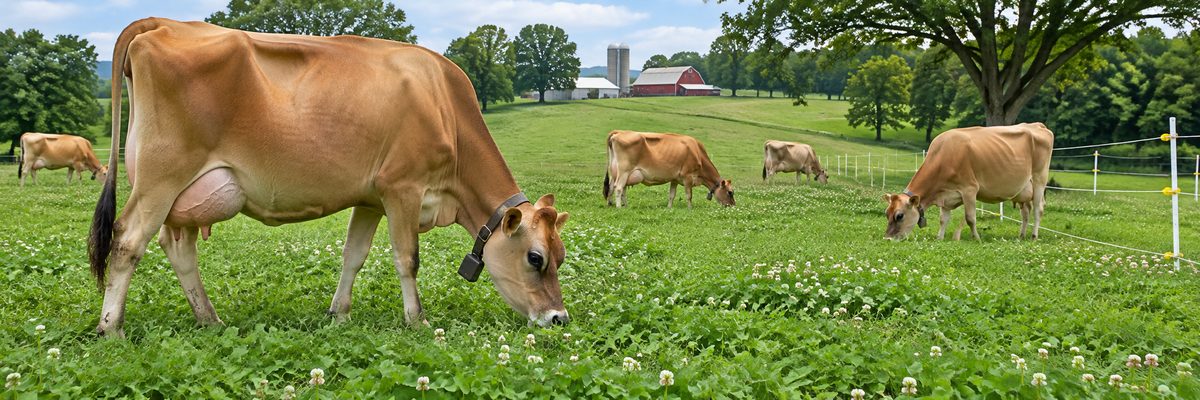
There isn't one magic herd size. The right number is the smallest herd that covers your costs, pays the family and still leaves you able to take a Sunday off once in a while. For some farms that's around thirty cows. For others it's a good deal more or less, depending on milk price, how much you pay for feed, what you earn per cow and whether the farm also makes cheese or bottles milk.
Start with the money, because that's where most herd-size arguments end up anyway. Then check labor, land and facilities against that number. A farm can have the cow count right on paper and still fail because there's one person trying to do the work of three.
Start from the income you need
Write down what the farm has to pay for each year: family living, loan payments, taxes, insurance, repairs and replacements. Then work backward.
- Figure out your cost of production per hundredweight or per cow. Feed, vet, breeding, supplies, utilities and hired help all count.
- Estimate milk income per cow, using your own production and the price your buyer actually pays.
- Subtract to get the margin per cow.
- Divide the income you need by the margin per cow.
That last number is a rough herd size. It's often bigger than people hoped, which is why many small farms add value (cheese, bottling, direct sales) or cut costs with grazing instead of simply adding cows. If the answer comes out at three hundred cows and you own forty acres, the problem isn't the arithmetic.
Be careful with someone else's numbers. A neighbor's herd on better ground, with cheaper feed and a paid-off barn, doesn't tell you much about yours. Use your own books or a realistic projection, and consider the break-even milk price too.
Labor sets the second limit
A person who can milk well and keep the barn clean can handle only so many cows before something slips. What that number is depends on the milking system:
- Bucket milkers or a small tiestall pipeline. Slower per cow, so labor becomes the limit sooner.
- Small parlor. Faster, but needs a layout where cows flow in and out without a fight. See low-cost parlors for small grazing dairies.
- Robot. Changes the labor picture, but the investment is large. Is a robotic system right for a small dairy goes through the question.
Then add everything that isn't milking: feeding, bedding, calves, breeding, hoof care, hay season, fence and bookkeeping. If you're hiring, add pay, taxes and workers' comp. And if the plan assumes the family does it all for free, test that assumption with the family. Ask about it before the herd arrives, not after the first January chore week.
Land and feed
How many cows your land can carry depends on soil, rainfall, forage mix and management. A grazing herd on good, well-managed pasture can support more cows per acre than one on thin ground, but numbers vary a great deal by region: the Northeast and Upper Midwest grow lush summer grass, while the Southwest and Mountain West usually need irrigation or purchased feed. For a grazing estimate, see how many cows per acre pasture can support.
Count what you grow and what you must buy. If you plan to buy most feed, the herd size isn't limited by acres but by money and manure storage. If you plan to grow most of it, the land sets the cap and the barn needs to fit inside it. Don't forget the young stock: heifers, calves and dry cows need feed and space too, so a herd of forty milking cows is really a herd of sixty to seventy head, give or take. How many replacement heifers to raise helps with that part.
Facilities and equipment
Your barn, bulk tank, manure storage and water supply all have capacities. A tank sized for twenty cows doesn't hold milk from forty, and a manure pit that's full in March is a bad surprise. Check each of these against the planned herd and note which one runs out first. That's your real cap until you spend money.
What different herd sizes look like
A handful of cows
Home use, family cow share or a small cheese operation. Income is modest unless milk is processed and sold direct. If you're thinking about one or two cows for the household, read keeping a family milk cow.
Twenty to fifty cows
A classic small family dairy, often tiestall or small parlor, often grazing. It can work with low costs, a good milk market or on-farm processing, but there's little cushion for low milk prices. Many farms in this range have off-farm income or a spouse with a job in town.
Sixty to a few hundred cows
More labor, more capital and usually more hired help. Margins per cow are often thinner, so volume matters. This is a different business with different questions: should you expand, run the numbers first.
Common mistakes
- Choosing herd size by how many stalls the barn has.
- Counting only milking cows and forgetting heifers and dry cows.
- Assuming milk price will stay at its best level.
- Planning for perfect weather in the hay field.
- Ignoring vacation. A herd that needs you every single day is more fragile than it looks.
For help with budgets and herd planning, a land-grant dairy program is the best place to start. University of Minnesota Extension and Penn State Extension both publish dairy business and farm management resources, and many states have an extension farm management specialist who will look at your numbers for free or a small fee.
Quick answers
What's the minimum herd size to make a living milking cows?
No single number holds up, since it depends on milk price, costs and whether you add value. Work backward from the income you need and your margin per cow, then see if labor, land and facilities can carry that number.
Can one person run a small dairy alone?
For a small herd, yes, but it leaves no room for illness, injury or time off. Plan for relief milkers and budget for them.
Is it better to start small and grow?
Usually, yes. A smaller herd lets you learn the cows, tune the routine and find out what your costs really are before you commit to more debt. Grow when the numbers say so, not when the barn has empty stalls.