Grazing, Organic & Small Dairies
Raw Milk Laws in the US: How Rules Differ by State
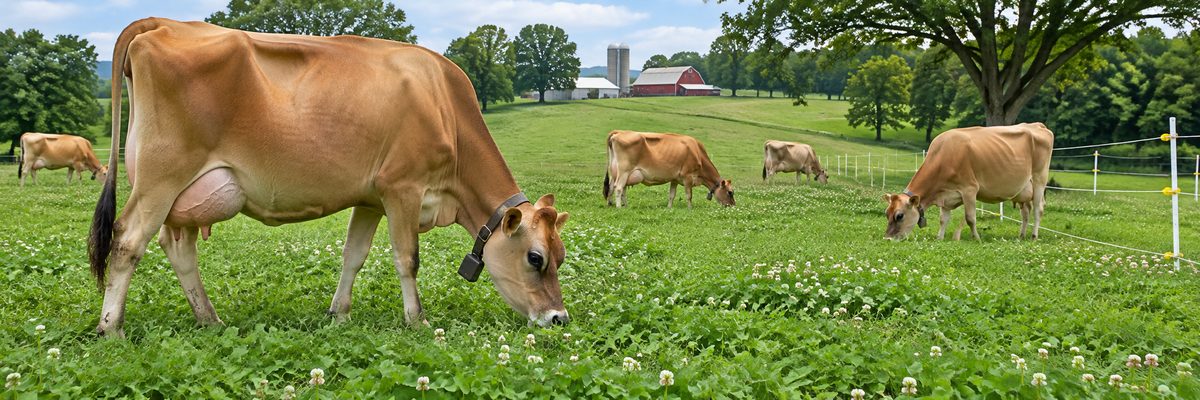
There is no single American raw milk law. There is a federal rule about crossing state lines, fifty different state approaches to everything inside them, and the occasional county or city ordinance that adds its own flavor. If you milk a cow, goat or sheep and someone asks whether they can buy a jar, the honest answer starts with "where do you live?"
Federally, raw milk meant for people to drink cannot be sold across state lines. Inside a state, the rules run from "prohibited entirely" to "sold in stores with a warning label," with plenty of stops in between. The rules also change, because legislatures revisit them, so treat any chart you find online as a starting point and not a verdict.
This is general information, not legal advice. What follows should help you ask better questions of your state agency and your attorney, which is the job a good overview can actually do.
The federal piece
The Food and Drug Administration prohibits interstate sale of raw milk for human consumption, and it describes the state picture as divided, with some states prohibiting in-state sales in some form and others allowing them. You can read the agency's position on its raw milk safety page. The federal government does not run a permit system for a farm selling to neighbors, so that part is left to the states.
Grade A milk that goes to a plant, the kind picked up by a hauler and measured against a milk quality testing program, is a different system altogether. It is built on pasteurization, and it is not what this article is about. This one covers milk that stays raw and heads for a kitchen, not a processor.
The common state pathways
States tend to use one or more of these approaches. Many use a combination, and the details inside each one are where farms get tripped up.
| Pathway | What it generally means | Typical conditions |
|---|---|---|
| Retail store sales | Licensed farms may supply raw milk to shops that sell it to consumers. | Permit, inspection, lab testing, labels with a warning statement, refrigeration rules. |
| On-farm sales | The customer buys at the farm gate, sometimes only on the farm and never delivered. | Permit or registration, testing schedule, limits on advertising or volume, labeling. |
| Herdshare or cow share | Members own part of the animal and pay for its care, rather than buying milk. | Written agreements, sometimes registration. Some states recognize it, some ban it. |
| Pet milk or non-human use | Sold labeled as not for human consumption. | Labeling rules, and regulators may check that the label matches how it is used. |
| Prohibited | No sales of raw milk for human consumption, with few or no exceptions. | Penalties vary. Gifting or sharing may or may not be treated differently. |
Even inside a "legal" state, the fine print can bite. A permit for on-farm sales does not usually cover a farmers market stall. A herdshare law may require a registration form you did not know existed. And the same milk can be fine when it leaves the gate and a violation when it rides in the back of a pickup to a drop point.
Differences you will run into
- Which animals count. Some rules cover cows only, some include goats and sheep, and some treat each species separately.
- Testing. Many states with a permit route require regular lab tests for bacterial counts, somatic cells and sometimes specific pathogens. Others lean on inspection and herd health programs.
- Herd health. Brucellosis and tuberculosis testing requirements differ, and some states add their own conditions.
- Labeling and advertising. Warning statements, signage at the farm and limits on how you can promote sales show up often.
- Who enforces. It might be the state department of agriculture, the department of health, a county sanitarian, or a mix. Phone calls to the wrong office waste a morning.
Region matters in a practical way. Western states have tended to include retail pathways, while some Northeast and Upper Midwest states have been stricter or narrower, and a few Southeast and Southwest states have varied approaches by county or by product. Treat those as tendencies and not rules, since each state sits somewhere on its own spectrum.
How to check your own state
- Start with your state department of agriculture. Look for its dairy division or milk sanitation program. Ask by phone and ask for the answer in writing, because email survives staff turnover.
- Ask the state health department. Some states split authority, so a second call is cheap insurance.
- Read the statute and the rule. The agency should be able to point you at the relevant sections. Do not rely on a forum post or a friend's memory of what the law used to say.
- Talk to your county and municipality. Zoning, home occupation permits and local health rules can matter.
- See an attorney if you plan to sell regularly. One consultation costs less than one bad surprise. A walk through permits, testing and liability basics will give you a list of questions to bring.
If the paperwork ever feels like a lot, this farm.FM piece about a farmer arrested for milking almonds without a license is a reminder that licensing questions can get strange. Dairy licensing, at least, is written down somewhere you can read it before the knock on the door.
Beyond the law: the health side
Legal does not mean risk-free. Federal health agencies and state public health departments warn that raw milk can carry bacteria that cause serious illness, particularly in young children, pregnant women, older adults and people with weakened immune systems. If you sell or share it, you are taking on responsibility for that risk, whether or not a statute says you may. The practical side is covered in raw milk risks, testing and good practice, and it deserves a read even if your state asks very little of you.
Insurance deserves a call too. Some farm policies exclude raw milk or limit product liability, and you would rather learn that from your agent than from a letter. If a herdshare is your route, how cow share agreements work explains what the contract has to carry.
Quick answers
Can I give raw milk away if I can't sell it?
Not necessarily. Some states treat giving it away differently from selling it, others regulate both, and some restrict distribution of any kind. Ask your state agency before you assume a gift is exempt.
Is raw milk legal in my state?
It depends on the state and on what you mean by legal: buying it, selling it, owning a share, or feeding it to pets. The most reliable answer comes from your state department of agriculture or its dairy division, in writing if you can get it.
Do raw milk laws apply to goat and sheep milk?
Often yes, but not always in the same way. Some states regulate cows only, others list goats and sheep as covered, and permit conditions can differ by species. Read the rule itself or ask the agency which animals it covers.