Grazing, Organic & Small Dairies
How Big Should Each Paddock Be for Grazing Dairy Cows?
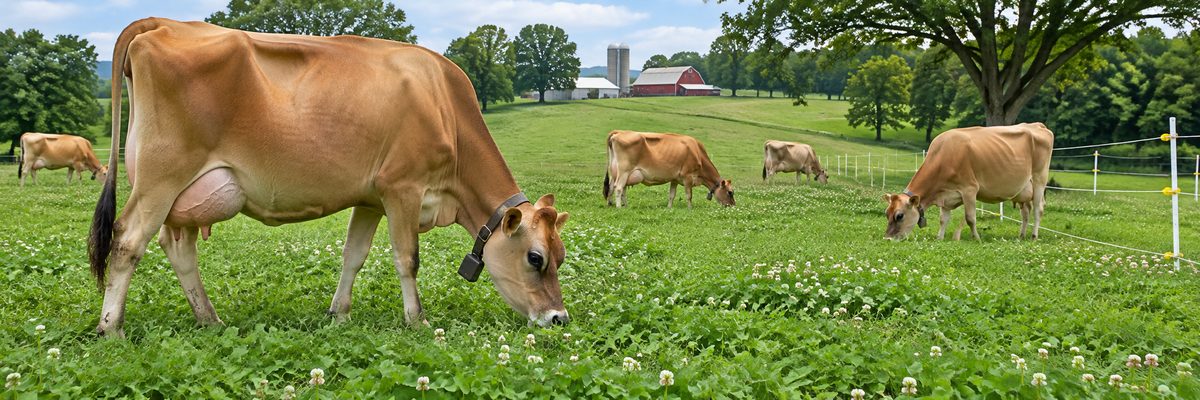
There's no single paddock size for a dairy herd, and anyone who gives you one without asking about your pasture is guessing. The right size comes from three things: how much pasture your cows will eat, how much forage is standing in the paddock when they go in, and how long you want them to stay.
The good news is that it's arithmetic, not art. Work out a first size on paper, put the cows in, then adjust by looking at what's left behind. A paddock that's cleaned up evenly by the next move is about right. One that still has green forage standing in it is too big, and one where the cows are hollering at the gate by noon is too small.
The three numbers you need
- Herd intake from pasture. How many pounds of pasture dry matter each cow should eat per day. That depends on production, supplement and season. If you feed a lot of grain or a partial mix in the barn, pasture makes up less of the diet.
- Available forage per acre. The pounds of dry matter that cows can actually take from the paddock: what's there when they enter minus what you want left behind.
- Grazing period. How long the herd stays in each paddock before moving: a day, a half day or one milking cycle.
Penn State Extension's guide to four steps to rotational grazing uses the same ideas. It describes available pasture as what's present when animals go in minus what's present when they come out, and notes that typical Pennsylvania pastures hold about 300 pounds of dry matter per inch of height, depending on plant density. Take cows in at 7 inches and pull them out at 4, and roughly 900 to 1,000 pounds per acre is available. Your own pasture might run lighter or heavier, so clip and weigh a few samples, or ask your extension office about a rising plate meter or pasture stick calibrated for your area.
The basic formula
Here's the logic. Acres per paddock equals herd intake per day times days in the paddock, divided by the pounds of forage available per acre, adjusted for how much the cows actually eat of what's offered. Penn State's table builds in a utilization percentage, an estimate of how much of the forage actually gets eaten, which they set higher for short stays and lower for longer ones. Their paddock-size table works out to about 0.03 acres per animal unit for a one-day stay at 1,000 pounds per acre, and 0.1 for a three-day stay.
Penn State's animal unit assumes about 25 pounds of forage dry matter eaten per day. A lactating Holstein typically takes in more total dry matter than that, but how much comes from pasture is a feeding-plan decision, so use your nutritionist's number if you have one.
A worked example
These numbers are illustrations to show the math, not targets. Suppose you have 60 cows, you want a one-day stay, and cows will take about 75 percent of the available forage you offer.
| Pasture dry matter eaten per cow per day | Available forage per acre | Acres needed per day | Acres per half-day move |
|---|---|---|---|
| 25 lb | 1,000 lb | about 2.0 | about 1.0 |
| 25 lb | 1,500 lb | about 1.3 | about 0.7 |
| 30 lb | 1,000 lb | about 2.4 | about 1.2 |
| 30 lb | 1,500 lb | about 1.6 | about 0.8 |
How it works for the first row: 60 cows at 25 pounds is 1,500 pounds of pasture per day. At 1,000 pounds available per acre and 75 percent eaten, each acre supplies 750 pounds, so the herd needs 2 acres a day. Thin pasture means more acres, and thick pasture fewer. Notice how much the available forage swings the answer: heavy covers need roughly a third less ground than light ones.
From paddock size to number of paddocks
Paddock size answers how much ground per move. How many paddocks you need depends on how long each needs to rest. Penn State gives a simple formula: the maximum rest period divided by the days of grazing per paddock, plus one. With a 25-day rest and one-day grazing periods, that's 26 paddocks at about 2 acres each, or about 52 acres for the 60 cows. In slow summer growth you may need much longer rest, which means more ground, supplement or stored feed to cover it. Their guide lists rest periods ranging from about 10 to 14 days in fast, cool spring growth to 40 to 60 days in hot, dry summer. How long to rest a pasture between grazings goes into what to watch.
If the math says you need more acres than you have, you have three levers: move to a shorter stay, add supplement, or reduce the herd on pasture. How many dairy cows per acre pasture can support and how much grain grazing cows really need sort out those tradeoffs.
Practical tips for setting paddocks
- Use temporary fence. Polywire and step-in posts let you change paddock size as the grass changes, so you're not stuck with a mistake. See fencing for grazing dairy cows for what to buy.
- Strip graze. Move a front fence forward and a back fence behind the herd so cows always have fresh grass and can't wander back to regrowth.
- Move after milking. Many grazers offer a new break after each milking so cows walk out to fresh pasture instead of leftovers.
- Shape paddocks for water and lanes. A long skinny paddock with water at one end means cows overgraze near the water and under-use the far end.
- Go smaller in fast growth, bigger in slow. In a spring flush, make paddocks bigger or take some ground out for hay. In a summer slump, you'll need extra acres or supplement.
- Keep the rest period fixed in your head. Paddock size and rest period are separate decisions. Cutting a paddock smaller doesn't give grass more time to regrow.
Checking whether you got it right
After the herd leaves, walk the paddock. You want an even residual height across most of it, with no big patches of untouched forage and no bare dirt. Too much left behind means your paddock was too big or cows were too picky; trampled grass and bare spots mean too small or too long a stay. Cows leaving the barn hungry and bawling by midmorning is a clear message. So is a herd that lies down at the gate with a belly full, ignoring a paddock you put them in an hour ago because they've already eaten what they like. Cows are blunt reviewers.
Watch milk and body condition too. If milk dips and cows look empty even though pasture is standing, the quality of what they're getting may be the issue, not the quantity. Talk to your nutritionist and take a forage sample.
Regional notes
In the Northeast and Upper Midwest, cool-season swards grow quickly in spring, slow in midsummer and recover in fall, so paddock size and number change through the season. In the Southeast and Southwest, heat and humidity affect forage type, shade and water needs, and cows may graze at night. In the irrigated West, paddocks often follow irrigation sets. The first step is the same everywhere: measure what's standing and write it down. Starting out? How to start rotational grazing with dairy cows puts paddock sizing in the context of a full first season.
Quick answers
How many acres per cow do I need for rotational grazing?
It depends on forage production, supplement level, season and rest periods. Many herds need roughly an acre or more per cow for the grazing season, but the range is wide, so work it out from your own pasture and ask your local extension service.
Should paddocks be the same size all season?
No. Grass growth changes, so paddock size should too. Use smaller breaks or take paddocks out for hay in spring flush, and larger or more supplemented ones in slow growth.
How often should I move dairy cows to a new paddock?
Many dairy grazers move after each milking or once a day to keep forage quality consistent. Penn State Extension notes that lactating cows tend to do best with shorter stays than beef cattle, so tune it to your herd and pasture.