Grazing, Organic & Small Dairies
Once-a-Day Milking: Does It Work for a Family Cow?
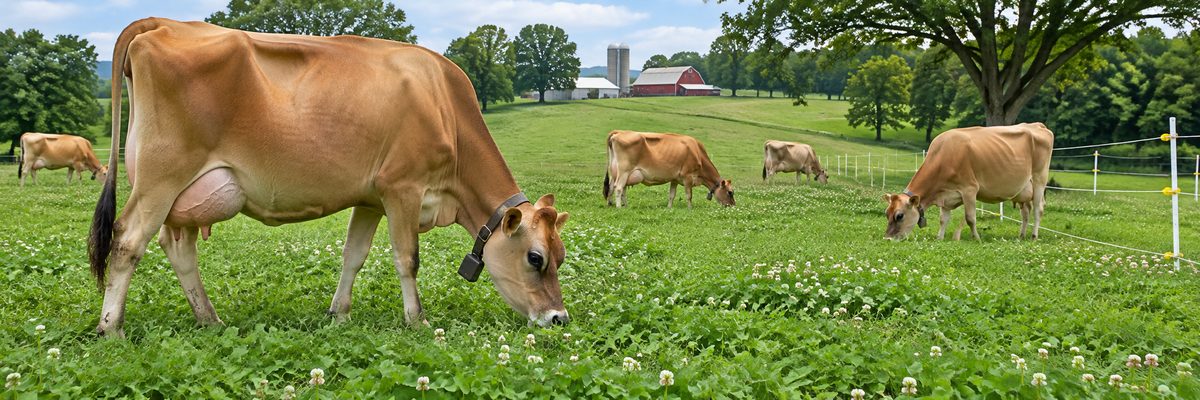
Yes, a family cow can be milked once a day, and plenty of people do it. You'll get less total milk, and some cows handle the change better than others. It tends to work best for moderate producers, cows in mid or late lactation, and cows with a calf taking part of the milk. It works poorly for a high-producing cow fresh off the calving pen, where a full udder for twenty-four hours is uncomfortable and risky.
The trade is simple: you give up some milk to get your mornings or evenings back. For a household that was already swimming in more milk than it could use, that's a fair swap. For a family counting on every gallon, it may not be.
What the research says
Most of the research on once-a-day milking comes from commercial herds, especially seasonal pasture systems. Teagasc, Ireland's agriculture authority, reports that in its trials once-a-day milking for up to eight weeks from the start of lactation did not significantly reduce annual milk solids yield. The trials also reported no increase in somatic cell count, less labor and no welfare problems. You can read their summary in the Teagasc once-a-day milking presentation. Keep in mind that this was in seasonal-calving pasture herds, and a single family cow of a different breed and feeding level may respond differently.
The takeaway for a house cow: the idea is well-tested, but the details depend on the cow, the stage of lactation and your management.
When it tends to work
- Moderate or low producers. Jerseys, Dexters and many crossbreds don't build as much pressure in the udder as a heavy Holstein.
- Mid to late lactation. Production is already declining, and the udder holds less milk.
- A calf shares the milk. Some owners separate the calf overnight, milk in the morning, and let the calf have the cow during the day. This approach has its own rules about calf feeding and cow health, so ask your vet.
- Good pasture and calm cows. Cows with stable routines handle schedule changes better.
- Families with limited time. A cow that fits the family beats one that wrecks it.
When to be careful
- Fresh cows. In early lactation, a cow with a full udder is under pressure. Most people stay at twice a day for the first weeks, and some stay longer. How fresh cows are managed is covered in post-calving cow checks for the first 14 days.
- High producers. A cow giving a lot of milk may be uncomfortable and more prone to leaking and udder trouble on a long interval.
- History of mastitis. A cow with a record of clinical mastitis or high cell counts needs close watching. Talk to your vet before changing the schedule.
- Heat and humid regions. A swollen udder in hot weather is uncomfortable, and mud and heat add bacteria. Southeast and Southwest owners should watch closely.
How to switch without upsetting the cow
Move gradually and watch her. Here's a cautious approach that many owners use. It's general, not a prescription, so adjust for your cow and check with your vet.
- Pick your timing. Mid-lactation is easier than early. Avoid hot spells and big feed changes at the same time.
- Stretch the interval slowly. Make the gap longer a bit at a time, rather than skipping a milking outright. A cow that's been on a twelve-hour routine can find a sudden thirty-six-hour gap rough.
- Check the udder every day. Look for tightness, heat, redness, leaking or a cow who's uncomfortable or kicking at her belly. If the udder looks tight and hot, milk her. Don't tough it out.
- Keep milking thoroughly. Empty the udder fully at each milking.
- Keep the routine rock steady. Once-a-day means once, at the same time, every day. Why cows dislike schedule changes explains why that matters.
- Track milk. Note how much she gives each day. If production drops far more than you can live with, go back to twice a day.
The mastitis question
A long interval means the udder stays full for longer, and pressure can irritate udder tissue. Clean teats and good dipping matter even more, since each milking is carrying more weight. Check the first squirts for clots or watery milk. Forestripping and a solid teat prep routine help you spot trouble. A cow with a sore or hot quarter needs to be checked by the vet, and any milk from a treated cow must be discarded for the withdrawal period the vet specifies. This is general information and not a substitute for veterinary advice.
What you get and what you give up
| Twice a day | Once a day |
|---|---|
| More total milk | Less total milk, often a clear drop |
| Fits a larger household or cheesemaking | Fits a smaller household or a cow with a calf |
| Two chores a day, no flexibility | One chore a day, more flexibility |
| Lower udder pressure | Higher udder pressure, more watching needed |
How much milk you lose depends on the cow, her breed, her stage and her feed, so measure before and after. If you don't have records, start them. How much milk a family cow gives in a year will help you set a baseline, and three-times-a-day milking sits at the other end of the scale if you're curious how the dairy trade thinks about frequency.
Other ways to ease the schedule
- Share the milk with a calf for part of the day.
- Line up a relief milker for weekends and trips.
- Dry her off earlier in the lactation to give yourself a break. See how to dry off a dairy cow.
- Pick a lower-producing breed. See the best breed for a family milk cow.
If you're still weighing whether a house cow fits your life at all, keeping a family milk cow lays out the full commitment.
Quick answers
Will once-a-day milking dry my cow up?
It won't dry her up outright, but total production usually drops, and some cows decline faster than others. Keep checking the udder and go back to twice a day if she seems uncomfortable.
Can I milk once a day right after calving?
Most people don't. A fresh cow produces a lot of milk and a full udder is uncomfortable, so owners usually stick with twice a day for the early weeks and ask the vet before changing.
Does once-a-day milking save labor?
Yes, it cuts the number of milking sessions and cleanups in half. You'll still need to keep a close eye on udder health and be ready to go back to twice a day if needed.