Grazing, Organic & Small Dairies
Best Pasture Mixes for Dairy Cows by Region
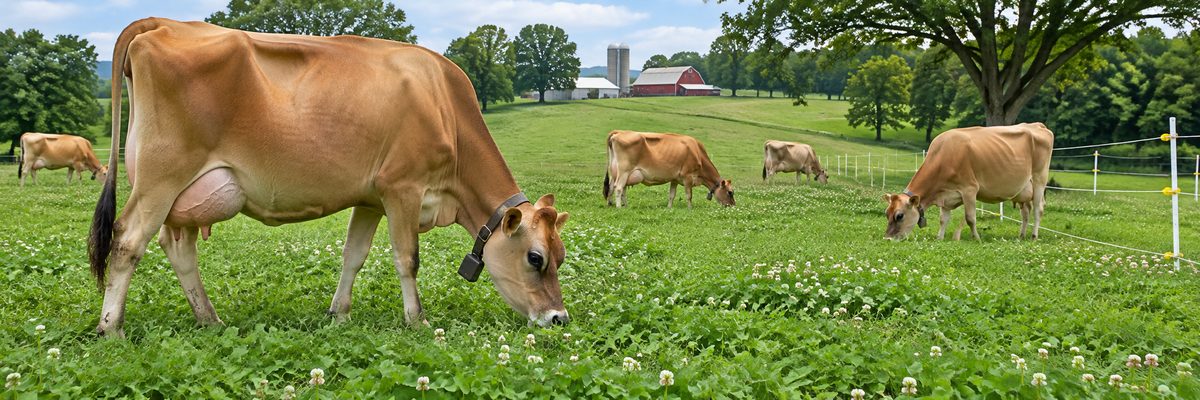
The best pasture mix is the one that survives your winters, your summers and your cows, in that order. Dairy cows are fussy eaters with high nutrient needs, so a mix that works for a dry cow or a beef herd can disappoint a milking string. You want grasses that stay leafy and palatable under repeated grazing, plus enough legume to hold protein and fix some nitrogen.
The short answer: build around the cool-season perennials that are proven in your region, add white clover and maybe red clover or alfalfa, keep the species list modest, and put your money into good varieties and seed-to-soil contact. Plant a mix that fits the farm, not the photo of the lush green field on the bag. Nobody has ever seen that field in real life.
What cows and soils need from a mix
A milking cow needs energy and protein from every bite, so grass quality matters more than total tonnage. Look for species and varieties that are palatable, regrow fast after grazing, handle trampling and match your soil drainage and pH. Legumes add protein and nitrogen but are generally less persistent and need more fertility than grasses, as University of Minnesota Extension points out in its guide to planning your forage supply for summer grazing.
That same page says that most agronomic guidelines recommend a small number of species in grazed mixtures, though it also notes disagreement on the ideal number and cites Northeast research in which six to nine grass species were more productive than a white clover and orchardgrass mixture. It also points out that variety can matter as much as species. In plain terms: don't buy a ten-species bag because it looks impressive, and don't buy the cheapest one because it looks like a bargain.
Regional starting points
These are common choices in extension teaching. Check with your county agent or state forage specialist, because local variety trials will beat anything in a general article.
| Region | Common grasses | Common legumes | Notes |
|---|---|---|---|
| Northeast | Orchardgrass, timothy, meadow fescue, tall fescue, perennial ryegrass, reed canarygrass in wet ground | White and red clover, sometimes alfalfa | Penn State Extension calls cool-season perennials the mainstay of Northeast grazing systems |
| Upper Midwest | Orchardgrass, meadow brome, timothy, tall fescue, Kentucky bluegrass, festulolium | White and red clover, alfalfa | Winter hardiness comes first; University of Minnesota research is testing diverse mixes to extend the grazing season |
| Southeast | Tall fescue (novel endophyte types preferred for milking cows), bermudagrass, bahiagrass, winter annuals like ryegrass and small grains | White clover, red clover, crimson clover | Warm-season perennials for summer, cool-season grasses or annuals for fall through spring |
| Southwest and Mountain West (irrigated) | Orchardgrass, meadow brome, tall fescue, perennial ryegrass in cooler zones | White clover, alfalfa | Water and altitude set the list; irrigation timing matters as much as species |
| West Coast (coastal and irrigated valleys) | Perennial ryegrass, tall fescue, orchardgrass | White clover | Mild, long seasons can allow year-round growth where moisture holds |
Some species recommendations above, particularly for the Southeast, Southwest and West Coast, come from general extension teaching and not from a single source, so treat them as questions to take to your local forage specialist rather than answers.
A few species worth knowing
Orchardgrass and timothy
Workhorses of Northern pasture. Orchardgrass starts early and regrows fast, which suits rotational grazing, though it can get stemmy if you let it go. Timothy is winter hardy and palatable but regrows more slowly, so it likes longer rest.
Perennial ryegrass and meadow fescue
Very palatable and high in quality, which makes them favorites with graziers for milking cows. Perennial ryegrass can struggle with hard winters and summer heat, and in colder regions it is often a short-lived part of the mix, so check local trial results.
Tall fescue
Tough and productive, with a deep root system that tolerates traffic and wet. The catch is the endophyte in many older stands, a fungus that produces compounds toxic to livestock, especially under heat stress. If you plan to graze lactating cows on tall fescue, ask your extension office about novel-endophyte varieties.
White clover
The default grazing legume. It stays close to the ground, handles close grazing and spreads by stolons. It improves feed quality and nitrogen supply, and it needs decent fertility and sun. It is also the legume that most often gets blamed when cows swell up, so read bloat on clover and alfalfa pasture before you aim for a clover-heavy stand.
Red clover and alfalfa
Higher yielding and good for hay or baleage and as a pasture component. Both can be grazed, but they bring higher bloat risk and need rest to persist.
How to choose and plant
- Get a soil test. pH and phosphorus and potassium levels decide whether clover survives and whether the investment pays.
- Know your drainage. Reed canarygrass and meadow fescue tolerate wet feet. Alfalfa and orchardgrass do not.
- Pick a short list. Two or three grasses and one or two legumes is plenty for most farms.
- Look at variety trials. Land-grant universities publish them for grasses and legumes. A variety bred for hay may not be the same as one for grazing.
- Plan for the weak season. If your pasture slumps in July, work in a species or a separate paddock that grows then, rather than stuffing everything into one mix.
- Control weeds and seed into good contact. No mix survives a bad seedbed or heavy weed pressure.
- Protect seedlings. Let new stands root and establish before the first grazing, then graze lightly.
If you are weighing species for summer in the South, Southeast forage options covers bermudagrass and winter annuals in more detail, and pasture dairying in the Southeast and Southwest deals with the heat problem.
Diversity, extended seasons and the extras
Penn State Extension's article on extending the grazing season with plant diversity describes combining cool-season perennials with warm-season and annual species to lengthen the grazing season and reduce overgrazing. It also says that harvested and stored forage costs at least twice as much per ton of dry matter as grazed forage. That is a good reason to look at annuals like brassicas, oats or sorghum-sudan for gaps, though each fits a particular slot and has its own handling rules.
Mistakes to avoid
- Buying a mix without checking whether it was formulated for your region.
- Seeding clover into a field with low pH and wondering why it vanished.
- Planting everything at once instead of renovating one paddock at a time and keeping the cows fed.
- Letting the neighbor's advice about what grew in his granddad's day outweigh a variety trial.
- Forgetting that a mix still needs good grazing management, including enough rest between grazings.
Quick answers
How many species should a dairy pasture mix have?
Most extension guidance favors a small number in grazed mixtures, often two or three grasses plus a legume or two. Some research on more diverse mixes looks promising, so ask your local specialist what has worked on similar soils.
Is clover good for dairy cows?
Yes. White clover is a high-quality, high-protein forage that fixes nitrogen and holds up under grazing. The risk is bloat when cows graze lush legume-heavy stands, so manage it carefully.
Can I overseed an old pasture instead of starting over?
Often, yes. Frost seeding or no-till overseeding of clover and some grasses can thicken a stand at lower cost, as long as you fix fertility and manage the competition from existing sod. A county agent can suggest timing for your area.