Grazing, Organic & Small Dairies
Writing an Organic System Plan for a Dairy
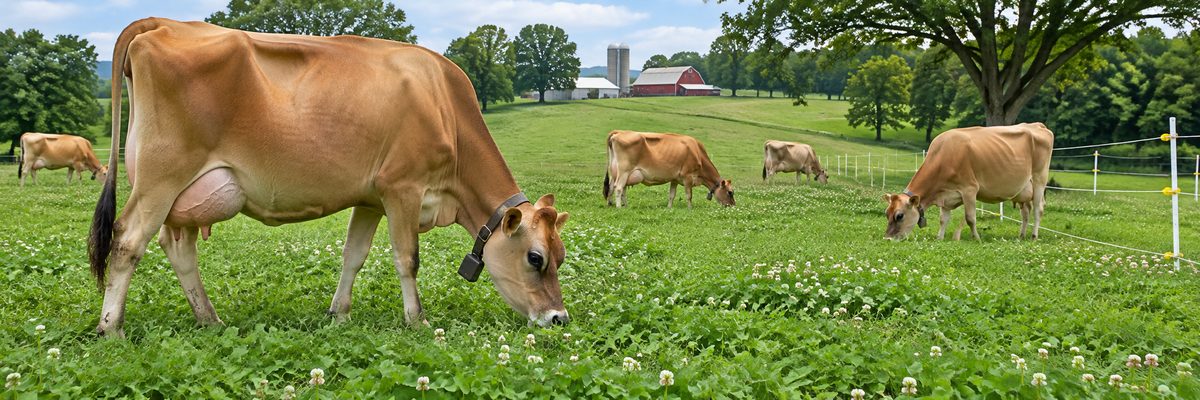
The organic system plan, or OSP, is the document your certifier uses to decide whether you can be trusted to run an organic dairy. It is not a form you fill out once and forget. It's a working description of how the farm operates, and the inspector will compare it with what they see in the barn, the lane and the feed room.
A good plan answers three questions: what do you do, how do you know you're doing it, and where's the proof? If you can answer those for the cows, the land, the milk and the inputs, you have most of the plan.
Most certifiers give you their own forms, and you should use them. This article explains what the federal rules require so the forms make sense.
What the regulations say the plan must include
The rule for the plan is 7 CFR 205.201. It says the plan must be agreed to by you and an accredited certifier and must include:
- A description of the practices and procedures you'll perform and maintain, including how often.
- A list of each substance you'll use as an input, with its composition, source, where it will be used and documentation of commercial availability as applicable.
- A description of the monitoring practices and procedures, with frequency, to verify the plan is working. That includes verifying suppliers and the organic status of products you receive.
- A description of your recordkeeping system.
- A description of the practices and barriers that prevent mixing organic and non-organic products on a split operation, and contact with prohibited substances.
- Anything else the certifier needs to judge compliance.
Another provision lets you substitute a plan prepared for another government program if it meets all the requirements, which is why some farms use a conservation plan from NRCS as part of their pasture plan.
The dairy-specific sections
For a dairy, the general headings turn into specifics. Here's what most certifiers expect you to cover, in roughly the order a farm walks through it.
Land and cropping
Maps of every field with identifiers, a history of what's been applied and when, buffer zones and boundaries, crop rotations, and soil fertility practices. This ties into the 36-month land rule, so include dates.
The pasture plan
Because dairy cows are ruminants, the pasture plan is its own required piece. Under 7 CFR 205.240, you need a functioning management plan for pasture, backed by auditable records, and the plan has to describe:
- The types of pasture you provide to meet feed requirements.
- The cultural and management practices that make sure there's enough quality and quantity of pasture throughout the grazing season, so ruminants average at least 30 percent of their dry matter intake from grazing.
- The grazing season for your region.
- The location and size of pastures, with maps giving each pasture its own ID.
- The grazing methods in use.
- The location and types of fences (other than temporary ones), plus the location and source of shade and water.
- Soil fertility and seeding systems.
- Erosion control and protection of wetlands and riparian areas.
The pasture plan is updated every year, and if you want to change an approved plan in a way that could affect compliance, you ask the certifier first. The organic pasture rule covers the numbers behind it.
Herd and animal origin
Which animals you have and where they came from, whether any are transitioning, the start date of the 12-month herd transition if there is one, and individual identification. Calves and heifers should be in the record too.
Feed
The ration for each group (lactating, dry, calves, heifers), the share from pasture, the purchased feeds with supplier and organic certificates, and any vitamin and mineral supplements. Under the rules, feed supplements and additives are allowed only in amounts needed for adequate nutrition and health, and with organically produced agricultural ingredients. If your feed salesman can't hand over a current certificate, you probably need a different salesman. Sourcing organic feed covers where to find it.
Health care and treatments
Your preventive practices, vaccination program, the substances you plan to use for illness and who prescribes them, how treated animals are identified, and how milk from treated cows is handled. Writing this section with your herd vet is the smart move. What's allowed when cows get sick goes through the rules.
Living conditions
Housing, bedding, outdoor access, shade, water, yards and feeding pads, and how you keep lanes well drained and clean. The regulations also expect conditions that allow animals to lie down, turn around and move naturally, and for bedding that is clean and dry.
Milking, cleaning and commingling
Which sanitizers and cleaners you use on milking equipment and where they come from, how organic milk is kept separate from any non-organic milk, and how the milk is picked up and by whom.
Records: the proof
The plan describes the system. Records prove it. Under 7 CFR 205.103, certified operations must keep records that fully disclose activities and transactions in enough detail to be understood and audited, that follow products from purchase through production to sale, and that are kept at least five years. Records need to be adapted to your operation and be good enough to show compliance.
For a dairy that usually means:
- Feed purchase invoices and organic certificates.
- Pasture records showing which paddock, when, and for how long.
- Treatment logs for every sick or injured animal. The rules specifically prohibit failing to identify and record treatment of sick and injured animals. See keeping treatment records that pass an inspection.
- Milk production and sales records.
- Field records for planting, harvest, amendments and storage.
If you don't have a record system yet, dairy record keeping: what to track and where is a good place to set one up. A stained notebook in the milk house is a legitimate system if it's complete and dated. A pristine spreadsheet that's three months behind isn't.
Keeping the plan current
To keep certification, you pay your fees every year and send the certifier a summary of any changes made to the plan, backed up by documentation, plus any changes you plan for the coming year. That's 7 CFR 205.406. The certifier must conduct an on-site inspection at least once a calendar year. In practice, that means updating the plan when you:
- Add fields, buy land or change a lease.
- Change the ration or switch feed suppliers.
- Add or remove a pasture, fence or water source.
- Change milking equipment, cleaners or sanitizers.
- Add a new product, like cheese or yogurt.
Get approval for significant changes before you do them, not after. "It seemed like a good idea" is not a defense a certifier hears fondly.
How to draft it without losing a month
- Get the certifier's forms first. Don't invent your own format.
- Draw the farm. A hand-drawn map with field names, paddock numbers, lanes, water and buildings is a better start than a blank form.
- Write what you really do. Not what you hope to do. Inspectors read both the plan and the barn.
- Add the herd vet to the health section. They'll know the allowed materials and the language certifiers expect.
- Have someone else read it. A neighbor, an extension agent or an experienced organic dairy farmer will find the holes you can't see.
- Keep a copy handy on inspection day, along with the records it points to. The organic dairy inspection day checklist helps.
For the full process around the plan, see how to get your dairy organic certified, step by step.
Regional notes
Certifiers are accredited by USDA but run independently, so expect different forms and slightly different questions. In the Northeast and Upper Midwest, pasture plans often focus on rotation, lane design and winter feeding areas. In the Southeast and Southwest, heat and shade are big parts of the living conditions section. In irrigated western systems, water use and large-herd handling come up. USDA's list of certifiers and inspectors is the place to start comparing.
Quick answers
What is an organic system plan?
It's the document, agreed with your certifier, that describes your practices, inputs, monitoring and record keeping, plus a pasture plan for ruminants. It is the basis for your inspection and your certification.
How often do I update my organic system plan?
Every year, when you renew, you give the certifier a summary of changes made during the past year and changes planned for the coming one. Significant changes to something like your pasture plan should be cleared with the certifier before you put them into practice.
Can I use my NRCS conservation plan?
For the pasture portion, the rules say a plan developed with a federal, state or local conservation office can be used as long as it covers every required element. Your certifier decides whether it does.