Grazing, Organic & Small Dairies
Best Cow Breeds and Crosses for Grazing Dairies
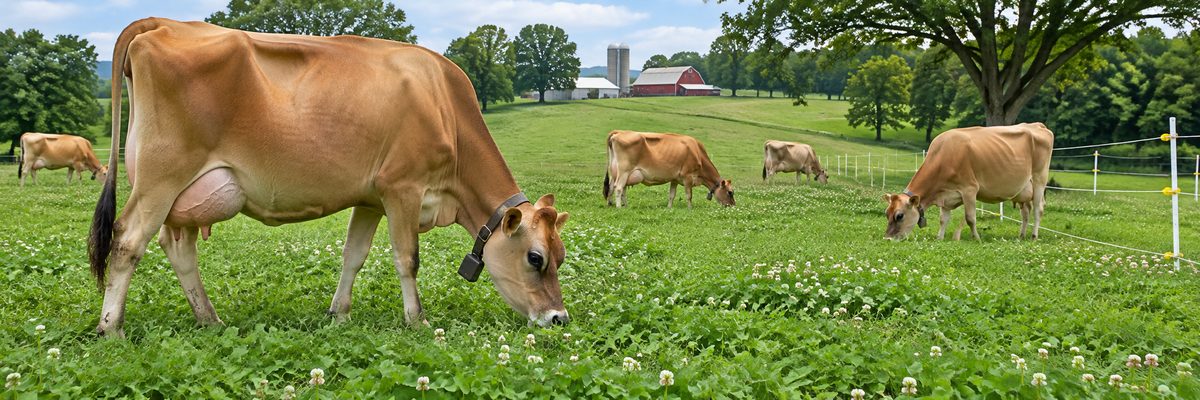
Ask five graziers which cow works best on grass and you'll hear six answers, one of which involves a neighbor's cow that "never had a problem in her life." The honest extension answer is less exciting: no single ideal pasture cow exists, because grazing dairies run so differently from each other.
What does hold across most of them is that a cow on grass has to get bred back on schedule, walk well, stay healthy, and turn pasture into milk without a lot of grain behind it. Jerseys, crossbreds with Jersey or Holstein blood, and New Zealand-type genetics are the most common answers for that, but plenty of herds do fine with something else.
The breed name is where the conversation starts. Here is what to weigh once you get past it.
Start with your system, not the breed
University of Missouri Extension's dairy grazing series makes the point that the ideal cow for a low-input seasonal herd is probably not the same animal as the best cow for a conventional herd that grazes part of the year. A seasonal herd that calves in a tight window needs cows that get pregnant on time; a year-round herd can forgive a longer calving interval. Missouri's publication on the genetics of the grazing cow says it plainly: the first step is to set goals for the farm's production system, then choose cows suited to the environment they'll work in.
Your milk market matters too. If your handler pays for components (butterfat and protein), a smaller cow with high solids may beat a big cow with high volume. If you're paid mostly on fluid volume, you may want the opposite. That's a conversation for your milk buyer before it's a conversation about semen.
The traits that actually matter on grass
In a Progressive Dairy interview, a University of Minnesota organic dairy researcher put the focus on profitability and milk per acre, not just production per cow, and named fertility and longevity as the top traits to breed for, followed by feet and legs. Missouri's specialist adds udder health (somatic cell score), productive life, and body size. Here's how those play out in a paddock:
- Fertility. On a seasonal herd, a cow that doesn't breed back in the window is a culled cow, or a cow that calves out of season and wrecks the plan. See seasonal calving on a grazing dairy for why this matters so much.
- Size. Many pasture-based producers prefer smaller cows, which tend to do less damage to paddocks in wet weather, and some believe smaller cows are more mobile and handle heat better. It's an opinion with some logic behind it, not a law.
- Feet and legs. Cows walk to the parlor twice a day on lanes. Weak feet end careers early. What causes lameness in dairy cows is worth a read before you pick sires.
- Ability to hold condition. Cows that gain and keep body condition on grass, with modest grain, tend to rebreed more easily.
- Temperament. A cow that walks quietly with the herd is worth more than a high-strung high-producer. This is hard to put in a sire proof, but you'll know it the first time one eats the polywire.
The common choices
Holsteins
US Holsteins are unsurpassed for milk volume per cow and are by far the most popular breed in the country. Missouri notes they're large, with a lot of capacity, and generally take longer to replenish condition and return to heat after calving than some other breeds, and they may be more vulnerable to heat stress. That makes them a more logical choice for non-seasonal herds and cooler climates. If you want Holsteins in a seasonal system, Missouri's advice is strict selection for sires with high daughter pregnancy rate. Fertility traits and daughter pregnancy rate explains what that number tells you.
Jerseys
Jerseys are popular with graziers as purebreds and in crossbreeding programs. They're smaller, and Missouri notes some evidence they hold up better in heat for reproduction than Holsteins. They're second to Holsteins in US numbers, so there's a deep enough sire pool to select hard. Compare the two directly in Holstein versus Jersey.
New Zealand genetics
New Zealand Friesians have been selected for generations under low-input, low-concentrate, seasonal conditions. Missouri describes them as smaller, quicker to gain condition and with good reproductive performance, with higher pregnancy rates than cows of North American origin. The catch is that New Zealand selection leaned toward milk solids and away from fluid volume, so these genetics fit best in seasonal, low-input systems or component markets. If you ship for volume, pick sires with higher milk values.
Crossbreds, including Kiwi-cross
Holsteins, Jerseys, and crosses with Holstein blood, Jersey blood or both are by far the most common cows on pasture-based dairies. The "Kiwi-cross" you hear about is generally a Friesian by Jersey cross from New Zealand-type breeding. Crosses are popular because they can bring fertility and size benefits, and because hybrid vigor helps health traits, though results vary by herd and by the parents used. A three-way rotational program needs a third breed; Missouri suggests asking whether it has enough sire choices to make progress and whether it complements your goals. Crossbreeding dairy cattle: pros and cons goes through the tradeoffs. If a cross looks unfamiliar to your milk buyer or registry, ask first, because breed and class can affect premiums or registration.
Other breeds
Guernsey, Brown Swiss, Ayrshire, Milking Shorthorn and others all have grazing herds and loyal fans, especially among farms that sell specialty milk or cheese. Missouri's advice is to pick a breed with enough population to give you real sire choices and strengths that complement your goals. Rare-breed cows are charming and a risk if the nearest AI sire is a continent away. Dairy cattle breeds compared side by side shows how they stack up.
How to choose without second-guessing it for ten years
- Write your system down. Seasonal or year-round, grain level, milk market, climate, parlor.
- Pick two or three traits that matter most and use them for sire and heifer selection. Fertility, longevity and udder health are common anchors.
- Visit farms like yours. Not the showy herd, the one with similar acres, pasture type and labor. Ask how many cows left for fertility or feet.
- Use proofs carefully. How to read a dairy sire proof helps. Be wary of proofs built on confinement herds when you're running grass.
- Move slowly. You can change genetics over a few generations. You can't un-buy forty cows in a spring.
Picking the breed is the easy part; keeping the cows satisfied is another matter, if this farm.FM piece on Texas cows that refuse to graze without Wi-Fi is any guide. Nothing on a sire proof predicts a demand for Netflix, so pick for fertility and feet and hope for the best.
Regional notes
In the Northeast and Upper Midwest, with long cold winters and shorter grazing seasons, many herds mix Holstein, Jersey and crossbred cows depending on how much stored feed they use. In the Southeast and Southwest, heat tolerance and fertility under heat push many graziers toward smaller frames and Jersey influence. West Coast and Mountain West irrigated pastures can support higher production and bigger cows, but heat and feed costs still apply. In grazing regions with seasonal calving, cooperate with your AI company or breeding advisor early, because sire availability and semen shipping timelines matter at breeding season.
Quick answers
What is the best breed for a grazing dairy?
There's no single best one. Jerseys, Jersey crosses, Holstein crosses and New Zealand-type cows are the most common on grass, but the right pick depends on your calving pattern, milk market and climate.
Are crossbred cows better for grazing?
Often they work well, because crossbreeding can combine fertility, size and component advantages. Results vary by herd and by what you cross, so check the parents and talk to farms that have done it for several generations.
Do small cows really do better on pasture?
Many graziers think so, since smaller cows tend to tread more lightly on wet paddocks and may handle heat and walking better. That's a common observation, not a guarantee, and a good big cow still beats a bad small one.