Grazing, Organic & Small Dairies
How Long to Rest a Pasture Between Grazings
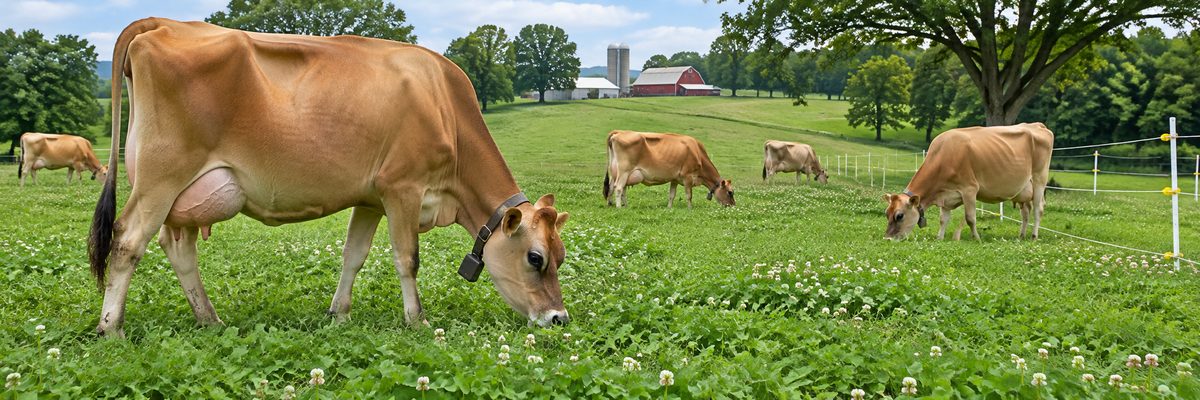
There is no magic number of days. The rest period is however long it takes the grass to get back to a good grazing stage, and that changes with the season, the species, the rainfall and how short you left it last time. A paddock that needs two weeks in May can need five or six in August, and the cows will not be shy about telling you which one you guessed wrong.
In practice, most graziers use a rule of thumb for a starting point and then let the plants overrule it. Fast spring growth can mean roughly two to three weeks of rest. The summer slump, a dry spell or a cool fall can stretch it to a month or more. Watch the grass, not the calendar on the milk house wall.
Move cows back too early and they eat the plant while it is still living off root reserves, which weakens the stand a little more every round. Wait too long and you are feeding mature, stemmy stuff that a high-producing cow will pick through like a buffet line with one good dish.
What the plant is doing while it rests
University of Wisconsin Extension breaks forage growth into three stages. Right after grazing, the plant has little leaf area and draws on carbohydrates stored in the roots to regrow. In the second stage it has enough leaf surface to feed itself and quality is at its peak. In the third stage it heads out and starts setting seed, where yield is high but fiber is up and protein and digestibility are down. You can read the whole explanation in their piece on forage growth stages when grazing cattle.
The goal of a rest period is to bring the paddock back into that middle stage and graze it there. For a milking herd that matters more than it does for dry heifers, because a fresh cow needs the quality and she has no room in her rumen for filler.
Signs a paddock is ready
Days are a planning tool. These are the checks that decide it:
- Height. Many cool-season pastures are ready somewhere in the range of 8 to 10 inches for the common grasses, though the target varies by species, so check what your local extension office recommends for yours.
- Leaf stage. Some grasses, perennial ryegrass in particular, are managed by counting live leaves per tiller. Graziers who use this method often graze around the three-leaf stage, before the oldest leaf starts to die back.
- No seedheads. If the paddock is heading out, you are late.
- Density. The stand should look thick underfoot rather than thin and stalky.
- Cow behavior. Cows that bawl at the gate are not a forage test, but cows that walk in and graze hard in the first hour are a decent sign you got the quality right.
A grazing stick or a plate meter makes height readings less of a guess. Penn State Extension suggests taking measurements in 10 to 20 spots spread through the paddock rather than only in the tall patches or the short ones, which are both flattering and both wrong. Their write-up on grazing management for organic, grass-fed or conventional dairies walks through the method.
Typical rest periods by season
These are general ranges from common extension teaching. Your own farm will wander off them.
| Season | Typical rest | What drives it |
|---|---|---|
| Spring flush | About 14 to 21 days | Fast growth, plenty of moisture, cool nights |
| Early summer | About 21 to 30 days | Growth slows as heat builds |
| Midsummer slump or dry spell | 30 to 45 days or more | Cool-season grasses nearly stop in heat and dry soil |
| Fall regrowth | 30 to 60 days or more | Short days and cold slow regrowth; this is the time to plan for stockpiling |
That spring number is the one that surprises new graziers. When grass is jumping, the first paddocks come around again before you have finished the last one. The classic fix is to skip some paddocks and cut them for hay or baleage, which keeps the cows ahead of the grass, and the stored feed comes in handy later. The practical side of that is covered in starting rotational grazing with dairy cows.
Why the number changes with the region
In the Northeast and Upper Midwest, cool-season grasses carry the system, with a big spring surge and a quieter July and August. Rest periods swing wide, and the answer to the summer slump is more acres per cow, not more urgency. A month-by-month grazing calendar for the Northeast and Upper Midwest shows how that plays out.
In the Southeast and Southwest, warm-season grasses like bermudagrass grow hardest in the heat, so the summer rest can be shorter while the cool months are slow. Heat stress on the cows becomes its own constraint, covered in pasture dairying in the Southeast and Southwest. On irrigated ground in the Mountain West and the West Coast, the water schedule can keep growth going all season, and rest periods tend to be steadier.
Mistakes that shorten the life of a stand
- Putting cows back on a fixed schedule even in a drought. The grass did not read your plan.
- Grazing too low. Plants that have been scalped have little leaf area and little stored energy, so they come back slowly and weeds get the first opening.
- Leaving cows in one paddock too many days. If they are still there when the first bites start to regrow, they eat the regrowth, and that undoes the rest period you just gave it.
- Assuming every paddock rests the same. The low spot by the creek and the knoll with the shallow soil do not grow on the same clock.
- Forgetting that a back fence is a lot cheaper than fixing a stand.
Putting it into a routine
- Walk the paddocks every few days in fast growth, weekly the rest of the time, and write down height or leaf stage.
- Start with a planned rest and adjust it as the season changes.
- Keep a few spare paddocks or a hay field in the loop to absorb spring growth.
- When growth slows, slow the rotation down by lengthening the rest rather than shortening the stay, and be ready to feed stored forage.
- Match cow numbers to what the farm grows. How many cows pasture can support is the question underneath all of this.
The Ohio State fact sheet on grazing intensity and move frequency is a good read if you want the theory behind long stays versus short ones. Either can work, as long as the plant gets enough recovery time.
Quick answers
Is 30 days of rest the right number?
It is a decent average for the middle of the season in many humid regions, but it is only an average. In spring flush it may be half that, and in a dry summer it can run well past it. Let height, leaf stage and the weather decide.
What if I run out of paddocks before the first one is ready?
That usually means too many cows for the acres or a growth slowdown. Feed stored forage for a few days, bring in extra acres, or reduce the amount of pasture in the ration until growth catches up. Overgrazing the first paddock again is the slow way to lose the stand.
Can pasture rest too long?
Yes. Grass that goes past the leafy stage loses quality fast, and cows leave much of it behind. If a paddock gets ahead of you, clip it or cut it for hay and let it start fresh.