Grazing, Organic & Small Dairies
How to Start Rotational Grazing With Dairy Cows
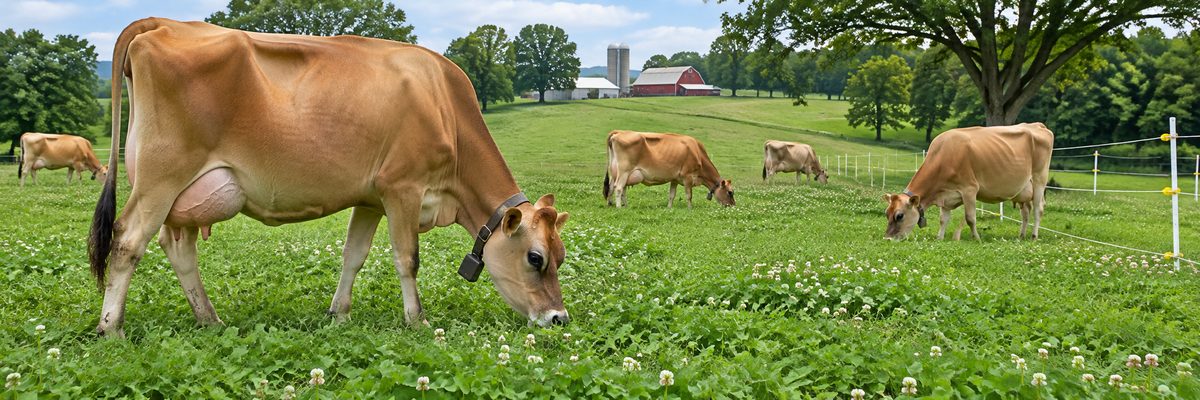
A cow turned out on one big pasture does what a cow does: eats the best bites over and over, ignores the rest and lets the good plants wear out. The pasture looks green from the road and performs like a lawn that's been mowed too short. Rotational grazing fixes that by giving cows a fresh piece of ground to eat down evenly, then moving them off so the plants can regrow.
Making the switch doesn't need a big budget. It needs a map, some temporary fence, a water plan and the discipline to move the herd on schedule even when the cows are sure they aren't done. This article walks through a first season, step by step, for a herd that's now on continuous grazing or a few big paddocks.
What changes when you rotate
Under continuous grazing, plants get nibbled before they recover. Under rotation, each paddock gets grazed hard for a short time, then rested while the plants rebuild leaf area and roots. You end up with more usable forage from the same acres, fewer weedy spots and more even manure. The tradeoff is more management: fence to move, water to deliver and numbers to watch.
Dairy cows are fussier than beef cows. A lactating cow needs consistent forage quality, which is why Penn State Extension says grazing periods for lactating dairy cows run a day or two, while beef cows and ewes can do fine with three days or more. Fresh grass at every milking is the idea, and it's why dairy rotations tend to be more intensive than beef ones.
Step 1: Walk and map the ground
Get a farm map or aerial photo and mark the acres cows can reach, the lanes to the parlor, water sources, trees, wet spots and existing fence. Walk the pasture. Note what's growing: orchardgrass, ryegrass, fescue, bluegrass, clover, alfalfa or something nobody planted. Soil type and drainage matter too, since a wet corner will pug in a rainy week no matter how clever your schedule. Your county NRCS office or conservation district can help with soil maps and may offer cost-share for fence and water.
Step 2: Decide how much of the diet pasture will be
This sets everything else. A herd getting most of its feed from pasture in good growing season needs more acres per cow than one using pasture as a supplement to a TMR. Production per cow, forage quality, season and grain supplement all shift the answer. Work with your nutritionist or extension specialist, and do not skip the part where you decide what the cows eat when the grass isn't growing. Stocking rate is the arithmetic part, and the paddock sizing below builds on it.
Step 3: Subdivide into paddocks
You don't need permanent perimeter fence everywhere on day one. Many beginners use a perimeter fence they trust and temporary interior fence (polywire and step-in posts) to cut paddocks. Start with fewer paddocks than the textbook says and add more as you learn. Two good rules:
- Size each paddock to what the herd will eat in the chosen grazing period. How big each paddock should be shows how to calculate it.
- Make the shape work for the lane. A paddock that cows can reach by a good path and drink from is worth more than a perfect rectangle in the wrong place.
For fencing details, see fencing for grazing dairy cows. A hot fence with a good charger and a good ground does most of the training work. A poor ground makes cows feel like it's optional.
Step 4: Plan rest periods and count paddocks
Penn State Extension's four-step rotational grazing guide gives a formula for the number of paddocks: divide the longest rest period you'll need by the number of days the herd grazes each paddock, then add one. Their example is a 3-day grazing period and a 35-day maximum rest, which comes to 13 paddocks. The same guide lists rest periods that vary with season and weather, shorter in a cool, moist spring and much longer in a hot, dry summer, from roughly 10 to 14 days in fast spring growth to 40 to 60 days when summer growth nearly stops.
That's why a rotation needs to be flexible and run by plant growth instead of the calendar. How long to rest a pasture between grazings explains what to look for. In spring, when grass grows faster than cows can eat it, many graziers pull some paddocks out of rotation for hay or silage, which shortens rest on the rest and keeps the surplus from going to seed.
Step 5: Sort out water and lanes
Cows that have to walk a long way for water will do less grazing and more standing in the lane. Aim for a water source in or near every paddock, and for lanes wide enough, drained enough and firm enough that cows can move at their own pace. Mud in the lane is expensive: it slows milking, hurts feet and raises mastitis risk. Details are in laying out cow lanes and water.
Step 6: Ease the cows in
Switching feeds suddenly isn't kind to the rumen. Move cows onto pasture gradually, with a source of fiber in the barn or the lane, and talk to your nutritionist about supplement while they adjust. Lush spring pasture is high in water and low in fiber, and some legume-rich stands carry a bloat risk, so ask your herd vet and extension agent how to manage it. Train cows to the fence before turning them loose on a paddock they'll be moved around in; training cows to respect fence and move smoothly covers it. A herd that knows the sound of the gate and the sight of the polywire moves in a few minutes. A herd that doesn't will explore your property line in detail.
Step 7: Measure and adjust
- Write down the date each paddock is grazed and the date the herd leaves it.
- Check pasture height before and after grazing. Penn State's worked example uses cows entering at about 7 inches and leaving at about 4, but targets vary by species and region, so confirm with your local extension service.
- Watch the cows: milk, manure, body condition and how they behave at the gate.
- Look at the plants: are you getting more of the species you want and fewer thistles?
- Adjust paddock size, move frequency and supplement based on what you see.
Where regions differ
In the Northeast and Upper Midwest, cool-season grasses and legumes grow fastest in spring and early summer, with a slump in July and August and a second flush in fall. In the Southeast and the Southwest, heat and humidity shift the season and may bring warm-season grasses, shade and cooling into the plan. In the irrigated West, water is the rest period: your schedule follows irrigation. Winter grazing and stored feed vary just as much. Your state extension dairy or forage specialist knows your local species and calendar.
Mistakes to avoid
- Going back to a paddock too soon because the cows seem to want it. They always want it.
- Making paddocks too big and then wondering why nothing improved.
- Ignoring water and lanes until the first rainy week.
- Skipping the fence charger test. Walk the line, check the voltage and fix the weak spot before the cows find it.
- Changing everything in one season. Start with part of the herd or part of the ground.
- Forgetting the backup plan for drought or a late spring.
The Penn State guide is at extension.psu.edu and is worth printing for the tables.
Quick answers
How many paddocks do I need to start?
Fewer than you think. Many herds begin with a handful and add more as they learn. The formula of longest rest period divided by grazing days, plus one, gives a target to work toward.
Can I rotationally graze and still feed grain?
Yes. Most grazing dairies supplement with grain or other feed, with amounts based on production, pasture quality and season. Your nutritionist can help balance the ration.
How long does it take to see results?
You can often see more even grazing in the first season. Gains in plant density, species and forage production usually build over several seasons, depending on soil, weather and how consistently you manage rest.