Grazing, Organic & Small Dairies
Fencing for Grazing Dairy Cows: Polywire, Netting and Wire
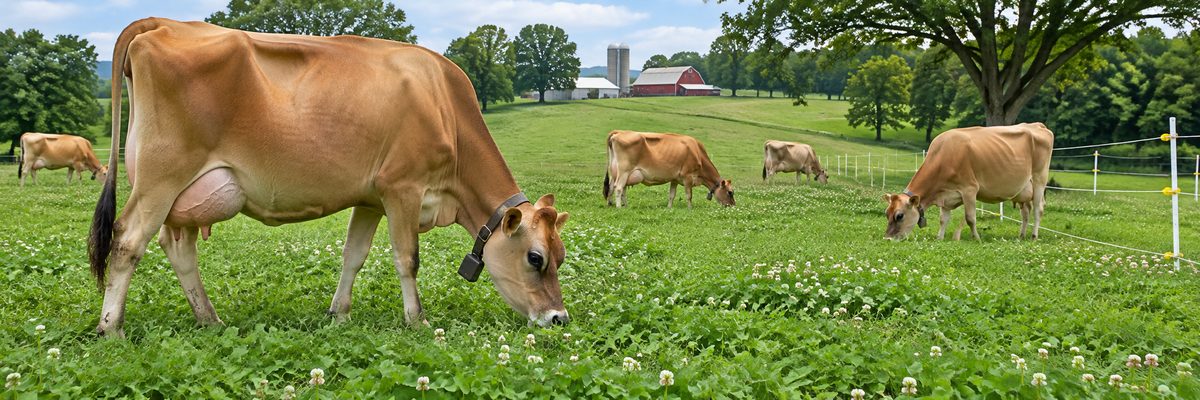
For most grazing dairies the fence answer is a mix. A permanent, electrified high-tensile wire around the outside, a lane system that keeps cows moving where you want them, and cheap, movable polywire for the paddock divisions inside. University of Minnesota Extension's fencing system design page describes the same pattern: most graziers use electrified high-tensile wire for the perimeter and polywire or other electric fence for the interior.
Dairy cows are easier to fence than many livestock because they are used to people, used to routine and, once trained, tend to respect a single strand. They are also hard on gates, because every one of them has to walk through twice a day, and they will find the one weak spot in a boundary with an accuracy that would impress a surveyor.
The three main options
| Fence type | Best use | Strengths | Watch for |
|---|---|---|---|
| Permanent high-tensile wire | Perimeter, lanes, long-term divisions | Long life, low maintenance once built, handles wind and snow better than temporary fence | Higher upfront cost and labor, needs good bracing and grounding |
| Polywire with step-in posts | Daily or twice-daily paddock moves, strip grazing | Fast to move, cheap per paddock, easy to reel in | Tangles, sags, grows over with grass and loses voltage if not kept clear |
| Electric netting | Odd corners, small areas, calves and sheep or goats | Fast to set up, visible, good in small areas | Heavy to move over long runs, snags weeds, less common for full-size cow paddocks |
Permanent wire
If you plan to keep grazing the same ground for a decade, build the perimeter once and build it right. That means solid corner and end braces, wire tensioned to stay tight, insulators that do not crack in the cold and a plan for how snow or drifting weeds will load it. The perimeter is the fence that stops a cow from ending up on a county road, so skimping here is the expensive kind of savings.
Polywire and step-in posts
Polywire is why intensive rotational grazing took off on small dairies. A reel, a handful of posts and a single strand can create a fresh paddock in a few minutes. Most dairies use one or two strands, and the setup works because cows are trained to the fence and because there is an edge of hot wire they can see and respect. The weak point is the wire itself. It carries less current than steel and it loses voltage fast when grass leans on it, so keep it clear of vegetation.
Netting
Netting is fine for temporary small areas, for young stock, or for a trial paddock before you commit to posts. For long runs around a milking herd, most dairies find it slower than a strand of polywire, and cows that lean into a hot net will leave the net in a state you would not want to untangle in the rain.
The energizer and the ground are the fence
You can build a perfect fence line and still have it fail if the energizer is too small or the ground system is poor. University of Vermont Extension, in its grazing system design considerations, says that whatever fence you choose, an electrified system needs an appropriately sized energizer and a good grounding system. That last part is where a lot of problems start.
- Size the energizer for the total length of fence and the vegetation load, not just for what it is today. Fence systems almost always grow.
- Ground it properly. Dry soil, droughty summers and winter frost make grounding harder, and poor grounding looks like a weak fence even when the energizer is fine.
- Test voltage at the far end of the line, not at the energizer, and check it again after rain, after a cold snap and after the first week of heavy growth.
- Keep a good fence tester in the truck. The back of your hand is a poor instrument.
Keep electric fence wiring and grounding away from barn and milking-system grounds, and if you see signs of tingling or cows balking at metal in the barn, a stray voltage investigation is a job for a qualified electrician or your utility, not a guess.
Dairy-specific fencing details
Gates and lane crossings
Everything funnels toward the parlor, so lane gates and crossings get hit hardest. Wire gates with a good insulated handle are cheap and fast, but a heavy-use gate near the barn deserves a proper swing gate. Laying out cow lanes and water is where you decide how many of these you need.
Wildlife and weather
Deer will run through a polywire like a finish line, and the repairs are a spring ritual in many regions. In snow country, temporary fence is usually coiled up and stored before the first hard snow, since heavy wet snow flattens polywire and posts. In the Southeast and parts of the South, fast vegetation growth means the fence line needs frequent trimming or herbicide to keep it from grounding out.
Training
A herd that has never met an electric fence will not respect it just because it is there. Train in a small area with a solid-looking fence first. Training cows to respect fence and move paddocks smoothly covers the steps, and heifers that learn on a small trial paddock are much calmer by the time they join the milking string.
If your cows ever seem to know your fence better than you do, this farm.FM piece on a smart fence and cows after Netflix access is the cautionary tale. Real fence is less entertaining and it needs the same maintenance as the dumb kind.
Budget and planning tips
- Build the perimeter first, even if it costs more than you want to spend. Everything else rides on it.
- Start with polywire for interior paddocks. You can always add permanent divisions after a season or two shows you where they belong.
- Buy more posts and reels than you think you need. Moving fence is faster when you are not stopping to reuse one.
- Pick one style of post and connectors and stay with it so repairs are simple.
- Label breaks and fix them the same day. A hole that is not fixed becomes the new gate.
The paddock size you end up with will drive the amount of fence you need, so it helps to read about how big each paddock should be before you order wire.
Quick answers
How many strands of polywire do dairy cows need?
Many graziers use one or two strands once the herd is trained, with the height set to the cows. Trained mature cows often stay in on a single strand, while a fresh group or heifers may need a second until they learn. Ask a local grazing specialist what is common in your area.
Is electric netting good enough for cows?
It can work for short stretches or small groups, but it is more commonly used for sheep, goats and calves. For full paddocks of a milking herd, polywire on step-in posts is usually faster to move.
How hot should the fence be?
Follow the guidance for your energizer and your animals, and measure at the far end of the line. A fence that tests strong at the energizer and weak at the end of the run has a problem somewhere in between, usually grounding or vegetation.