Grazing, Organic & Small Dairies
The Organic Pasture Rule: 120 Days and 30 Percent Dry Matter
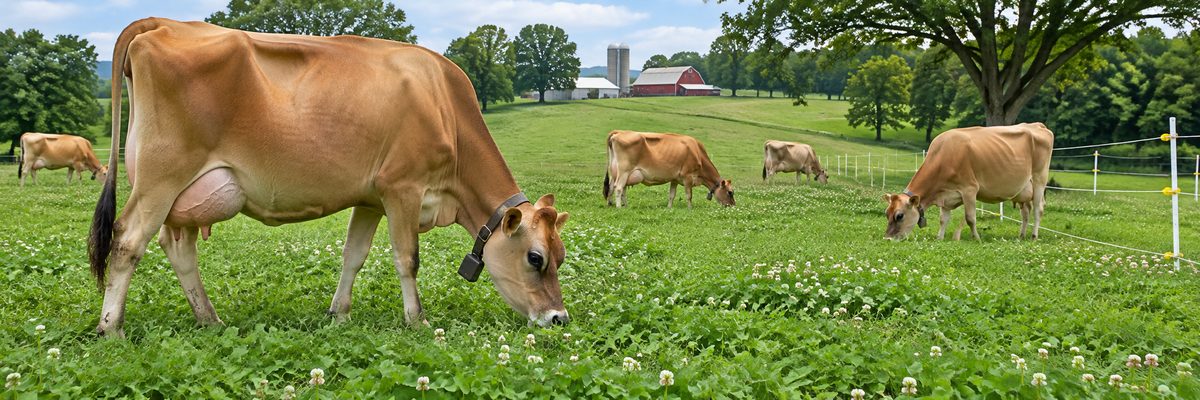
The organic pasture rule gets quoted as "120 days and 30 percent," and that shorthand is right as far as it goes. It hides three details that trip people up: the 120 days is a floor, the 30 percent is an average over the season and not a daily target, and the rule applies to dry matter, not to how many hours cows spend outside.
In plain terms, dairy cows must graze throughout the grazing season for your region, which can't be shorter than 120 days a year. Across that season they have to average at least 30 percent of their dry matter intake from pasture. Cows can be kept in for specific reasons, such as real inclement weather, health problems or calving, but being in milk and a long walk to the paddock are not among them.
Here's what the rule says, how to measure it, and how grazing dairies keep up with it.
What the rule says
The wording is in 7 CFR 205.237(c). During the grazing season, producers must:
- Provide not more than an average of 70 percent of a ruminant's dry matter demand from dry matter fed. Dry matter fed does not include dry matter grazed from residual forage or vegetation rooted in pasture. This is averaged over the whole season for each type and class of animal.
- Graze ruminants throughout the entire grazing season for the geographical region, which can't be less than 120 days per calendar year. The season may or may not be continuous, because of weather, season or climate.
- Provide pasture of enough quality and quantity to graze throughout the season and give all ruminants an average of at least 30 percent of their dry matter intake from grazing.
The 30 percent is the legal floor. Most grazing dairies that take pasture seriously run well above it, because grass is the cheapest feed on the farm. Meeting the minimum while treating pasture as an afterthought is possible, but a certifier will look at the pasture plan and the records to see that it's real.
How dry matter works
Dry matter is what's left of the feed once you take the water out. Fresh pasture is mostly water, so a cow can spend a lot of time grazing and still get only a modest share of her dry matter from grass if she's also eating a lot of dry feed. That's why the rule counts dry matter and not hours.
As an illustration only: if a cow eats 50 pounds of dry matter a day, 30 percent would be about 15 pounds from pasture, averaged over the season. Some days she'll do more, some days less, and the certifier looks at the average. Cows don't file dry matter reports, so that part is yours. Your nutritionist can help estimate pasture intake, and the pasture records need to show how you did it.
Pasture is a crop
Federal rules require pasture to be managed as a crop, in line with the land and crop rules, and to use irrigation as needed to promote growth if you have it available. That means no prohibited substances on pasture, a defined plan for fertility and seeding, and attention to erosion and riparian areas. How to start rotational grazing with dairy cows is the practical starting point.
When cows can be kept off pasture
The rule doesn't require cows to be on grass 24 hours a day or in all weather. 7 CFR 205.239 allows temporary confinement for specific reasons, and each one is written narrowly.
| Situation | What the rule allows |
|---|---|
| Milking | Short periods daily for milking, scheduled so cows still have enough grazing time to meet the dry matter requirement |
| Dry-off and calving | One week at the end of lactation for dry-off, three weeks before calving, calving itself, and up to a week after |
| Newborn dairy calves | Up to six months, after which they must be on pasture during the grazing season |
| Bad weather or danger | Inclement weather, or conditions where the health, safety or well-being of the animal could be jeopardized |
| Soil or water risk | When pasture access would put soil or water quality at risk |
| Health care | Preventive procedures or treatment of illness or injury |
| Sorting, shipping, sales | Short confinement, with continuous organic management maintained |
| Breeding | No longer than needed for natural service or AI; not to watch for heat or confirm pregnancy |
| 4-H and FFA projects | Up to a week before a fair or demonstration, through the event, and 24 hours after the animal gets home |
Two points matter on a working dairy. First, the rule says lactation itself is not a reason to deny pasture, so a high-producing cow doesn't get a pass. Second, breeding bulls are exempt from the 30 percent dry matter requirement. The regulation also says yards, feeding pads and feedlots can be used during the non-grazing season and for supplemental feeding during the grazing season, but continuous total confinement is prohibited, and they must be large enough for animals to eat without competing.
Planning a grazing season that meets the rule
- Define your grazing season in the pasture plan. Your certifier needs the dates for your region.
- Know your acres. More cows than the pasture can support means more purchased feed and a harder 30 percent. How many dairy cows per acre can pasture support? helps with that.
- Budget the supplement. Grain and stored forage are allowed, but they count against the 70 percent ceiling. See how much grain grazing dairy cows really need.
- Record every paddock move. Date, paddock, group and approximate pasture intake. The certifier needs auditable records, not recollections.
- Plan the shoulders of the season. Early spring and late fall are where farms fall short, when growth is slow and cows are hungry. Winter feeding plans for a pasture-based dairy covers the handoff.
- Write down why a cow was kept in. If she stayed in for health reasons, note it. If it was weather, note that too.
Common trouble spots
- The paddock too far away. If the paddock is so far that grazing turns into a commute, cows spend their day walking and won't graze enough. Keep milking and grazing in balance.
- Dry-season gaps. A dry summer can stall regrowth. Plan irrigation, annual forages or stockpiled grass, and keep the certifier in the loop.
- Heat. Cows often graze at night in hot weather, which is fine, but you have to show it in your plan and records. Shade and water for grazing cows in hot weather goes over the setup.
- Heavy feed. A big grain mix and a small paddock can add up to a feed ratio that can't meet the 70 percent ceiling.
The cow, for the record, did not read the regulation and has opinions about the grass in the paddock next door.
Regional notes
The grazing season depends on where you farm, and certifiers read it regionally. University of Maine Extension's organic dairy certification bulletin says certifiers in the Northeast expect animals six months and older to be on pasture from May through October, and that farms running more than two animal units per pasture acre must show they graze intensively and efficiently. Elsewhere, a longer growing season in the Southeast and Southwest can mean a longer season, while hot summers and dormant grass can create gaps. In arid irrigated regions, the rule's language about using irrigation to promote pasture growth when it's available is worth reading closely. Ask your certifier how they define the grazing season in your region before you write the plan.
Quick answers
Does the 120 days have to be consecutive?
No. The rule says the grazing season may or may not be continuous, depending on weather, season or climate, but the total can't be less than 120 days per calendar year. Your certifier will want the season defined in your plan.
Is 30 percent a daily requirement?
No. It's an average of dry matter intake from grazing over the grazing season, so a hot week or a short drought won't sink you as long as your records show the season average. Cows still need to be grazed throughout the season.
Can I keep cows in for milking and bad weather?
Short daily periods for milking are allowed, if you schedule it to leave enough grazing time. Inclement weather and animal health or safety concerns are also valid reasons to keep animals in temporarily.