Grazing, Organic & Small Dairies
How to Get Your Dairy Organic Certified, Step by Step
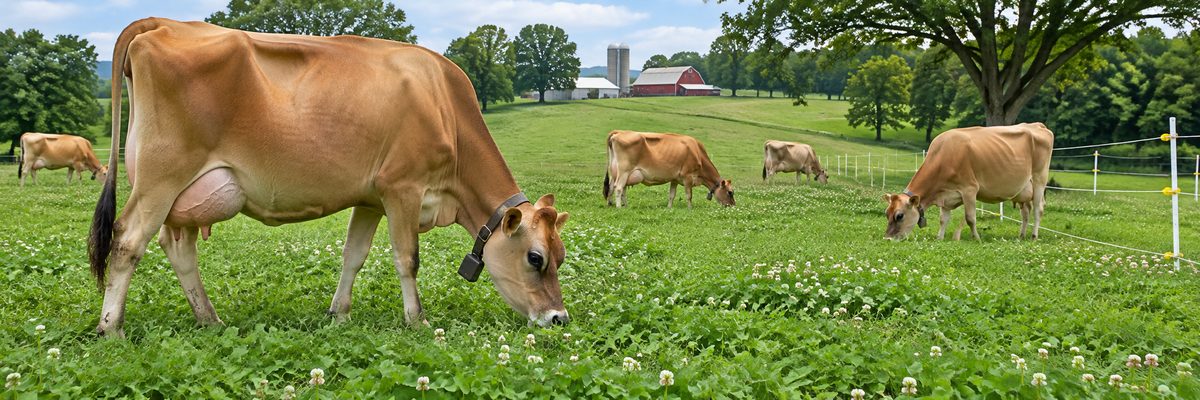
Organic certification is mostly paperwork wrapped around a lot of habits. The cows and the cropland don't change overnight (the cows would like it noted that they were fine already), but the way you prove what you do does. If you can show the certifier what you feed, where cows graze, what you treat them with and where the milk goes, you're most of the way there.
The process itself is the same for every farm. You pick a USDA-accredited certifier, apply, write an organic system plan, get inspected, and receive a certificate if everything lines up. The part that surprises dairy farms is the clock: land and animals both have transition rules, and certification doesn't start counting your milk as organic until those are met.
Here's the sequence, with the places where dairies tend to stall.
The five basic steps
USDA's Agricultural Marketing Service lays the process out on its page on becoming a certified operation. In plain terms:
- Adopt organic practices, choose a certifier and apply. You select a USDA-accredited certifying agent and send in an application and fees.
- The certifier reviews your application to see whether your practices comply with the USDA organic regulations.
- An inspector visits your operation on site.
- The certifier reviews the application and inspection report and decides whether you comply.
- The certifier issues your organic certificate.
To stay certified you go through an annual review and inspection. A USDA transition factsheet notes that initial certification can take three to six months, which is worth keeping in mind if you're lining up a milk contract. The certifier's timeline depends on how complete your application is and how busy their inspectors are.
Working through each step
Step 1: Know what you're signing up for
Before you call anyone, read the livestock and dairy rules in the federal organic regulations, which are Part 205 of Title 7 of the Code of Federal Regulations. You can read them at the eCFR page for 7 CFR Part 205. For a dairy the big pieces are these:
- Land: fields used for organic crops, including pasture, must have had no prohibited substances applied for three years before harvest. The organic dairy transition period explains the clock.
- Animals: a one-time, 12-month transition is allowed for a dairy that's not already certified and has never transitioned animals before. After that, animals must be organic from the last third of gestation.
- Feed: 100 percent organic feed, with allowed vitamin and mineral supplements.
- Pasture: ruminants must graze throughout the grazing season, at least 120 days, and get at least 30 percent of dry matter intake from pasture on average. See the organic pasture rule.
- Health care: preventive practices first, and no antibiotics or prohibited substances in animals whose milk is sold as organic. See what's allowed when cows get sick.
USDA's Organic Livestock Requirements publication is a shorter version, if you want to read before you tackle the regulation itself.
Step 2: Line up a buyer
This is the step people do last and shouldn't. Organic milk has to go somewhere, and it needs a handler or processor who's also certified and who is taking on new producers in your area. In some regions and at some times, handlers have waitlists or limit new supply. Ask your milk hauler, your co-op or your regional organic dairy network what the market looks like before you spend money on anything else. Organic milk markets: premiums, contracts and waitlists goes through what to ask.
Step 3: Choose a certifier
Certifiers are accredited by USDA but run independently, so fees, forms, and the pace of service vary. USDA lists them in the certifiers and inspectors section of its site, and the Organic Integrity Database lets you look up certified operations and certifiers. Ask a few for fee schedules and sample forms, and ask neighbors who use them.
USDA says certification fees can run from a few hundred dollars to several thousand, depending on the certifier and the size and complexity of your operation, and typically include an application fee, an annual renewal fee, a charge tied to sales or production, and inspection fees. USDA has also run cost-share programs that reimburse part of certification costs. Whether one is open to you, and how much it pays, changes, so ask your certifier and your local FSA or state agriculture office.
Step 4: Write the organic system plan
The organic system plan (OSP) is the center of the application. It describes your practices, inputs, monitoring and record keeping. For a dairy it also includes a pasture plan with maps, and, if you're transitioning cows, the dates and animal IDs. Most certifiers supply forms. Writing an organic system plan for a dairy walks through what goes in each section.
Step 5: Get ready for the inspection
The inspector will walk the land, the barn, the feed storage, the parlor and the milk house, and will review your records. They'll want to see that what you wrote in the plan matches what's happening in the barn. Records need to be good enough to trace products from purchase or production to sale, and to be kept at least five years. Expect to be asked about feed purchases, treatment logs, pasture records, and how you keep organic and non-organic products separate if you have both.
The federal rules also require certifiers to conduct some unannounced inspections each year, so keep the books current instead of tidying up the week before. An organic dairy inspection day checklist is worth printing.
Mistakes that slow dairies down
- Starting with the application instead of the plan. A half-finished OSP means a letter asking for more information, and another month of watching the mailbox like it owes you money.
- Forgetting the land clock. The cows can transition in 12 months, but the fields have their own three-year rule.
- Buying non-organic feed "just this once." The certifier will see it, probably before you finish the sentence.
- Keeping records in your head. The inspector can't audit your memory. Neither can you, after the second winter.
- Not asking about costs. Organic feed alone can change the budget, and the feed salesman will be delighted to explain how. See sourcing organic feed without wrecking your budget.
Regional notes
In the Northeast and Upper Midwest, organic dairies are more common, so there are more certifiers, inspectors and handlers with experience in dairies. University of Maine Extension's bulletin on organic dairy certification requirements notes, for example, that certifiers in the Northeast expect animals six months and older to be on pasture from May through October. In the Southeast and Southwest, heat and forage seasons change what a grazing season looks like, so ask the certifier how they handle it. In the West, irrigated pasture and large herds raise their own questions, and the handler's requirements can be as strict as the certifier's. Rules are federal, but how they're read and how fast things move can differ by certifier and region.
Quick answers
How long does organic dairy certification take?
USDA's transition factsheet says initial certification can take three to six months after you apply, but the clock that matters more for dairies is the transition: 12 months for the herd, if eligible, and three years for the land. Ask your certifier how those overlap on your farm.
How much does organic certification cost?
USDA says fees range from a few hundred dollars to several thousand, depending on the certifier and the operation. Ask for the full fee schedule, including inspection and sales-based charges, and ask whether any cost-share program applies to you.
Do I need a buyer before I certify?
Not legally, but practically yes. Certification doesn't create a market, and organic handlers can have waitlists, so get a conversation started early.