Byproduct Feeds for Dairy Cows: What Works
Distillers grains, soy hulls, brewers grains, citrus pulp and more: how to judge byproduct feeds for dairy cows on real price, storage, variability and risk.
Rations, TMR, silage and hay quality, minerals, transition feeding, feed costs and water.
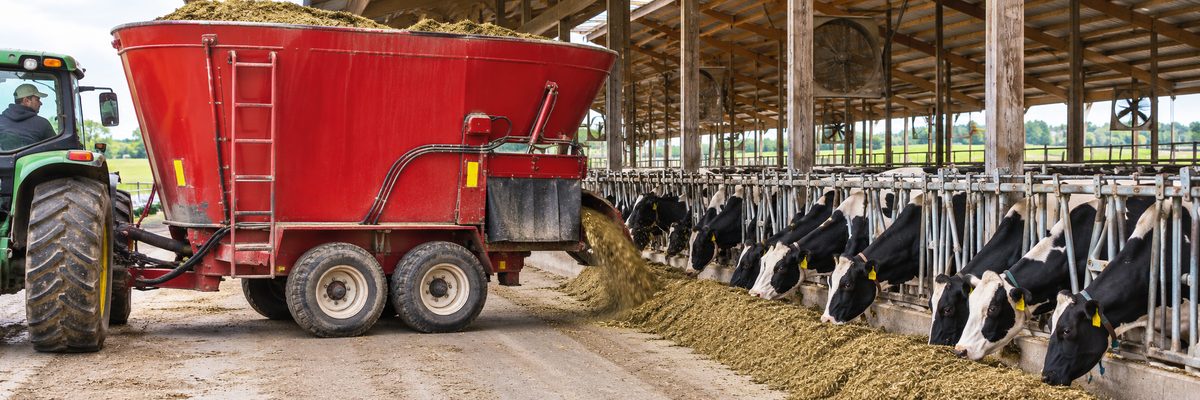
Distillers grains, soy hulls, brewers grains, citrus pulp and more: how to judge byproduct feeds for dairy cows on real price, storage, variability and risk.
A plain walkthrough of feed cost per cwt and income over feed cost, with a worked example, a table, and the usual ways dairy farmers get the math wrong.
How to feed the last three weeks before calving: ration goals, intake, minerals, anionic options, bunk management and the mistakes that cause fresh cow trouble.
How cold, wind and wet coats change what cows need, plus ration, water and frozen-feed fixes that keep Upper Midwest dairies producing when winter turns harsh.
Corn silage and haylage do different jobs in a dairy ration. Compare yield, energy, protein, cost and storage so you can decide which one your farm needs.
How often to cut alfalfa for dairy: balance yield against quality, learn the standard schedules, protect the stand in fall, and let the forage test decide.
A plain guide to dairy cow minerals: calcium, phosphorus, magnesium and the trace minerals, how to read a mineral tag, and where herd diets usually fall short.
Silage inoculants cost little per ton but results vary. Learn which bacteria do what, when they tend to pay off and how to test one on your own farm.
Stretch short forage supplies through drought with early inventory, alternative feeds, nitrate checks and a ration plan, with Northern Plains specifics.
Keep dry matter intake up when the barn heats up: when to feed, how to adjust the ration with your nutritionist, and the water and cooling that make it work.
Get fresh cows eating fast after calving: water, forage, ration steps, bunk management and warning signs to watch while milk climbs toward peak.
Feed one or two family milk cows well on a small budget with good forage, a simple grain plan, minerals and water, and learn when to call in outside help.
Learn how to estimate silage and hay needs for the winter feeding season, from herd groups and intake to shrink, silo capacity and a safety cushion.
Compare free-choice mineral feeders with minerals mixed into the TMR or grain. See why mixing usually wins for milking cows and where free-choice still fits.
Make baleage that keeps: target moisture, how many layers of wrap to use, how fast to seal bales, and the mistakes that turn a bale into a compost pile.
Understand how dairy nutritionists charge, what services you get, the difference between independent and feed-company consultants, and when the cost pays off.
Typical dry matter intake for dairy cows by stage of lactation, plus what pushes it up or down, from heat and bunk space to forage quality and sorting.
Penn State research points to pushing up feed often in the first two hours after delivery. See a practical push-up schedule and fixes for common bunk problems.
Learn to body condition score dairy cows on the five-point scale: where to look, what each score means, target scores by stage and how to adjust feeding.
Where dairy feed savings really hide: buying, shrink, refusals and ration tuning, plus the cuts that look cheap and quietly drain the milk check.
Set up a far-off dry cow diet that keeps body condition steady, meets mineral needs and gets the cow to calving in shape for a smooth, healthy freshening.
Packing density decides how much silage you lose. Get layer thickness, tractor weight, covering and sealing right so your bunker feeds clean all winter.
Decode the nutritionist's ration printout: dry matter, as-fed amounts, protein, fiber, energy, minerals and cost, and learn which numbers deserve a phone call.
How to take hay and silage samples that represent the whole lot: how many cores, which lots, bunker and bag tips, handling and labeling so lab results can be trusted.
Learn to recognize aerobic spoilage at the silage face, check temperature, set a feedout rate that stays ahead of it and fix the packing habits behind it.
Hay loses value from the day it is baled. Learn how moisture, stacking, covers, ventilation and bale type cut storage losses and keep mold out of the barn.
Learn how to read manure consistency, color and undigested particles in your pens, and what loose or lumpy piles say about the TMR and the rumen.
Alfalfa brings protein and fiber a dairy ration loves, but stands cost money and fuss. Here is how to weigh yield, quality, risk and your own ground.
How feeding, body condition and bunk management affect ketosis risk in fresh cows, what to change in the ration, and when to bring in the vet and nutritionist.
Rain on every forecast? Learn how to make decent dairy hay in a wet summer with smarter cutting, faster drying, preservatives, baleage and honest testing.
Milk fat dropped and you are not sure why? Walk through the feed causes of low butterfat and protein, from rumen pH and starch to fiber and oils.
How to spot mycotoxin trouble in dairy feed, what testing can and cannot tell you, and the storage and feeding fixes that cut exposure without guesswork.
How Northeast dairies can plan forage inventory around short seasons, wet harvests and variable weather, with hybrid choices, storage options and a backup plan.
A step-by-step look at using the Penn State particle separator on TMR, corn silage and haylage, plus target ranges and what to change when the numbers are off.
Learn what RFV, RFQ, NDF, ADF, NDFD and crude protein on a forage test mean, and how to compare hay and silage lots before they ever reach the TMR mixer.
Round or square bales for a small dairy? Compare handling, storage losses, feeding ease and equipment cost so your hay fits your herd, barn and back.
Plan trough size, refill rate, placement and cleanout so every cow in the barn gets enough clean water, including cross-alley and parlor exit waterers.
Spot subacute rumen acidosis in your herd from cud chewing, loose manure, low milk fat and sore feet, then trace it back to the ration and bunk.
Compare silage bags, bunkers and towers on cost, shrink, labor and herd size so you can pick storage that fits your dairy before the next harvest.
Plan a warm-season and cool-season forage calendar for Southeast dairies, from bermudagrass hay and haylage to winter annual silage, with tips for humid weather.
How to test dairy well water for nitrates, sulfates, bacteria and salts, when to retest, and how to read results alongside the feed your cows eat.
A practical checklist for feeding transition cows from three weeks before calving to three weeks after: body condition, bunk and ration steps to cut fresh cow trouble.
What MUN on your milk test means, the typical target range, why it swings with time of day and breed, and how to use it to spot protein feeding problems.
How much water a milking cow drinks, what pushes that number up, and why clean, plentiful water often limits milk before the ration does.
How California and Pacific Northwest dairies use almond hulls, cottonseed, citrus pulp and other local byproducts in rations, and what to check before buying a load.
DCAD explained for dairy farmers: what dietary cation-anion difference means, how anionic diets help prevent milk fever, when they make sense and how to monitor them.
A TMR blends forage, grain and supplements into one mixed ration. See how it works, what a mixer costs in labor and money, and which herds benefit most.
Learn how much feed refusal to leave, what it costs, and the safe ways to handle weigh-backs, from older heifers to the compost pile, without hurting fresh cows.
Time corn silage harvest by whole-plant moisture, kernel milk line and storage type so the pile packs, ferments clean and feeds well all winter.
Cows pick the grain and leave the stems. Find out why sorting happens in a TMR and how particle size, moisture and mixing changes can cut it down.
Cows eat in meals that follow milking, fresh feed and the weather. See why timing shapes what they pick at midnight and how to adjust feeding, push-ups and heat plans.