Grazing, Organic & Small Dairies
Irrigated Pasture Dairies in the West: What Works
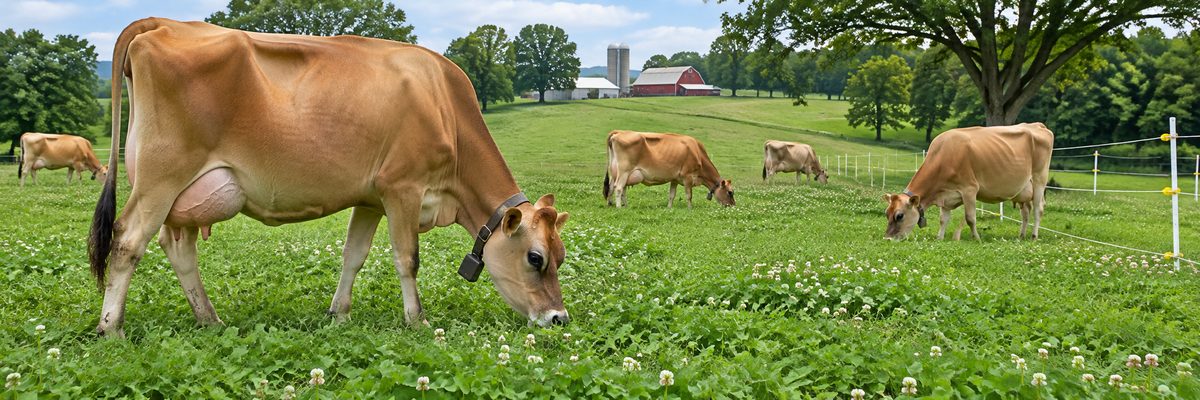
In the West, the grass doesn't grow because it rained. It grows because someone opened a headgate at the right time, and the rest of the dairy is organized around that fact. Water is the first input, the biggest cost and the one thing you can't buy more of at the feed store.
Irrigated pasture can feed a grazing dairy very well, from the mild, wet coastal valleys of Oregon, Washington and northern California to the high, short-season valleys of Idaho, Montana, Colorado and Utah. What changes by region is the length of the growing season, the source and legal status of the water, and how much winter feed you have to put up. This article lays out what tends to work and where to ask local experts, because water law and agronomy here are intensely local.
Start with the water
Before you buy cows, find out what water you actually have. That means a legal right, a delivery system and an amount that holds in a dry year. Western water rights are governed by state law and often by ditch companies or irrigation districts, and rules about priority, shares and curtailment can change what you can irrigate in July. Ask your state water resource agency and your irrigation district what your land is entitled to, and what happens in drought. Don't assume that a pasture that looks green in May will be green in August.
Then look at the delivery method:
- Flood or border irrigation is cheap and common in older systems, but it's labor-heavy and often less efficient. Uneven fields get uneven results.
- Wheel lines and hand lines are affordable and portable, and work on small acreages. They take labor to move, a chore that is nobody's favorite in the heat.
- Center pivots and solid-set sprinklers give uniform coverage and low labor, but have higher capital and energy costs and don't suit every field shape.
Your local NRCS office and irrigation specialists at your land-grant university can help with system design, scheduling and cost-share programs.
Scheduling irrigation around grazing
Irrigation and grazing have to take turns. Sprinkler water on a paddock the herd needs tomorrow creates mud, compaction and unhappy cows. A common approach is to irrigate a paddock right after grazing, so it regrows with moisture and is dry and firm by the time the herd returns. Flood systems are harder to coordinate and sometimes need dry-down time before cows can go back in. Pasture that's soaked at grazing time loses plants to pugging, so build in extra rest where needed.
The rotation itself follows the basics in how to start rotational grazing with dairy cows, with a Western twist: the rest period is set by irrigation and heat as well as by plant growth. Paddock size and fencing choices are covered in how big each paddock should be and fencing for grazing paddocks.
Grasses and legumes that work
Irrigated Western pastures often combine cool-season grasses like orchardgrass, tall fescue, perennial ryegrass, meadow fescue, and Kentucky bluegrass with legumes such as white clover. Mild coastal areas favor perennial ryegrass and clover mixes, which can grow nearly year-round. Higher, colder valleys favor winter-hardy species like orchardgrass, meadow brome and timothy. Species choice depends on elevation, soil, salinity and water quality, so check with local extension. Best pasture mixes by region gives a broader overview.
Legumes bring protein and nitrogen, but lush clover or alfalfa pasture carries bloat risk, so read bloat prevention on clover and alfalfa pasture and talk to your vet about your risk level. Mixed stands, moderate legume proportions and not turning hungry cows onto lush legume stands are common ways to reduce the risk.
Regions at a glance
| Region | Strengths | Main challenges |
|---|---|---|
| Pacific Northwest and North Coast | Mild weather, long grazing season, strong grass growth | Winter wet and mud, high land costs, regulation |
| California valleys | Long season with irrigation | Water costs, heat, regulation, competition with large dairies |
| Intermountain West (Idaho, Utah, Colorado, Montana) | Productive irrigated land, cool nights | Short season, long winter, water curtailment |
| Southwest high desert | Sun and long season | Water cost, heat, drought |
Short seasons, long winters
In the mountain valleys, the grazing season may be five or six months, and the winter feeding period is long. That puts the weight of the budget on stored feed, and the surplus from the spring flush has to be harvested as hay or baleage. Irrigated hay ground may be an enterprise of its own. Frozen water lines and calving on snow are normal. In these places, the economics lean on winter feed cost, milk market access and how far the milk truck has to go. Distance to a processor matters in the West, where plants can be hours away, and some small dairies add value by processing on farm. Winter feeding plans for a pasture-based dairy and low-cost parlors for small grazing dairies help with the cost side.
Mineral and water quality notes
Some Western soils and waters are high in salts, sulfates or certain minerals, or low in others such as selenium, depending on where you farm. Test irrigation water and forage, and talk with your vet and nutritionist about what your herd needs. Hard water also affects cleaning in the milk house, which is a separate headache.
Mistakes to avoid
- Buying land without verifying the water right and delivery schedule.
- Irrigating the paddock the cows are about to graze.
- Planting a species not suited to your elevation, salinity or winter.
- Counting on a full irrigation season in a drought year without a backup feed plan.
- Letting the water bill be a surprise. Pumping energy in particular adds up.
For research-based advice, University of Idaho Extension, Oregon State University Extension and UC Agriculture and Natural Resources have forage, irrigation and dairy resources for their regions.
Quick answers
How many cows can an irrigated acre support in the West?
It varies a lot with climate, water, grass and management, so there's no safe single number. Start from your local extension's forage production estimates and adjust after a season of watching your own paddocks.
Is irrigated pasture cheaper than feeding hay?
Often, but not always. It depends on water and pumping costs, labor and what you can grow. Compare the cost per ton of dry matter, including irrigation, against the price of the feed you'd buy.
Do I need a water right to irrigate pasture?
Generally yes, and the rules are set by your state. Contact your state water resource agency and irrigation district before purchasing land or planning an expansion.