Grazing, Organic & Small Dairies
Goat Milk vs Cow Milk: Real Differences for Producers
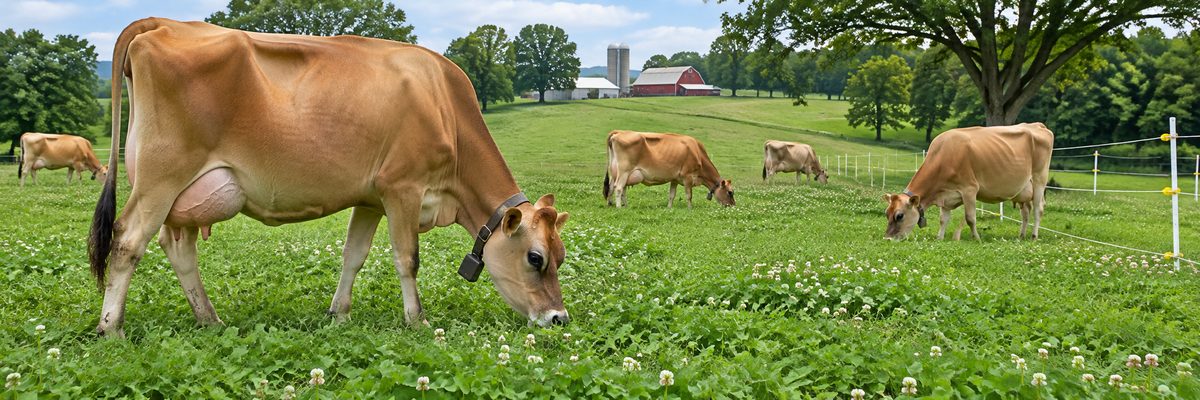
Goat milk and cow milk are closer than the marketing suggests and further apart than the cheese counter lets on. Both are mostly water, fat, protein and lactose. The ranges overlap heavily. What differs is the volume each animal gives, the way the milk behaves in a vat, the market you can reach and the amount of work behind each gallon.
For a producer, the main question is not which milk is better. It is which animal fits your land, your labor and your buyers. A cow gives many times the volume. A goat gives a smaller amount from a much smaller animal, and some of the economics favor the little one in the right setting.
Here is how the two compare on the things that show up on a milk check or in a cheese vat, with the usual caution that individual animals vary more than breed averages.
Composition: overlapping ranges
A Mississippi State University Extension fact sheet comparing dairy goats and dairy cows gives these composition ranges, and notes that they vary with breed, diet and stage of lactation.
| Component | Goat milk | Cow milk |
|---|---|---|
| Total solids | 12.0 to 15.4% | 12.3 to 15.6% |
| Fat | 3.2 to 6.0% | 2.7 to 4.8% |
| Protein | 3.0 to 3.8% | 2.8 to 3.9% |
| Lactose | 3.6 to 4.8% | 4.2 to 5.2% |
| Somatic cell count (thousands per mL) | 200 to 1,000 | Under 750 |
Goat milk tends to run a little higher in fat and a little lower in lactose, though the ranges overlap so much that a rich Jersey and a modest Alpine can look alike on paper. Another thing to notice is somatic cell count. Goats naturally run higher counts than cows, because of the way goat milk is secreted, so a number that would worry you in a cow tank does not mean the same thing in a goat tank. If you sell to a buyer, ask what limits apply to goat milk, since they are usually set differently from the cow standards.
Protein, fat globules and the digestion question
Goat milk has a loyal following among people who find cow milk hard to handle, and the claims are loud. The Mississippi State fact sheet says goat milk has lower levels of one casein protein, alpha-s1 casein, than cow milk, and describes it as easier to digest. Penn State Extension's dairy goat production publication adds that goat milk's smaller fat globules stay suspended longer, which gives the impression of natural homogenization, and that people with cow milk allergies can often drink goat milk. It also says scientific evidence does not support most of the health claims made for it.
The practical advice for a producer is to sell the milk for what it is and let customers sort out their own health decisions. Do not promise that it cures eczema, asthma or a bad week. Regulators dislike those claims, and so do your insurance carrier and your lawyer. Anyone with a true milk allergy should talk to a doctor before swapping species, since the two milks are not interchangeable for allergic people.
Yield and the animal
Volume is where the two part ways. A Holstein cow in a commercial herd gives several gallons a day through most of her lactation, and a top cow gives more. The extension average figures for goat breeds run in the range of roughly 1,800 to 2,600 pounds per lactation for common US dairy breeds, which works out to a few quarts to a gallon or more a day for a good doe. You can find those breed averages in the Alabama Cooperative Extension dairy goat guide, and the breed-by-breed numbers are laid out in dairy goat breeds compared.
The milking itself differs too. A goat has two teats and a cow has four. The Mississippi State publication points out that most of a goat's milk is stored in the gland cistern, which makes milking easier, while a cow stores more of her milk in the alveoli and needs stimulation to let it down. It also says goats are smaller and easier to handle but more social and playful, which can make milking difficult. A cow might not move when you ask. A goat will have already moved, climbed the stand and be eyeing your jacket.
Feed, land and housing
| Factor | Goats | Cows |
|---|---|---|
| Space per animal | A few dozen square feet of bedded and exercise space (see starting a dairy goat herd). | A freestall, tiestall or pack per cow, plus feed bunk space and alleys. |
| Fencing | Demanding. Goats test everything. | Easier, but still not free. |
| Feed | Browse, pasture and hay, with grain for high producers. Feeding dairy goats goes into it. | Large amounts of forage and a more complex ration at larger scale. |
| Capital for a start | Lower per animal, easier to scale down. | Higher per animal, equipment and housing are bigger investments. |
| Labor per gallon | Higher per unit of milk, since each animal gives less. | Lower per unit of milk once milking is mechanized. |
The point of that table is that goats win on entry cost and flexibility, and cows win on volume per hour of labor. Whether that works for you depends on whether you value a small start or a large output.
Markets and pricing
Cow milk has a huge, structured market: co-ops, processors, federal milk marketing orders and futures-based pricing, which you can read about in how federal milk marketing orders work. Goat milk has a much smaller market with far fewer buyers. Prices are usually negotiated with a processor or set by the buyer's own program, and the options often depend on region: some areas have a goat cheese plant nearby and some have nothing for a hundred miles.
For a small producer the common paths are:
- Sell to a processor. Where a goat milk buyer exists, it is the least regulatory work, but the buyer's terms and haul schedule set the rules.
- Make cheese or yogurt on the farm. Goat milk is popular for cheese, and a farmstead operation can add value. Start with farmstead cheese basics, and get the licensing right.
- Sell fluid milk. Pasteurized sales require licensing, and raw milk rules differ by state, as in raw milk laws by state.
- Sell animals. Does, kids and 4-H project goats are a real side market in many regions.
Do your homework on prices in your region before building a plan around them. A goat milk price that looks great in a magazine can vanish when the only buyer is three hundred miles away.
Which fits your farm
- Choose goats if you have limited acreage, want a low-cost start, plan to make cheese or sell directly, or have the time and temperament for a lot of small animals.
- Choose cows if you want volume, have the land and forage, have a processor or co-op to take the milk, or want to build toward a larger herd.
- Consider both only if you enjoy chaos. Many farms do keep a few of each, and each has its own parasite, nutrition and facility needs.
Quick answers
Is goat milk healthier than cow milk?
The two are similar in composition, and extension sources say the scientific evidence does not support most health claims made for goat milk. Some people tolerate it better than cow milk, but anyone with a milk allergy should check with a doctor first.
Does goat milk have more butterfat than cow milk?
Often a little, though the ranges overlap. Nubian goats and Jerseys can both produce rich milk, while Holsteins and some goat breeds run lower in fat.
Can I sell goat milk the same way as cow milk?
The same basic rules apply, since pasteurized and raw milk are both regulated, but the buyers, prices and some testing standards differ. Check your state agency and the processors in your area before committing to a plan.