Why Cows Sort Their Feed and How to Stop It
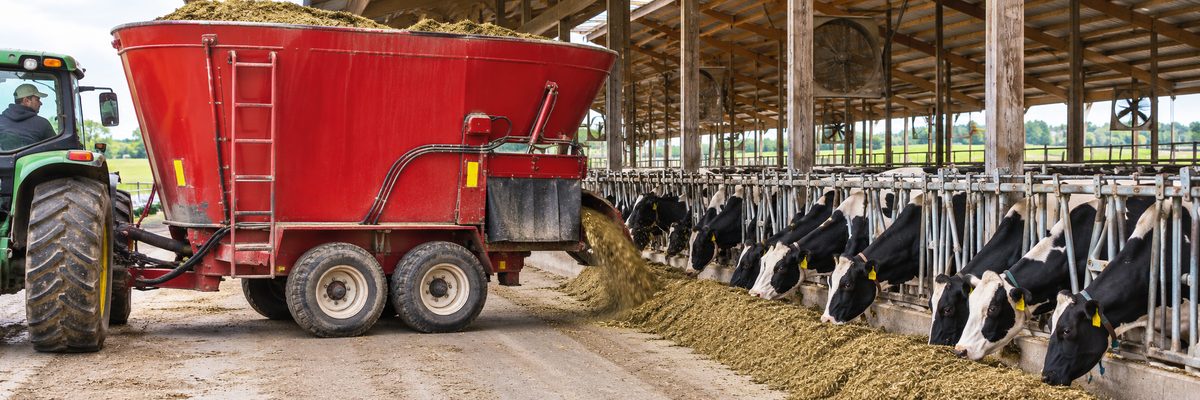
A total mixed ration is supposed to deliver the same bite to every cow every time. Cows did not read that part of the brochure. Give a Holstein a pile of mixed feed and she will use her tongue and muzzle like a pair of tweezers, pulling out the fine, sweet, grain-heavy pieces and shoving the long stems aside for someone else.
That is sorting, and it quietly wrecks a well-balanced ration. The cows that sort get too much starch and too little fiber. The cows behind them get the leftover long stuff. Your nutritionist formulated one diet, and the pen is eating three.
The fix usually comes down to particle size, moisture and how the feed is mixed and delivered. None of it is glamorous, and all of it pays.
Why Sorting Hurts
University of Kentucky extension explains the pattern well. The more aggressive eaters, and those first to the bunk, pick the concentrate particles. That leaves them short on chewable fiber. Cows coming behind get a mix higher in fiber and lower in energy. Those are often the timid cows, the heifers and the early-lactation animals, which are exactly the cows you can least afford to under-feed.
Penn State adds another angle. When a TMR carries a lot of dry, long forage, sorting gets more extensive, and cows that favor small, grain-rich particles can build up organic acids in the rumen and lose buffering. That is the setup for subacute rumen acidosis, which shows up later as low fat tests, loose manure and sore feet.
There is a money side too. A sorted ration looks fine on paper while the cows eat something different, so the milk check does not match the formula.
What Causes It
- Long, dry forage. Kentucky extension notes sorting is common in herds feeding around 10 pounds or more of hay in the ration, especially lower-quality hay. Their TMR guidance flags sorting concerns when hay runs above roughly 7 pounds per cow per day.
- A dry mix. When the ration is too dry, fine particles and grain separate from the forage. With wet feeds, grain sticks to the forage and sorting drops.
- Uneven mixing. Chunks of hay that never broke down, clumps of wet byproduct, and ingredients that sit in the corner of the mixer all give cows something to pick through.
- Too much feed left over. The bigger the refusal pile, the more chances cows have to pick and choose.
- Long gaps between deliveries. Hungry cows are more competitive, and competitive cows are more selective.
- Crowded bunks. If there is not room for every cow at once, the bossy cows eat first and sort hardest.
How to Tell If Your Cows Are Sorting
Watch them eat
Stand at the end of the alley an hour after feeding. Cows that are sorting dig and toss, nosing through the feed with their heads swinging. It is the same motion a toddler uses on a plate of vegetables.
Check the leftovers
Compare what is left in the bunk to what went in. Long stems, cobs and chunks of hay in the refusals mean the cows picked the rest.
Use a particle separator
The University of Wisconsin dairy team recommends testing with a Penn State Particle Separator right after feed is delivered and again later, so you can see how the mix changes as cows eat. Do it at several spots along the bunk. If the top screen holds more fiber in the later sample than in the fresh one, sorting is happening. How to run the test is in checking particle size with the shaker box.
Look at the manure
Large pen-to-pen or cow-to-cow differences in manure point to unequal diets. Use the method in manure scoring for the ration.
Ways to Reduce Sorting
Adjust forage length and quality
Very long hay is the usual culprit. Chop or process dry hay shorter, or cut back the amount of hay in the mix. Replacing some of the hay with silage helps, since silage is moist and sticks together. Your nutritionist can help rebalance fiber if hay comes down.
Add moisture
A TMR that is too dry will separate. A little water, or a wet feed such as a liquid or wet byproduct, helps fine particles cling to the longer pieces. Do not drown the ration, though. A soggy mix hurts intake and ferments in the bunk. Check dry matter on silage and byproducts at least a couple of times a month, as Kentucky recommends, and adjust when it rains on the silo face.
Mix for the right time
Most mixers do well with roughly three to six minutes once everything is in, according to Kentucky extension. Overmixing pulverizes the forage and creates a different problem, a ration with too little effective fiber. Undermixing leaves clumps. Watch the mixer and follow the order of loading your nutritionist recommends.
Deliver feed on a steady schedule
Penn State Extension reports that when feed was delivered twice a day, feed was available more throughout the day and less of it was sorted out. More frequent delivery can help in heat stress, when cows eat in bursts. Reading about how often to push up feed can help you set a rhythm.
Keep refusals small and consistent
Leaving a little feed in the bunk keeps cows from running out, but a mountain of leftovers invites picking. Penn State suggests refusal targets in the low single digits for most groups. See what to do with refusals and leftovers for handling them safely.
A Simple Troubleshooting Order
- Sample fresh TMR from the start, middle and end of the bunk with a particle separator.
- Sample the same spots two or three hours later.
- Check the dry matter of the mix and of the wet ingredients.
- Look at the amount and length of hay in the ration.
- Review mixing time and loading order.
- Check bunk space, headlock or rail access, and delivery times.
- Re-test a week after any change.
What Not to Do
- Do not simply add more hay. Cows will sort that out too.
- Do not chase it with a bigger mixer. A mixer that is overfilled mixes worse, not better.
- Do not ignore the cow that always has a pile of fines at her feet. She is telling you something, and she will keep telling you at every feeding.
- Do not reformulate before you measure. A ration that looks wrong on paper is often right on paper and wrong in the bunk.
Sorting looks different across regions. Southeast and Southwest herds fight it hardest in the heat, while Upper Midwest and Northeast herds tend to see it when hay or dry feeds go into winter rations. For a deeper read, see Kentucky's guide to managing the total mixed ration.
Quick answers
Can you ever stop sorting completely?
Not completely. Cows are built to select, so aim to reduce it to a level where every cow still gets close to the formulated diet. A particle separator on fresh and leftover feed shows how close you are.
Does adding water to a TMR stop sorting?
It often helps, because grain and fines stick to the forage. But too much moisture hurts intake and spoils the feed faster, so work with your nutritionist on the right level for your ration.
Should I feed less hay to reduce sorting?
Often yes, especially when the hay is long and dry. Replace it with something chopped or moist, and keep the total fiber in the ration where your nutritionist wants it.