How Much Dry Matter Does a Dairy Cow Eat
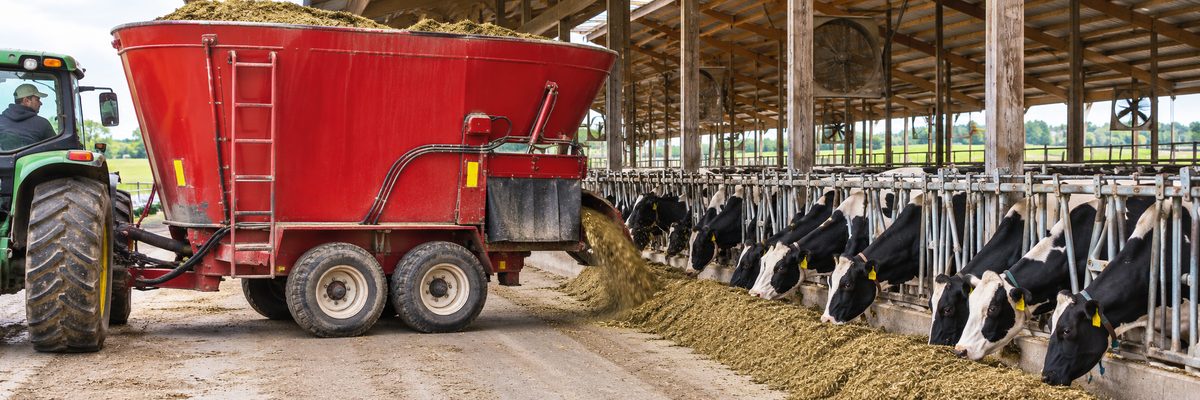
Ask a nutritionist how much a cow eats and you will get a number in pounds of dry matter, not pounds of feed. That is because a ton of corn silage and a ton of dry hay are very different amounts of actual nutrition, and the water in the silage does not feed anybody. Dry matter intake, or DMI, is the amount of feed left after you take the water out.
A mature, high-producing Holstein in the middle of lactation commonly eats somewhere in the range of 3 to 4 percent of her body weight in dry matter each day. For a cow around 1,500 pounds, that works out to roughly 45 to 60 pounds. Smaller breeds like Jerseys eat less in total, though they often eat more relative to body size. Dry cows eat quite a bit less, and fresh cows eat less than their milk would suggest. Those ranges are rules of thumb, not guarantees, and your nutritionist's ration software will have a more specific prediction for your cows.
What matters more than any textbook number is whether your own cows are eating what your ration was built around. A ration is a promise to the cow, and DMI is how you find out whether she believed it.
Intake by stage of lactation
| Stage | Typical intake pattern | What to watch |
|---|---|---|
| Dry cow, far-off | Lowest of the herd, often around 2 to 2.5 percent of body weight | Overfeeding energy, which sets up trouble later |
| Close-up (last weeks before calving) | Often drops as calving approaches | Sudden drops that suggest illness or a ration problem |
| Fresh (first weeks) | Climbs, but slower than milk | Cows that stall out; early signs of ketosis or other disease |
| Early lactation | Rises toward peak over many weeks | Peak intake arrives after peak milk |
| Mid lactation | At or near the highest sustained intake | Body condition drifting up |
| Late lactation | Gradually eases as milk falls | Cows getting too fat before dry-off |
The key idea here is the lag. A cow hits peak milk a few weeks after calving, but she does not hit peak intake until later, often well into the second or third month. In between she is pulling energy off her own body, which is why the first month after calving needs so much attention. Feeding fresh cows in the first 30 days covers how to help her through that gap, and the transition cow feeding checklist shows how to start before she calves.
What pushes intake up
- Good forage. Digestible, well-preserved forage that cows like to eat. Poor forage fills the rumen without feeding the cow.
- A consistent ration. Cows eat more when every bite tastes about the same as the last one.
- Fresh feed and frequent push-ups. Feed that is available when cows come to the bunk, covered in how often to push up feed.
- Comfortable cows. A cow that is lying down enough has time and energy to eat.
- Enough bunk space and low competition. A cow cannot eat what she cannot reach. First-calf heifers in overcrowded pens often lose at the bunk.
- Clean, plentiful water. Intake and water intake rise and fall together. Water needs of dairy cows is worth a read before blaming the ration.
- Cool weather. Cows love a cool snap and will eat accordingly.
What pulls intake down
The list is long, and the cow is never short of reasons to stand at the bunk and stare at you.
- Heat stress. Hot, humid weather cuts intake, and cows shift their eating to cooler hours. Southeast and Southwest herds see this hard, and Upper Midwest herds see it in July. Feeding dairy cows in hot weather covers what to change.
- Wet, heavy, or fermented feeds. Silage that is very wet or has gone through a poor fermentation can limit intake.
- Spoiled or moldy feed. Heated silage, moldy hay, or mycotoxins make cows back off.
- Sorting. Cows that pick out the grain and leave the long stems do not eat the ration you formulated, even if the pounds look right.
- Acidosis and other digestive upsets. Cows that feel off their rumen will go off feed.
- Disease and pain. A cow that suddenly eats less is telling you something. Lameness, mastitis, a displaced abomasum, and other problems all show up in the bunk first.
- Stress and change. Moving pens, social stress, and sudden ration changes all trim intake.
- Dirty feed bunks or poor water. Cows are picky, and they vote with their mouths.
How to figure out what your herd eats
Most dairies do not weigh each cow's feed. You work with pen-level numbers:
- Weigh what goes into the mixer for a pen. The feeding records from your TMR mixer or scale are the best source.
- Weigh refusals, the feed left in the bunk the next day. What to do with refusals and feed leftovers covers the best ways to handle them.
- Subtract refusals from what was fed to get the amount eaten, as fed.
- Take a dry matter sample of the feed, since the water content changes with weather and forage, and convert as-fed pounds to dry matter pounds.
- Divide by the number of cows in the pen to get average DMI per cow.
That average hides variation, so use it as a trend line. If a pen's DMI drops by a few pounds after a rainstorm, a feed change, or a heat wave, you want to see it the same day, not in the milk tank a week later. Penn State's Dairy Sense piece on predicting dry matter intake compares prediction approaches if you want to look under the hood of the equations.
Putting the number to work
DMI feeds into everything else on the ration printout: how much nutrient each cow actually gets, how much each pound of feed costs, and how much milk you can expect. If predicted intake in the ration is higher than what cows actually eat, then the nutrients per pound were set too low for your cows, and they will fall short even though the ration looks correct on paper. If you are working with a nutritionist, give them real intake numbers rather than letting the software guess. How to read a dairy ration report shows where that number sits on the page.
Also, a cow that is eating less than expected is not being rude. She is giving you a free diagnostic that no lab can charge for. Do not let it go to waste. For general nutrition resources from a land-grant source, see UW-Madison dairy extension.
Quick answers
How many pounds of feed does a dairy cow eat a day?
As fed, it depends on how wet the feed is, so the number can look much bigger than dry matter. A mid-lactation Holstein commonly eats in the range of 45 to 60 pounds of dry matter, but your nutritionist can give you a target for your herd.
Why do fresh cows eat less than expected?
Intake rises more slowly than milk after calving, and fresh cows are also dealing with calving stress, possible metabolic disease, and adjusting to a new ration. Watching intake closely in the first weeks helps catch problems early.
Does hot weather change how much a cow eats?
Yes, heat stress cuts intake and changes when cows eat. Shade, fans, sprinklers, and shifting feed delivery to cooler hours can all help, and your nutritionist may adjust the ration for it.