How Often Should You Push Up Feed
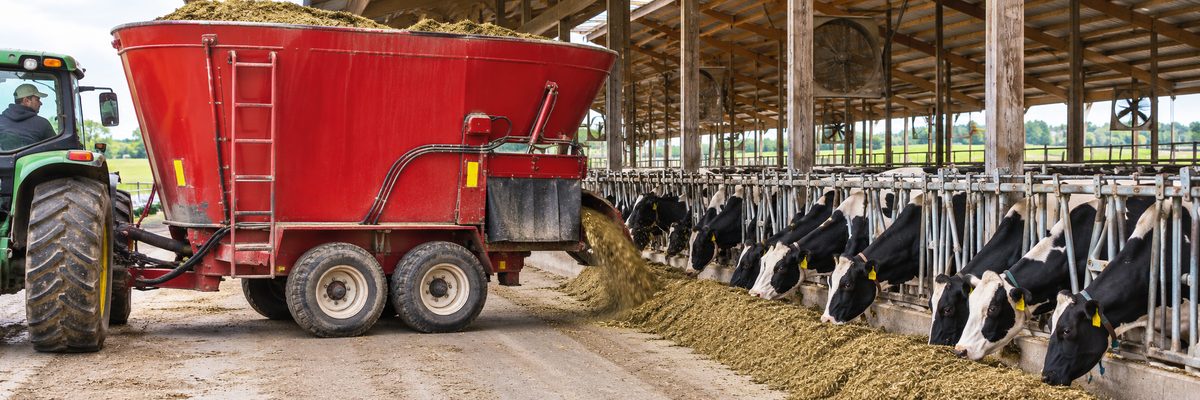
Pushing up feed is the least exciting chore on a dairy and one of the better returns on your time. Cows pull feed out of reach, and a cow will not stretch her neck for a ration she can see but not quite touch. She'll stand there looking at it. Then she'll go lie down.
The short answer from Penn State Extension is that feed push-ups matter most in the first one to two hours after fresh feed goes out, and a common recommendation is to push it up about every half hour during that window. After that, the schedule depends on your barn, your labor and whether feed is within reach.
Here is how to build a schedule that actually fits your dairy, and what to do if there are not enough hands.
Why Push-Ups Pay
Penn State describes pushing feed as perhaps the simplest and least expensive management strategy a dairy can use. They point to herd data showing that herds that routinely pushed feed up produced over eight pounds more milk, on average, than herds that did not. Those herds differ in other ways too, so do not expect that exact gain on your own farm, but the direction is clear.
The same article makes the case with arithmetic. One pound of dry matter intake is worth around two pounds of milk for Holstein cows. Intake is what pays the bills, and push-ups keep it high by keeping feed inside reach and by getting cows back to the bunk.
Cows are also social eaters. Fresh feed, a push-up and milking are the three events that stir them to eat. Fresh feed is the strongest, but it has limits, and a push-up is the cheapest follow-up.
A Practical Schedule
Penn State's list of low-cost steps to raise intake by about a pound per cow per day includes feed available on demand, TMR fed twice a day, push-ups every half hour for the first two hours after feeding, a bunk empty no more than three hours, and a refusal target around 3 percent.
| Time after fresh feed | Push-up frequency | Why |
|---|---|---|
| 0 to 2 hours | About every 30 minutes | Cows are most competitive and eat the most |
| 2 to 6 hours | Every hour or two, or as needed | Keep feed within reach while cows rest and ruminate |
| 6 hours to next feeding | At least once or twice, including before the last milking | Prevents an empty or unreachable bunk |
| Overnight | One late push-up before staff leave, or a mechanical pusher | Long overnight gaps lower intake |
This is a starting point. Penn State notes that pushing twice an hour rather than once an hour in the first two hours after delivery raised milk yield by about 4 pounds per cow per day with no loss of resting time, in one set of trials. The point is that the first two hours are where extra effort pays most.
Watch the Clock on Empty Bunks
The Penn State article recommends that cows not go more than about three hours without feed. After that, cows get hungrier, eat bigger meals and compete harder. In one study they cite, a bunk that was restricted or empty for about ten hours, usually overnight, cut intake by around 3.5 pounds per day, while cows with open access through the night gave more milk and spent more time lying down.
A big hungry meal is also a risk for the rumen. Cows that gorge after a long gap can drop their rumen pH, which is part of the subacute acidosis picture. Steady access beats big swings.
How Many Fresh Deliveries?
Push-ups work alongside delivery frequency. Penn State says twice-daily delivery is preferred under most conditions, since it kept feed available more of the day, reduced sorting and increased intake and milk in the study they cite. Feeding four or five times a day, by contrast, reduced dry matter intake and lying time in other work.
In hot weather, it is a different story. More frequent delivery can reduce sorting and improve intake during heat stress. Where twice-a-day feeding stays in place, Penn State suggests splitting it about 40 percent in the morning and 60 percent in the evening, since cows eat more after the day cools off. Southeast and Southwest herds should plan around this, and the notes in feeding dairy cows in hot weather go deeper.
Barn Design Changes the Answer
- Freestall barns with headlocks or a rail: The feed lane gets messy fast, and cows reach only so far. Push-ups matter most here.
- Tie-stall and stanchion barns: Cows eat from a manger that is closer to them, but feed still drifts. Check it between milkings.
- Grazing dairies with supplemental TMR or grain: A feed pad or feed lane works the same way. Feed spread thin on a wide pad needs more attention than a tight bunk.
- Robotic dairies: Cows come and go on their own schedule, so feed needs to be reachable all day. Many robotic dairies use an automatic pusher.
- Large western dairies: Long bunks and big pens often rely on feed trucks and mechanical pushers on a set schedule.
When Labor Is Short
If you cannot walk the bunk every half hour, prioritize.
- Put the extra effort in the first two hours after feeding.
- Push up the fresh-cow and high-producing pens first. They are the ones with the most to lose.
- Assign one person to push up during milking changes, when everyone is already in the barn.
- Consider a mechanical or automatic pusher. The payback depends on labor cost and barn size, so price it out rather than guessing.
- Reduce wasted trips by checking whether feed is actually out of reach. A bunk that still has feed at the headlocks does not need pushing.
Cows will let you know if you are getting it wrong. They simply stand at the bunk, look at the feed that is out of reach, and let it sit there. This is the dairy version of a very quiet protest.
Mistakes to Avoid
- Pushing feed up while cows are mid-bite, which spooks them off the bunk.
- Pushing too hard and packing feed against the headlocks so cows can't pull it out.
- Pushing only before milking and ignoring the long stretch after.
- Skipping push-ups on Sundays and holidays, then wondering why the Monday milk dropped.
- Leaving the bunk wet and spoiled in the corners while pushing fresh feed on top.
For more on the research, see Penn State's article on timely feed delivery and push-ups. Your nutritionist can also help you match a schedule to your barn. Related reading: how much dry matter a dairy cow eats and what to do with refusals.
Quick answers
How many times a day should you push up feed?
There is no single number. A common pattern is every 30 minutes for the first two hours after delivery, then a few more times through the day and one late push-up before the night. Adjust to what the bunk and cows tell you.
Does pushing up feed really raise milk production?
Penn State reports that herds that routinely push feed up average more milk than those that do not, and that pushing twice an hour instead of once in the first two hours raised yield in one study. Results vary by barn, so track your own intake and milk.
Is an automatic feed pusher worth it?
It can be, especially where labor is tight or cows need feed through the night. Compare the cost with the labor you spend and the intake you are missing, and ask your nutritionist what intake looks like on your dairy.