Ketosis and Feed: How Ration Changes Help
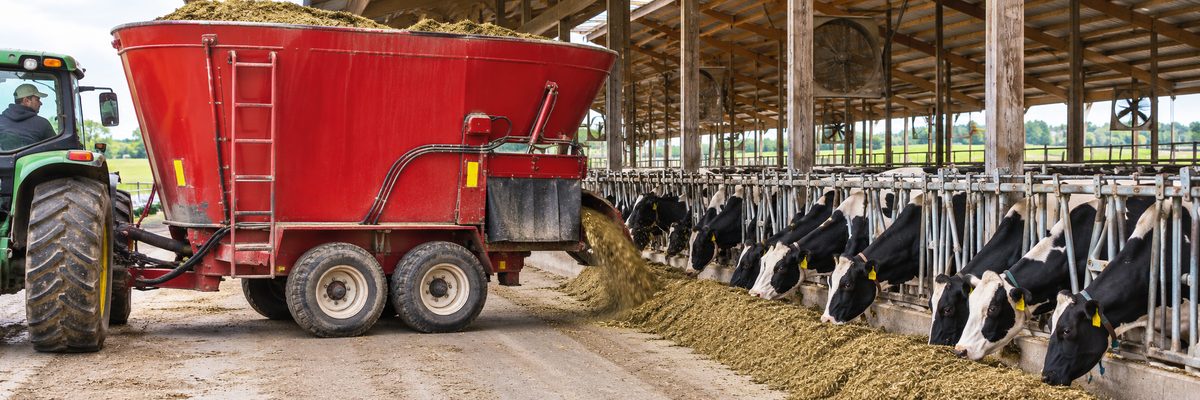
Fresh cows have a talent for going from fine to flat in about a day, and ketosis is one of their favorite ways to do it. Ketosis is what happens when a fresh cow burns body fat faster than her body can handle. The fat breaks down into ketones, appetite falls, milk drops and the cow gets worse. Feed does not cause ketosis by itself, but feeding and management are the best tools for preventing it. Most of the prevention happens before the cow ever calves.
For treatment of a sick cow, your vet leads. This page is about the feed side: what raises the risk, what lowers it, and what to change when the fresh pen keeps producing cows that will not eat.
Why fresh cows get ketosis
After calving, milk production rises faster than intake. The cow is in negative energy balance, so she mobilizes fat. A healthy cow handles that and keeps eating. A cow already struggling, whether from overconditioning, low calcium, uterine infection, a displaced abomasum or just a crowded pen, eats less, mobilizes more fat and spirals.
Ketosis can be clinical, with obvious off-feed behavior and sometimes nervous signs, or subclinical, where cows look okay but have high ketones in blood or milk. Subclinical cases are more common and still cost milk, fertility and health. Your vet can help set up a testing program, often using blood ketone meters in the first couple of weeks after calving. For a general overview, the Merck Veterinary Manual page on hyperketonemia in cattle covers the disease in more detail.
Body condition: the first lever
Fat cows are the classic ketosis candidates. Cows that calve overconditioned have a lot of fat to mobilize, tend to eat less after calving and are more prone to fatty liver. Cows that calve too thin have little reserve and may struggle in other ways.
The common goal is to calve cows in moderate condition and to avoid big changes in the dry period. This starts before dry-off: late lactation is the time to adjust condition, not in the dry pen. Learn the method in how to body condition score your cows, and record numbers at dry-off, calving and in early lactation. If the herd average at calving is creeping up, the dry cow ration is the first place to look. That feeding is covered in how to feed dry cows before calving.
Ration changes that help
In the dry and close-up pens
- Control energy in the far-off diet. Use forage and straw to keep cows full without adding extra condition.
- Keep close-up intake high. A cow that eats well before calving usually eats well after. See close-up dry cow ration basics.
- Prevent low calcium. Cows with low blood calcium eat less and are more likely to develop ketosis. DCAD management and mineral control are part of the picture. Read what DCAD is and why dry cows need it.
- Provide enough space and comfort. Crowded cows eat less.
In the fresh pen
- Palatable forage first. Cows eat what tastes good. Poor, dusty or moldy forage in the fresh ration hurts.
- Gradual step-up of grain. It supports energy intake while protecting the rumen. Rushing it can cause acidosis. See signs of subacute rumen acidosis.
- Adequate protein and minerals. They support intake and health.
- Possible additives. Some herds use rumen-protected choline, niacin, propylene glycol or monensin-type products as part of a fresh cow program. Which of these suit you, the regulations around them and the amounts are a matter for your vet and nutritionist. Do not mix up your own program from articles like this one.
Bunk management and cow behavior
The best ration does nothing if cows do not eat it. Check the basics:
- Feed is available at all hours, with fresh feed delivered on a predictable schedule.
- Feed is pushed up often. A cow that has to reach for it eats less. See how often to push up feed.
- Bunk space and stalls are adequate, and the fresh pen is not crowded.
- Heat stress is controlled with shade, fans and water in summer.
- Cows are not being forced to compete for feed or water.
A cow that eats well but not quite enough will often tell you with a falling milk number and a rumen that looks hollow. A walk through the pen at feeding time, then again a few hours later, tells you more than an hour with the spreadsheet.
Spotting trouble early
Detection tools include rumination monitors, activity collars, milk yield drops and a regular fresh cow check. Many herds test fresh cows for ketones at set days after calving using a handheld meter or milk test, then follow up on positives with the vet's protocol. See post-calving cow checks for the first 14 days for a routine you can adapt. Treated cows may have milk and meat withdrawal times, so follow your vet's instructions closely and keep records.
When treatment is needed, see ketosis in dairy cows and how to treat it for general information, and let your vet decide the treatment plan.
Keep the records that point to the cause
Track how many fresh cows test positive, which cows are affected, their body condition, their calving ease and any other disease. A herd that has many ketosis cases usually has a pattern: overconditioned cows, a crowded close-up pen, low calcium cows, slow intake or a ration issue. Review the data every month with your vet and nutritionist. Penn State Extension's dairy resources and other land-grant programs publish transition cow material that can help you structure that conversation.
If ketosis keeps showing up, resist the urge to blame the cows. They are doing exactly what cows do when the feed bunk, the pen and the calendar have not lined up.
Quick answers
Can feeding prevent ketosis?
It can lower the risk a lot, mainly by controlling body condition, keeping dry matter intake high and managing the fresh cow ration and bunk. It cannot eliminate every case, since other fresh cow diseases also trigger it.
What body condition should cows have at calving?
Many herds aim for moderate condition, around 3.0 to 3.5 on the five-point scale, but ask your vet and nutritionist what fits your herd. The key is to avoid overconditioned cows at calving.
Do I need a nutritionist to manage ketosis?
You do not strictly need one, but a nutritionist is the person who can tie your ration, forage tests and fresh cow data together. Your vet handles the testing protocol and treatment.