Forage Inventory: How Much Silage Will You Need
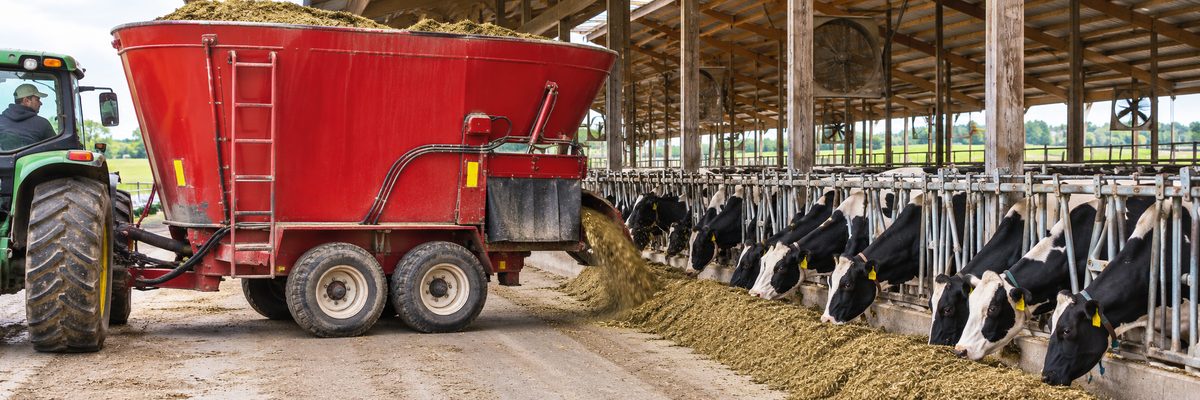
Running out of silage in February is a special kind of bad. The cows still need to eat, the price of purchased forage is at its worst, and the bunker looks suspiciously like a cave. A forage inventory done in the fall costs you an afternoon with a calculator. One done in the spring costs you a lot more.
The math is not hard. Count what each group of animals eats per day, multiply by the number of days you will be feeding, add shrink, then compare that with what is in the silo, bunker, bags and hay barn. The tricky part is the honest numbers: how much dry matter is actually in that pile, and how much of it will make it to the cow.
Here is a step-by-step way to do it, with the places where farms most often fool themselves.
Step 1: List your animal groups
Write down every group that eats stored forage: lactating cows, dry cows, springing heifers, bred heifers, younger heifers and calves on starter-plus-forage. Use the number you expect to have, not the number you had last winter. If you plan to expand or cull hard, adjust.
Step 2: Estimate dry matter intake per group
Dry matter intake is how much feed a cow eats once the water is taken out. It varies with body size, milk production, stage of lactation and ration. A lactating Holstein eats much more than a dry cow or a growing heifer, and a Jersey eats less than a Holstein. How much dry matter a dairy cow eats goes into the details, and your nutritionist can give you real numbers for each group from the current ration.
Then work out the share of that intake that comes from each forage: corn silage, haylage, hay, straw, pasture. Your ration report shows it, and reading a dairy ration report helps if the columns blur together.
Step 3: Count the days
The feeding season length varies a great deal by region. A grazing herd in the Northeast or Upper Midwest may feed stored forage for many months, while a Southeast herd with winter annuals feeds much less stored forage in winter but may feed more in summer drought. Count the days you actually need stored feed, and add a buffer for late springs. Spring is a notorious liar.
Step 4: Multiply, then add shrink
For each forage, multiply the dry matter per head per day by the head count and by the days. That gives you the dry matter needed. Then add shrink, which is the feed lost between the field and the cow. Shrink comes from:
- Fermentation and seepage losses in the silo.
- Spoilage at the top, edges and face.
- Weathering on bags and unprotected bales.
- Refusals and feed pushed out of the bunk.
- Rodents, birds and the occasional mystery.
Shrink is easy to underestimate. A well-packed, well-covered bunker with a fast feed-out rate loses less than a loose, uncovered pile that gets fed slowly. Packing a bunker silo the right way and keeping the face clean are the cheapest ways to protect inventory. Do not assume zero shrink. A good number to use comes from your own records or from your nutritionist or extension agent, not from optimism.
Step 5: Measure what you have
This is where inventory becomes honest. You need a real estimate of tons of dry matter in storage. The general approach:
- Measure the volume. For a bunker or pile, length times average width times average height, with sloped sides handled as an average. For a tower, use the diameter and the depth of silage. For bags, use length and the bag's diameter and fill level.
- Apply a density. Packed density depends on how well the silage was compacted, the chop length and the moisture. Extension publications give ranges and formulas, so use their tables rather than a guess.
- Convert to dry matter. Use a measured dry matter percentage for each forage. A quick microwave or Koster tester check, or a lab test, beats eyeballing.
- Count hay and baleage separately. Number of bales times average weight, adjusted for moisture. Bale weights vary more than most farmers admit.
Extension forage programs publish silo capacity tables and calculators. The University of Wisconsin dairy program and Penn State Extension both host forage resources, and the UW-Madison dairy extension site is a solid starting point for density and capacity tools.
A simple worksheet layout
| Group | Head | Forage dry matter per head per day | Days | Total forage dry matter needed |
|---|---|---|---|---|
| Lactating cows | Your count | From your ration | Feeding days | Head x intake x days |
| Dry cows | Your count | From your ration | Feeding days | Head x intake x days |
| Bred heifers | Your count | From your ration | Feeding days | Head x intake x days |
| Younger heifers | Your count | From your ration | Feeding days | Head x intake x days |
Add up the totals, add shrink, and subtract what you have in storage. The result tells you whether you are long, short or exactly right (the last one almost never happens).
Add a cushion
Yields change, intake rises when forage is excellent, and herd numbers drift. Most advisers recommend carrying some inventory past the end of the feeding period so a short crop does not force a panic purchase. The size of the cushion depends on how variable your yields are and how easy it is to buy feed locally. In regions with frequent drought, such as the Northern Plains, the cushion grows. Feeding dairy cows during drought gives ideas for stretching a short supply.
Check it again in winter
An inventory is a snapshot. Check the silo level or bunker face a few times during the winter and compare it with the plan. If you are burning feed faster than planned, find out why now: more cows than expected, heavier refusals or higher intake from a ration change. You can adjust early, and early adjustments are cheaper. What to do with refusals and leftovers can also reduce waste.
Common mistakes
- Using tons as-fed instead of dry matter. Cows eat dry matter, and water does not fill a bunk.
- Forgetting the heifers, who eat a surprising amount for animals that produce no milk.
- Skipping shrink because the silage "looks tight."
- Assuming last season's density applies to a new crop, even though the packing crew and the weather changed.
- Measuring the bunker height at the tallest spot and calling it the average. The pile has opinions about that.
Quick answers
How do I figure how many tons of silage are in my bunker?
Measure the volume, apply a density based on how well it was packed, then convert to dry matter with a measured moisture. Extension silo capacity calculators do this arithmetic for you.
How much shrink should I plan for?
It depends on packing, covering, feed-out rate and storage type. Use your own records if you have them, or ask your nutritionist or extension agent what is typical for your setup.
When should I do a forage inventory?
After harvest, once you know what actually went into storage, and again partway through the feeding season. Doing it twice lets you catch problems while you can still fix them.