Free-Choice Minerals vs Mineral in the Ration
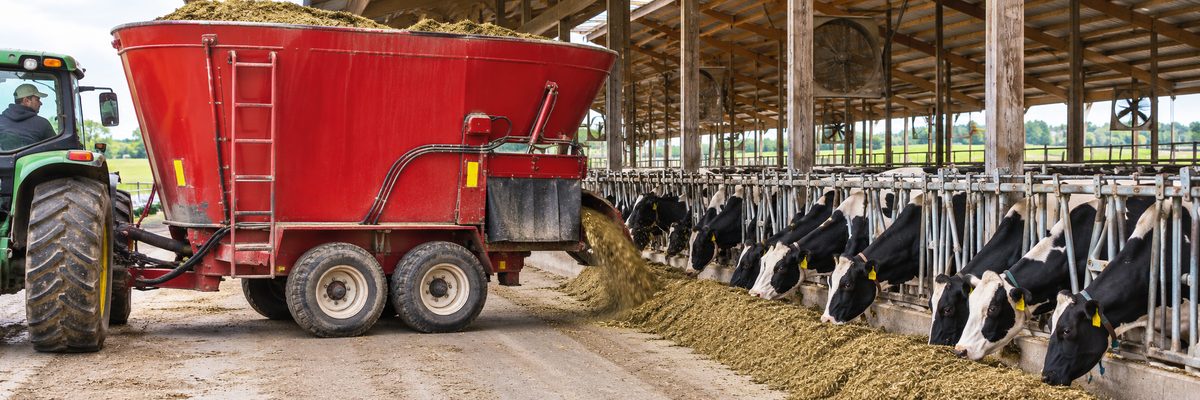
The mineral feeder in the corner of the pen has been there since your father's day, and the cows seem to like it. That is the problem. Cows like salt, and salt happens to be the thing that makes a mineral mix taste worth eating. Whether they eat the right amount of everything else in the mix is another question.
For milking cows, the research favors putting minerals into the ration. Free-choice feeders work for some groups and some situations, but they leave you guessing at how much each cow actually ate.
Here is how the two methods compare, why mixing usually wins, and where free-choice still has a job.
The Two Methods
- Mineral in the ration: the premix goes into the TMR or the grain mix, so each cow gets a measured share as part of the feed she is already eating.
- Free-choice: loose mineral, blocks or tubs sit in a feeder, and cows eat what they decide to eat.
Both can work on paper. The difference is control.
Why Mixing Usually Wins
University of Kentucky extension is blunt about it. Ideally, supplemental minerals and vitamins are added in recommended amounts to the grain mix or total mixed ration, because that regulates the intake of each mineral and vitamin so every cow receives the expected amount. Research has shown that cattle do not consume the correct amounts when minerals or vitamins are fed separately in a mineral feeder.
There is a simple reason. Salt is the only mineral cattle consume to meet a need. Free-choice supplements often use salt to limit intake, but the Kentucky guidance says intake of the mineral and vitamin supplement is highly variable, from cow to cow and from day to day. A boss cow may eat a lot, a timid heifer may eat none, and the average on your feed bill tells you nothing about either.
Put it another way. A TMR gives every cow in the pen the same bite. A feeder gives every cow the chance to make her own bad decision.
That variability matters most for the minerals you least want to guess about. Selenium, copper, zinc and the vitamins A, D and E are needed in small, steady amounts, and several of them have upper limits. They also affect immunity, as covered in dairy mineral program basics.
Side-by-Side Comparison
| Factor | Mineral in the ration | Free-choice feeder |
|---|---|---|
| Intake control | Each cow gets a predictable share | Varies by cow and by day |
| Fits TMR herds | Yes, easy to add to the mix | Often redundant |
| Fits grazing herds | Via grain or supplement in the parlor, if fed | Common where cows get little or no grain |
| Cost accuracy | Easy to track per cow | Hard to track, waste is common |
| Labor | Part of the normal feeding routine | Refill, clean and protect from rain |
| Dominant cows | Less of an issue | Bossy cows can overeat |
| Weather | Not affected | Wet mineral clumps, spoils or washes away |
Where Free-Choice Still Fits
Heifers and dry cows, with care
Kentucky extension says heifers and dry cows can be fed free-choice mineral supplements where salt is used to regulate intake, but notes the same variability problem and recommends putting the correct amount in the grain mix or TMR whenever possible. Dry cows have special needs before calving, and the right ration approach is in the close-up dry cow ration basics.
Grazing herds with little grain
If cows eat mostly pasture and get little or no parlor grain, there may be no ration to mix minerals into. Free-choice becomes the practical option, and some herds improve results by pairing it with a small grain feed at milking, if one is in the plan. Penn State Extension notes magnesium-boosted free-choice blocks can be one way to supplement spring pasture when cows will not eat enough grain, along with other approaches such as magnesium oxide in grain.
Dairy goats and small family herds
Many small-ruminant keepers use loose free-choice minerals made for the species, since goats and sheep have different requirements than cattle, copper in particular. See feeding dairy goats: hay, grain and minerals. Never use a cattle mineral for sheep or goats unless your vet or nutritionist says it is right.
As a backup, not a plan
A feeder can supplement a well-built ration if your nutritionist wants it there. It should not be the plan for trace minerals or vitamins.
How to Move From Free-Choice to Mixed
- Track current use. Weigh what goes into the feeders for a few weeks and divide by head count. Odds are the number will surprise you in one direction or the other.
- Get a ration balance. Have your nutritionist compare your forage, grain and water analysis against requirements for each group.
- Choose a premix. Make sure the tag shows the trace minerals and vitamins, not just the required items.
- Add it to the feed. Put it in the TMR or grain mix at the rate your nutritionist sets.
- Keep salt available. Cows still need access to salt, and your nutritionist can tell you whether it is covered in the mix.
- Watch results. Check milk components, fertility, hoof health and somatic cell count over several months.
Expect some grumbling. Cows that have visited the same feeder for years will keep checking the corner for a while, like a regular whose usual table got moved.
A Short Detour on Salt
If you want a cow's-eye view of the salt lick, this farm.FM piece on a cow who opens a spa with mud baths, salt lick facials and hooficures treats it as a beauty product. Your cows treat it as a snack bar, which is exactly why a mineral that depends on salt for appeal is a poor way to deliver selenium.
Mistakes to Avoid
- Counting a trace-mineral block as a complete program.
- Letting feeders sit empty for days, then wondering why intake spikes when they are refilled.
- Using the same mineral for all species.
- Skipping a feed tag review. Look for sources of the minerals you expect, as Kentucky recommends.
- Changing the program without telling your nutritionist, who is balancing the rest of the ration around it.
For more reading, see Kentucky's mineral feeding for healthy cows, and ask your nutritionist or herd vet before changing anything for fresh cows or goats.
Quick answers
Should lactating cows have a free-choice mineral feeder?
If they eat a TMR or grain mix, the better approach is to include minerals in that feed, since research shows cattle do not reliably consume the correct amount from a separate feeder. A feeder may still hold salt or a backup supplement your nutritionist recommends.
What do grazing herds do about minerals?
Many use free-choice minerals when little grain is fed, and some add minerals to a small grain ration fed in the parlor. Spring magnesium needs special attention, so talk with your nutritionist or extension office.
Can goats use cattle minerals?
Not safely as a rule. Goats and sheep have different needs, and copper is the standard example. Use a mineral made for the species, and check with your vet or nutritionist.