What Is a TMR and Is It Right for Your Herd
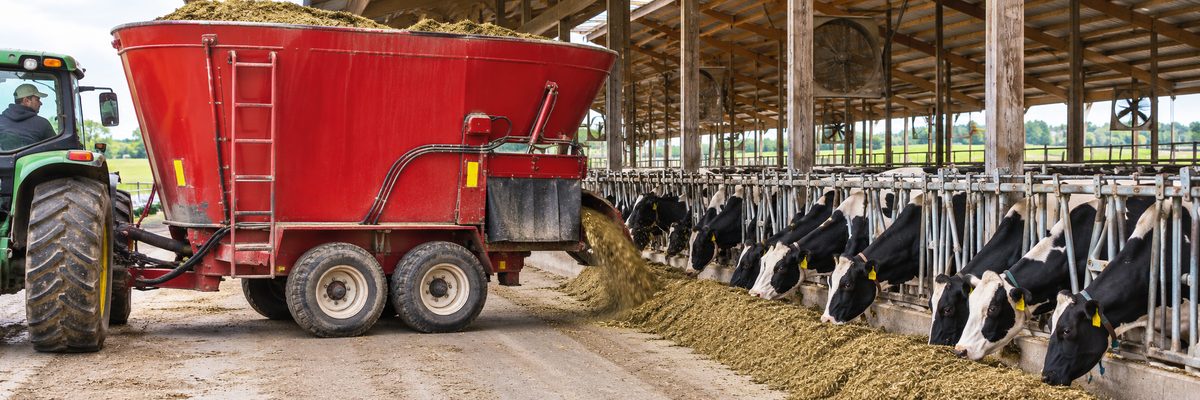
TMR stands for total mixed ration. Forage, grain, protein, minerals, and whatever byproducts you are using get loaded into a mixer, blended, and fed as a single ration, so that every bite is supposed to have the same ingredients in the same proportions. That is the whole idea, and it is a good one.
It is not the right answer for every dairy. A 2,000-cow Southwest dry lot and a 40-cow tiestall barn in Vermont have very different problems, and a mixer wagon that is a godsend for one can be an expensive way to feel busy at the other. The question is whether the benefits of even, consistent feed are worth the equipment, the labor, and the feed-alley layout.
Here is how a TMR works, who gains the most, and what to look at if you are on the fence.
How a TMR works
Think of it as a salad the cow cannot pick the croutons out of, at least in theory.
A conventional approach feeds forage at the bunk, grain in the parlor or from a feeder, and supplements on top, and the cow assembles her own diet. With a TMR, the mixer does the assembling. A nutritionist formulates the ration, you load ingredients in a set order and weights, mix to a target texture, and deliver it to a bunk where cows eat from the same mix.
The aim is a rumen that sees a steady, balanced diet all day instead of big swings of starch and fiber. Cows that get slugs of grain in the parlor and a pile of hay in the lot can get tough digestion and uneven intake. A well-mixed TMR smooths that out.
Variants you will hear about:
- Full TMR. Everything in the mixer, fed at the bunk.
- Partial mixed ration (PMR). A base mix of forage and some grain, with extra concentrate fed in the parlor or by robot to match production.
- Component feeding. Forage and grain delivered separately. Still common on small tiestall and grazing dairies.
What a TMR does well
- Consistency. Every cow in a pen gets the same ration, and the ration is the one the nutritionist designed.
- Rumen steadiness. Fewer feast-or-famine swings in fermentation.
- Use of odd ingredients. Byproducts, wet feeds, and small-quantity items blend in where they would be hard to feed alone. See byproduct feeds for dairy cows.
- Group feeding. You can build different mixes for fresh cows, high pens, low pens, dry cows, and heifers.
- Labor on large herds. One mix serves a lot of cows.
- Accountability. Scales and records tell you what was fed. Nobody has to guess whether the scoop was heaping.
What it costs and where it struggles
- Equipment. A mixer wagon or stationary mixer, a loader or other means to fill it, and a scale you can trust. Prices vary widely by size and new versus used, so get quotes and ask your lender before assuming.
- Space and layout. You need a feed alley or bunk a wagon can reach. Tiestall barns and older barns can make that hard.
- Labor and skill. Loading order, mix time, and scale accuracy matter. A mixer driven carelessly is a very efficient way to make the wrong feed.
- Sorting. Cows are experts at picking the good stuff out. Long forage, too-dry mix, or poor mixing leaves the bunk looking even while cows eat unevenly. Why cows sort their feed and how to stop it goes into causes and fixes.
- Small groups. A big mixer does not mix a tiny batch well, and a half-load mixes poorly in many machines. Check the manufacturer's minimum and maximum fill.
- Grazing herds. If cows get most of their feed on pasture, a TMR for the whole herd does not fit. A supplement fed in the parlor or a small mixed supplement often does the job.
Which herds benefit most
Larger freestall and dry lot herds
Herds with several pens, a loader, and a feed alley usually come out ahead. The consistency pays back in milk and rumen health, and the labor math improves with scale. Southwest and West Coast dairies built around dry lots and commodity byproducts are classic TMR operations.
Mid-size herds
This is where the decision is least obvious. A used mixer and a loader can work well, but the numbers depend on your labor, your forages, and what your nutritionist can do with them. Some mid-size herds go to a PMR plus parlor grain, which keeps part of the benefit without full commitment.
Small and tiestall herds
A TMR is often not worth it. Many small dairies get good results from consistent component feeding, careful forage quality, and a balanced grain mix. Another route is buying a ready-mixed ration from a feed mill or custom mixer, if one operates near you. Ask what they charge, how often they deliver, and how they handle forage dry matter changes.
Grazing and organic dairies
Pasture is the main feed, so the question is how to supplement it. A small TMR for the barn season can work, but many grazing herds feed grain and forage separately. Local extension specialists in your region know what fits your forage base.
Making a TMR work if you go that way
- Start with forage analysis and a ration from a nutritionist, since the TMR is only as good as the recipe. See how to read a dairy ration report to understand what you are getting.
- Calibrate the scale on a schedule and check it with a known weight.
- Write down loading order and mixing time, and post them where the operator can see them.
- Check particle size with a shaker box. The Penn State shaker box shows how.
- Watch the bunk. Weigh refusals and track them over time.
- Push feed up often enough that cows always find fresh feed within reach.
The UW-Madison dairy extension and Cornell PRO-DAIRY both publish feed management material, including TMR evaluation.
Quick answers
Is a TMR better than feeding grain in the parlor?
For many herds, yes, because it gives a steadier rumen and consistent intake. But parlor feeding or a PMR can still work well, especially on smaller or grazing dairies, so the best fit depends on your setup.
Can a small herd use a TMR?
Yes, with a small mixer or a purchased mixed ration, but the cost per cow is higher than on a large herd. Many small dairies decide that careful component feeding is the better value.
What is the biggest mistake with a TMR?
Treating it as set-and-forget. The mix drifts when forage moisture changes, loaders vary, or cows sort, so regular dry matter checks, scale checks, and bunk checks keep it working.