How to Feed Dry Cows Before Calving
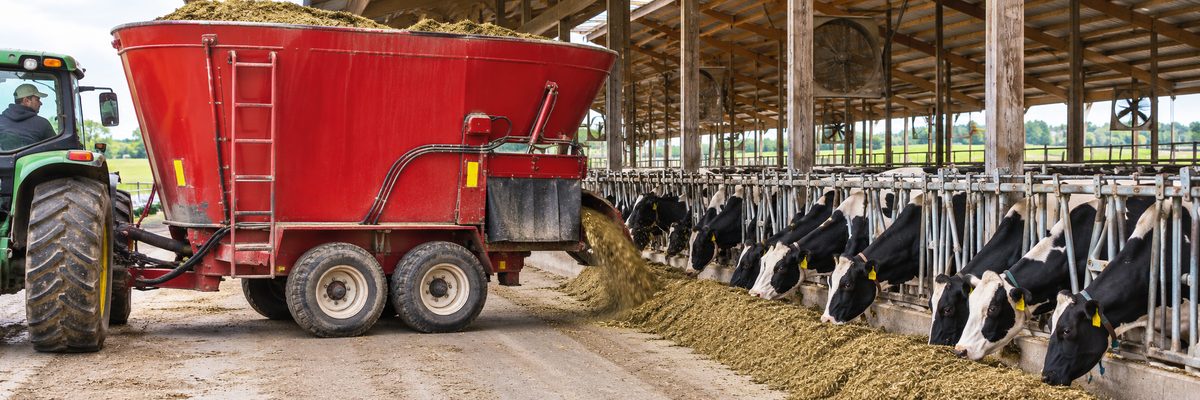
The dry period is not a vacation, and a dry cow is not a lactating cow with the lights off. She is rebuilding udder tissue, growing a calf that puts on most of its weight in the last two months, and getting her rumen ready for a big ration change. Cows do not read the ration sheet; they read the bunk. The goal of the far-off dry diet is simple: hold body condition steady, meet her mineral and protein needs, and keep her from getting fat.
Most herds split the dry period into two feeding groups. Far-off cows, from dry-off until about three weeks before calving, get a lower-energy, higher-fiber ration. Close-up cows, in the final three weeks or so, get a different diet that starts getting them ready for fresh. This piece covers the far-off group. The final stretch is in close-up dry cow ration basics.
What the far-off cow needs
Compared with a milking cow, a far-off cow needs far less energy, but she still needs adequate protein, minerals and vitamins. Her dry matter intake is lower than when she was milking, and it often drops further toward calving. A ration that is too rich in energy is the usual mistake, because the cow gains condition she will not shed quickly after calving, and overconditioned cows carry more risk of fresh cow problems, including ketosis and fatty liver.
The target is to maintain body condition from dry-off to calving, not to repair a thin cow or trim a heavy one. Thin cows should be brought back to condition in late lactation, when feed turns into condition efficiently, and not in the dry pen. Learn to body condition score your cows and write down the number at dry-off, because the number is how you know the ration is doing what you think.
Forage is the foundation
A typical far-off diet is built on forage with a bulk of low-energy, high-fiber feed: grass hay, wheat straw, corn silage mixed with straw, or a limited amount of lower-quality alfalfa. The mix keeps cows full without overfeeding energy. Straw is the classic tool for this because it dilutes a richer forage and keeps the rumen busy.
Watch potassium. High-potassium forages, such as lush alfalfa and grass from heavily manured or fertilized fields, can raise milk fever risk, which becomes a bigger issue if you plan to feed an anionic diet later. Forage testing tells you what is in the bunk. If you are unsure how to read the numbers, sampling forage properly is the place to start.
Protein, minerals and vitamins
Protein needs go up as the calf grows, and diets that are too low in protein shortchange fetal growth and udder development. The dry cow ration is usually balanced with a small amount of protein supplement or a purpose-made dry cow mineral pack.
Mineral programs for dry cows are different from lactating rations, which is why the mineral tub from the milking pen usually does not belong here. Points to consider with your nutritionist:
- Calcium and phosphorus levels matter, and in many programs calcium is kept moderate in the far-off group.
- Magnesium and selenium are often supplemented, and vitamin E and vitamin A matter for immunity.
- Trace minerals such as zinc, copper and manganese support hoof, udder and immune health.
- Selenium rules and soil levels vary by region, so work with your nutritionist or vet on local needs. Excess is as problematic as deficiency.
For the bigger mineral picture, see dairy mineral program basics.
A sample structure, in words
A far-off dry cow ration might look like this: a base of grass or mixed hay and straw, with some corn silage for energy, balanced with a protein and mineral supplement, and fed as a total mixed ration so cows cannot pick out the tasty bits. Exact amounts should come from a nutritionist balancing against your own forage tests, body condition and breed. A Jersey and a Holstein dry cow do not eat or weigh the same.
If you feed a TMR, the loading order and chop length matter. Long straw that is not mixed in well will be sorted out, and the cow with the boldest tongue will end up with the best bites. Every pen has one cow who treats the bunk as a buffet and everyone else as staff. That is a social problem as much as a nutritional one, so give every cow enough bunk space and keep feed in front of them.
Housing and grouping
The dry pen too often gets the worst corner of the barn and the leftover feed, as if the cows will not notice. They notice. Dry cows should not be left with the milking string for convenience. A separate dry pen lets you feed the right ration and keep an eye on the cows. Space matters: a crowded dry pen means cows do not eat enough and the ones at the bottom of the pecking order get squeezed. Clean, dry bedding supports udder health, and dry cow housing and close-up pen management covers the layout.
Dry cows on pasture, common in grazing regions, can do well on good summer grass but may become overweight on lush, high-energy pasture. Many grazing herds supplement with hay or straw or restrict pasture time, and pay attention to potassium in fast-growing grass. In hot regions like the Southeast and Southwest, heat stress also hurts dry cows, reducing intake and lowering calf birth weight and next-lactation milk. Shade, water and airflow are not optional for the dry pen.
Dry period length and timing
A dry period of roughly six to eight weeks is a typical target, with the far-off phase taking the longer share and the close-up phase the last three weeks or so. Shorter or longer dry periods can work in some herds, but the right call depends on your cows and your management. See how long a dairy cow's dry period should be for the trade-offs.
Common mistakes to avoid
- Feeding the lactating ration to dry cows. It is easy, it is convenient, and it makes cows fat.
- Ignoring body condition. If cows calve at a condition score you did not plan for, the dry diet is the first place to look.
- High-potassium forage with no plan. Test it and plan around it.
- Overcrowding. A pen that is too full works against even the best ration.
- Forgetting water. Dry cows drink less than milking cows, but they still need clean, fresh water.
Your extension office is a good place to compare notes. University of Wisconsin dairy feed and nutrition resources and Cornell PRO-DAIRY both publish guidance on transition and dry cow feeding that you can bring to your nutritionist as a starting point.
Quick answers
What do you feed a dry cow?
Mostly forage, often a mix of grass hay, straw and some corn silage, balanced with protein and a dry cow mineral. The aim is steady body condition, not weight gain.
Should dry cows get grain?
Far-off cows usually do not need much, if any, grain beyond what is in a balanced ration. Close-up cows often get a little more energy to prepare the rumen for fresh cow feed.
Can I feed dry cows the same ration as heifers?
Sometimes, but not automatically. Bred heifers and dry cows have different needs for energy and minerals, so have a nutritionist look at your specific diet before you combine groups.