Summer Bacteria Counts in the Southeast
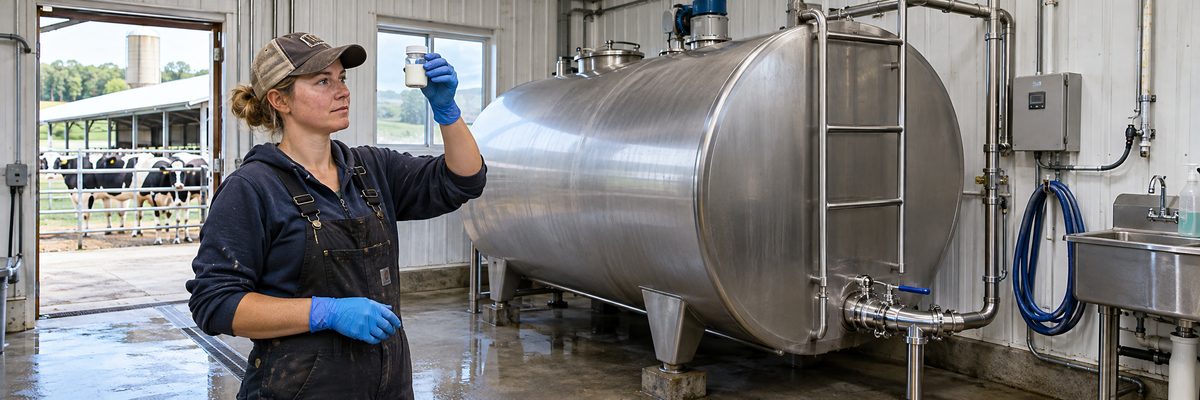
July in the Southeast is hard on everything with a pulse and most things without one, including your milk. Heat and humidity let bacteria multiply in places they were behaving in January: the bulk tank, the pipeline, the teat ends, the wet corner of the holding pen. A bacteria count that sails along all winter can jump the first month it stays above 90 degrees overnight.
The fix almost always starts with the same three questions. Is the milk cooling fast enough? Is the equipment washing as clean in summer as it did in winter? Are the cows themselves dirtier? Work through those in order, because one bad summer count is usually a cooling failure, a cleaning failure or a cow hygiene failure, and sometimes all three.
What a high count is telling you
Raw milk bacteria counts come in a few flavors, and the type of test pattern helps you find the source. The two big categories are bacteria that came from dirty equipment and cows, and bacteria that grew because milk stayed warm. A separate piece, troubleshooting a high bacteria count in milk, goes through the standard detective work. Two related tests are worth knowing:
- Standard plate count reflects the overall bacteria load in milk.
- Preliminary incubation (PI) count and other tests hint at cleaning problems; see what a high PI count says about your cleaning.
- Coliform count often points toward manure and dirty teats, which is covered in coliform counts in milk: causes and fixes.
Limits and penalties depend on your state and milk buyer, and your handler's field representative can explain which results apply to you.
Fix one: cooling
Heat is the one thing that really is different in summer. If milk isn't cooled quickly after it leaves the udder, bacteria that were few can become many. The general requirements for cooling are in how fast milk must cool in the bulk tank. In hot weather, check these points:
- Compressor and condenser. Is the condenser coil clogged with dust, chaff or cottonseed? Is it getting enough airflow? In a hot, closed milk house, the unit may be fighting its own exhaust.
- Milk house ventilation. A milk house that traps heat makes the tank work harder. Add or clean fans and keep vents open and screened.
- Refrigerant and controls. Have a refrigeration technician check performance before the hot season, not after the first bad test.
- Pre-cooling. If you use a plate cooler, check that well water is flowing at the right rate and temperature. Plate coolers can cut the load on the tank, but only if they're clean and the water supply is cold enough.
- Tank load. Adding a lot of warm milk at once is harder for the tank to handle. A sudden herd increase or a longer milking can overwhelm cooling capacity.
Fix two: washing
Summer doesn't change the chemistry in the wash, but it does change the conditions around it. Hot weather can shorten how long water heaters stay hot, increase biofilm growth and tempt people to cut corners in a long, sweaty shift. Check the following:
- Wash water temperature at the start and end of the cycle. Confirm the numbers against your chemical supplier's label and see wash water temperature and chemical strength for the principles.
- Chemical concentration and water quality. Water hardness, iron or low pH can reduce chemical performance, and summer demand can change water supply.
- Rubber and plastic parts. Cracked liners, worn gaskets and old hoses hold bacteria. Replace them on schedule.
- Wash routine in hot weather. Make sure every step is completed, including the acid rinse if your system uses one, and that nobody shortens the cycle to catch the tail end of the afternoon.
- Bulk tank cleaning. Review the steps in the bulk tank cleaning routine and look for milkstone and film on the tank and fittings.
Fix three: cows and cow hygiene
Heat stress makes cows lie in the wettest, dirtiest spot they can find, and the cow's teat end becomes the first point of contact with all of it. That's one reason environmental bacteria and coliform counts climb in summer. Southeast herds also deal with humidity, rain and flies, so manure and mud stay wet longer.
- Cool the cows in the holding pen and barn with shade, fans and soakers. Humid heat cow cooling in the Southeast explains the options. Cool cows spend more time lying in clean stalls instead of hunting for a wet spot.
- Keep stalls and lots clean. Remove wet bedding and manure often. Where cows lie in wet areas, expect dirty udders and more environmental mastitis.
- Do not skip teat prep. Hot weather makes it tempting to shorten the routine, which is exactly the wrong move. Forestrip, dip, wipe and let the contact time run.
- Watch mastitis. Cows with clinical or subclinical mastitis can shed lots of bacteria into the tank. Work with your veterinarian and consider milk culturing to find the source.
- Control flies. Fly irritation affects cow behavior and cleanliness, and wet manure breeds them.
A summer checklist
| When | What to check |
|---|---|
| Before the hot season | Service the bulk tank and compressor, clean condenser coils, test ventilation, check water heater and wash temperatures |
| Every day | Tank temperature, wash cycle, teat prep routine, clean stalls and alleys |
| Weekly | Liners and gaskets, milk house cleanliness, fly control, bacteria test results |
| When counts rise | Test the milk by source, check cooling records, watch a full wash cycle, review cow hygiene |
A bacteria count that rises in summer is a message from the farm, and it's rarely a mystery to the person who knows where to look. The tank will not apologize for the heat, and neither will the hauler's lab report.
Getting help
When a count is stuck, call your milk buyer's field representative, your equipment dealer or a milk quality consultant. Many dairies also use their veterinarian for culture work. University extension programs such as University of Florida's dairy extension and the National Mastitis Council provide guidance on heat, milk quality and mastitis in warm, humid climates.
Quick answers
Why do bacteria counts go up in summer?
Warm temperatures let bacteria grow faster in milk, equipment and cow environments, and heat stress and humidity can dirty cows and stress cooling equipment. Most summer spikes trace back to cooling, washing or cow hygiene.
What's the first thing to check when the count jumps?
Check the bulk tank temperature and cooling records, then watch a full wash cycle. Those two areas explain a large share of sudden increases, and they're quick to check.
Can mastitis cause a high bacteria count?
Yes. Cows with mastitis can shed large numbers of bacteria into the milk. If equipment and cooling check out, culture milk from suspect cows with your veterinarian's help.