Wash Water Temperature and Chemical Strength
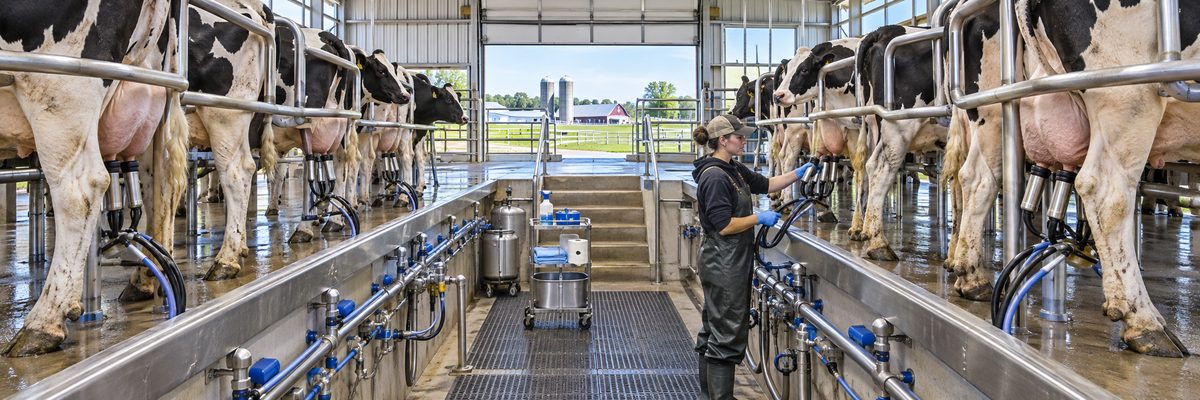
Most wash problems come down to two numbers: how hot the water is and how strong the chemical is. Too cool and the fat doesn't dissolve. Too weak and the protein film stays. Too hot at the wrong step and you bake milk onto the steel. The target temperatures are not secret, but they are easy to drift from.
The ranges below come from extension guidance such as Virginia Tech's cleaning and sanitizing publication. Your detergent label wins any argument with this article, because manufacturers write concentration, temperature and contact time to match their own products.
And a quick confession about milk houses everywhere: the thermometer on the wall is usually the only thing in the building nobody has ever checked.
Temperature by step
| Step | Typical temperature | Why it matters |
|---|---|---|
| Pre-rinse | Lukewarm, about 100 to 110°F, and no hotter than 120°F | Hot water sets protein onto surfaces; cold water leaves a greasy fat film |
| Detergent wash, start | Hot, in the range of 160 to 170°F in the Virginia Tech example | Gives the cleaner enough heat to carry through the cycle |
| Detergent wash, end | Still above 120°F | Below that, soils can redeposit instead of rinsing away |
| Hand-washed parts | Soak at about 120 to 135°F for at least 5 minutes | Gives the detergent time on parts that cannot be circulated |
| Bulk tank rinse | About 90 to 120°F | Flushes milk without cooking it on |
| Acid rinse | Lukewarm or cold is fine | Works through low pH and contact time, not heat |
The pattern is easy to remember: warm to remove milk, hot to dissolve what's left, warm or cool for the final rinses.
The temperature that matters most is the one at the end
Everyone checks the starting temperature. Hardly anyone checks what is left after six to ten minutes of circulating through cold pipe and a long run of tubing. If the solution is at 170°F going in and 100°F coming out, the second half of that wash was lukewarm and the cleaner was doing a much weaker job.
How to check it
- Use a thermometer you trust, checked against a known reference such as ice water.
- Read the temperature at the start of the cycle and again at the end, in the return line or wash sink.
- Do it at the end of a busy morning, with the heater just drained down. Do it again in winter and again in summer.
- If the end temperature is low, look at the water heater capacity and the insulation on wash lines before you blame the detergent.
In long barns and cold climates, a booster heater or insulated wash line often solves a problem that years of extra detergent did not. In the Upper Midwest, an uninsulated line in January is its own science experiment.
Chemical strength
Strength is set by the manufacturer, based on the product, the water and the equipment. The common sequence uses an alkaline or chlorinated alkaline detergent followed by an acid rinse. The extension guide gives one example for the pipeline acid rinse of about 1 ounce of acid per 5 gallons of water, which is an example, not a universal rule.
What matters is measurement. Know how many gallons the wash uses, measure the chemical by the ounce, and write both numbers on the posted procedure. Eyeballing detergent is the number one reason that two milkers get two different results from the same equipment.
Water hardness changes the answer
The Virginia Tech guide points out that water over about 10 grains per gallon of hardness may call for more detergent, and very hard water, around 30 grains or more, calls for a water softener. Calcium and magnesium in hard water can neutralize detergents, leave films and give milkstone a head start. A farm in the Mountain West on hard well water may need a different product than a farm on soft surface water, and the article on hard water and dairy cleaning in the Mountain West goes through it. Ask your supplier for a water test before you pick a program, and retest if you change wells.
Sanitizers have their own quirks
Sanitizing is a separate step with its own limits. According to the same extension guide, chlorine compounds can lose strength in storage, chlorine and iodine are affected by high pH, iodine products are unstable above 120°F, and quaternary ammonium products don't get along with hard water. In other words, a sanitizer mixed in hot water or stored in a hot milk house may not be doing what the label promises.
- Mix sanitizer at the strength on the label, and use test strips if the manufacturer recommends them.
- Don't mix it far ahead of milking, and don't store mixed solution.
- Use the sanitizer at the temperature the product calls for.
- Let it drain; don't let sanitizer pool in a tank or line you are about to fill.
Safety, because chemicals bite
Add chemicals to water, never water to chemicals. Wear gloves and eye protection when mixing. Never mix chlorinated products with acids or other detergents, since the result is chlorine gas. Store everything in labeled containers in a ventilated, locked room, and keep an eyewash station within reach. Ask your supplier for the safety data sheets and keep them in the milk house.
When the numbers look right and the counts are still bad
If your temperatures and mixes are good and the lab still sends bad news, the problem is probably somewhere else in the system: worn rubber, a plugged air injector, dead ends in the pipeline or slow cooling. Work through a bacteria count troubleshooting checklist instead of tightening the chemistry yet again. The full sequence is also laid out in the basics of the pipeline wash cycle, and the same temperature logic carries over to the bulk tank routine.
More detergent is not a cure for cold water. It's just a more expensive way to be disappointed.
Quick answers
How hot should the water be for the wash cycle?
Extension guidance commonly suggests starting hot, around 160 to 170°F, and keeping the solution above 120°F through the cycle. Check your detergent label, since some products specify a different range.
What temperature is too hot for rinsing?
The first rinse after milking should be lukewarm and kept under 120°F. Hotter water can cook protein onto surfaces and make it harder to remove.
How do I know the detergent is the right strength?
Measure by the label for your actual water volume and hardness, and ask your chemical dealer to test your water. If cleaning results change after a well or heater change, ask them to recheck the program.