Coliform Counts in Milk: Causes and Fixes
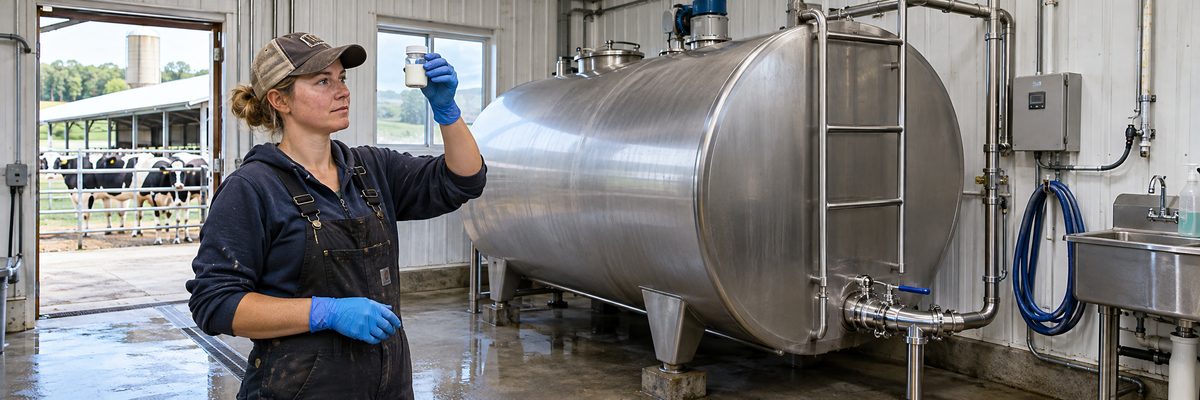
When the lab report shows a high coliform count, the milk is telling you manure or environmental material is getting in. The usual routes are dirty teats, wet or fouled bedding, contaminated wash water, equipment that is not washing clean, and occasionally coliform mastitis. Fix the path the bacteria take and the number comes down.
Coliforms are a broad group of Gram-negative bacteria that ferment lactose. Penn State Extension, in its article on using bacterial counts as a tool for troubleshooting, says contamination by these bacteria is typically from the environment and that elevated coliforms are frequently an indicator of fecal contamination.
In plain terms, the count measures how much of the barn is getting into the bulk tank. That is rarely the sort of thing you want to find out from a form letter.
Where coliforms come from
Dirty cows and udders
Cows that lie in manure, wade through mud or stand in wet alleys carry that material onto their udders. If prep does not remove it, it ends up in the milking unit. Penn State notes that dirty cows are likely to have dirty udders, which can raise the coliform count along with PI and the standard plate count.
Bedding
Bedding that is wet, old or fouled is a bacteria reservoir. Organic bedding such as sawdust and shavings can support heavy growth if it stays damp, while clean, dry sand tends to hold fewer bacteria, though it brings its own handling issues. How you handle freestall bedding matters more than the material alone; the notes on sand bedding basics for freestall barns cover the maintenance side. Fresh bedding added often and soiled spots removed daily make a visible difference.
Wash and rinse water
If the water supply carries coliforms, every wash and rinse reintroduces them. Penn State recommends routine testing of the water supply for coliforms. Test the water at the tap in the milk house, and retest after any well work or plumbing change.
Equipment that is not truly clean
Worn rubber, biofilm and dead-end pipe spots can hold coliforms between milkings. The pattern Penn State describes is useful: an elevated laboratory pasteurized count with a normal coliform count points at equipment sanitation and condition, while both elevated together calls for looking at milking procedures and equipment.
Coliform mastitis
If coliform and standard plate counts are both high, there could be coliform mastitis in the herd. Environmental pathogens, as discussed in environmental versus contagious mastitis, shed heavily from infected quarters. Mastitis treatment decisions belong to your veterinarian, and any milk from treated cows must be withheld for the full withdrawal period.
Fixes that work, in rough order of payoff
- Clean the cows. Look at udders and legs as the cows enter the parlor. If you see manure up to the flank, the problem started in the pen.
- Fix teat prep. Wipe or scrub teats, allow adequate dip contact time and wipe with a clean, dry towel for each cow. The steps in pre-milking teat prep are worth running against what your crew does at 4:30 in the morning.
- Keep bedding dry. Add fresh bedding on a schedule, scrape alleys more often and fix any leaking waterers that turn stalls into bogs.
- Test and treat the water. A positive coliform test means fixing the source, not adding more sanitizer and hoping.
- Tighten the wash. Confirm hot start and end temperatures, detergent strength and a working acid rinse. Then replace worn liners and hoses.
- Screen for mastitis. Check SCC trends, look for clinical cases and, if the pattern suggests it, ask your vet about culturing.
Regional and seasonal patterns
Wet spring weather in the Northeast and Upper Midwest pushes coliform counts up as lots turn to mud and cows walk it into the barn. The spring mud and clean teats routine addresses exactly that stretch. In the Southeast, heat and humidity make bedding and water systems breed bacteria faster, and wet seasons make everything worse. Dry-lot dairies in the Southwest have less mud, but dried manure dust and a muddy corner around the waterers can still put plenty on the cows. Grazing herds deal with muddy gateways and lanes, and the wet gate area near the parlor is often the worst spot on the farm.
In every region, the right question is the same: what path do manure and mud take from the cow's environment to the milk?
Using the report as a map
Coliform counts do not stand alone. Read them next to SPC, PI, LPC and SCC. If coliforms are up with a high PI, think teats, cleanliness and wash water. If coliforms are up with a high SCC, think mastitis. If only the LPC is up, think equipment first. Working through the bacteria count troubleshooting checklist keeps you from chasing the wrong thing.
A stray count now and then is normal variation. A trend is the real signal, and a trend can start with something as small as a leaking waterer that nobody got around to fixing. The cow will find the leak before you do.
What not to do
- Do not respond to a high count by raising sanitizer strength beyond the label. More chemical is not more clean, and residues cause their own problems.
- Do not mix chlorine products with acid or other detergents.
- Do not assume the problem is the milking system without checking the cows and bedding first.
- Do not use untested pond or surface water for wash or rinse.
Quick answers
What does a high coliform count in milk mean?
It generally points to environmental or fecal contamination, from dirty udders, bedding, water or equipment. Occasionally it is related to coliform mastitis, so check SCC alongside it.
Can well water cause a high coliform count?
Yes. If wash or rinse water carries coliforms, they can show up in the milk. Test the water supply routinely and after any well or plumbing work.
Will a better dip fix my coliform count?
A good dip with enough contact time helps, but only on teats that were cleaned first. If the cows and bedding are dirty, the dip is being asked to do work that belongs to the shovel.