Bulk Tank Cleaning Routine, Step by Step
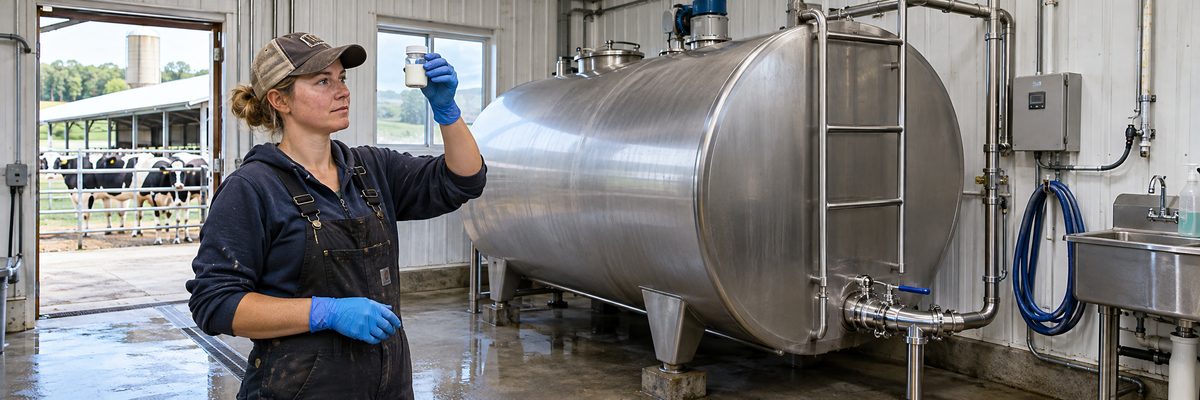
A clean bulk tank follows the same logic as a clean pipeline: rinse right after the milk is gone, wash hot with a cleaner that matches your water, rinse off the detergent, finish with an acid rinse as your program directs, and sanitize just before the next milk goes in. Skip a step and the tank will let you know, usually through the milk check.
The tank is the last place your milk sits before it leaves the farm, and the first place a bacteria count gets built if the tank is not clean. Whatever you did right in the parlor can be undone by a film on the walls and a gasket nobody pulled in a month.
What follows is the general routine described in extension materials such as Virginia Tech's guide to cleaning and sanitizing milking equipment. Your chemical supplier's label and your tank manufacturer's instructions come first, so use this as a framework and not a recipe.
The routine, in order
1. Rinse right after the hauler leaves
The hauler normally rinses the tank after pumping out, but whoever does it, it should happen immediately. Dried milk is much harder to remove than wet milk. Use lukewarm water, in the neighborhood of 90 to 120°F, and avoid water that is hot enough to cook protein onto the stainless. The rinse goes to the drain, not back into the wash.
2. Wash with hot, correctly mixed detergent
The wash solution should start hot and stay hot. The Virginia Tech sheet gives an example of starting at about 170°F and keeping the solution above 120°F through a 6 to 10 minute cycle. Mix the cleaner for your actual water volume and hardness, using the measured amount from the label. Eyeballing detergent is how people end up with milkstone or a cleaner that did not do its job.
For automatic tank washers, confirm that spray heads are rotating and reaching everywhere. For hand washing, a brush and a bit of patience beat a lot of foam.
3. Rinse off the detergent
Flush the cleaning solution thoroughly with water. Detergent left behind can interfere with the next steps and can end up in the milk.
4. Acid rinse
An acidified rinse removes mineral films and prevents milkstone. Many programs do it after every milking, others on a set schedule, so follow your supplier's directions for your water. Never mix acid with chlorinated detergent. The result is chlorine gas, which is a serious hazard in a closed milk house.
5. Drain, then sanitize before milking
Sanitize shortly before the next milking, not after the wash and not hours earlier. Let the sanitizer drain completely from the tank and outlet so it does not show up in your milk. Sanitizer gets used up fast on a dirty surface, which is another reason the wash step cannot be rushed.
The parts people forget
The automatic wash handles the inside of the tank. It does not handle everything.
- Outlet valve and cap. Take these apart and clean by hand. This is a classic bacteria hiding place.
- Gaskets and lid seals. Pull them periodically and look underneath.
- Agitator shaft and paddle. Film builds up where nobody looks.
- Calibration rod or stick. It touches the milk and needs washing and sanitizing too.
- Manhole cover and the tank exterior. Dirt that sits on top of the tank can drip into it when you open the lid.
- Air inlet and vent. A vent that is dusty or spider-infested is not helping anyone.
The Virginia Tech sheet also advises taking covers and gaskets apart for manual cleaning and cleaning the outlet connection by hand. If you take away one thing, make it that one.
A word of safety, and a serious one: never climb into a closed tank. A tank with a single manhole can be short on oxygen and full of chemical vapors. Wash from the outside and use a long-handled brush.
How to tell if it worked
Clean looks like clean. Water sheets off the walls in an even layer instead of beading up, stainless surfaces look bright, and there is no slimy film or white scale when you run a finger over a surface. Milkstone shows up as a dull, chalky layer, and protein film can be nearly invisible at first and turn yellowish as it builds, which is how it sneaks up on people.
Smell matters, too. A sour or sweet-rancid smell in an empty tank means something is growing.
Beyond the eyeball test, your lab reports are the real report card. A rise in preliminary incubation counts often points toward tanks, lines or cooling, and understanding what a high PI count says can narrow down whether this tank deserves suspicion.
Water, temperature and chemistry
Hard water makes every part of this harder. Calcium and magnesium can neutralize detergent and leave film, and the Virginia Tech sheet suggests using more detergent when hardness runs high and a softener when it is very high. If you are in the Mountain West, hard water and dairy cleaning may be the first thing to fix. Likewise, if the water heater cannot keep the wash hot for the full cycle, the best detergent in the world will not save you, which is why getting the wash temperatures and strengths right deserves its own routine check.
Posting the procedure
Write the routine down and post it in the milk house. Include the number of gallons, the ounces of each chemical, the temperatures and who does what. That way a new milker or the neighbor kid covering for a weekend does not have to guess, and the inspector sees a farm that knows its own system.
A fair test of any wash routine is whether a stranger could follow it without calling you. If the answer is no, the laminated sheet is overdue.
Quick answers
How often should a bulk tank be washed?
After every pickup, and before the next milk goes in it must be sanitized. If the tank sits empty for a long stretch, it should be re-sanitized just ahead of use.
Can I use the same chemicals as my pipeline wash?
Often the same products and the same basic steps apply, but follow the tank maker's and chemical supplier's directions. Chlorinated detergent and acid must never be mixed.
What is the most common thing missed when cleaning a tank?
The outlet valve, gaskets and agitator parts. They are the places the automatic wash can't reach well, so they need to come apart and get scrubbed.