Hard Water and Dairy Cleaning in the Mountain West
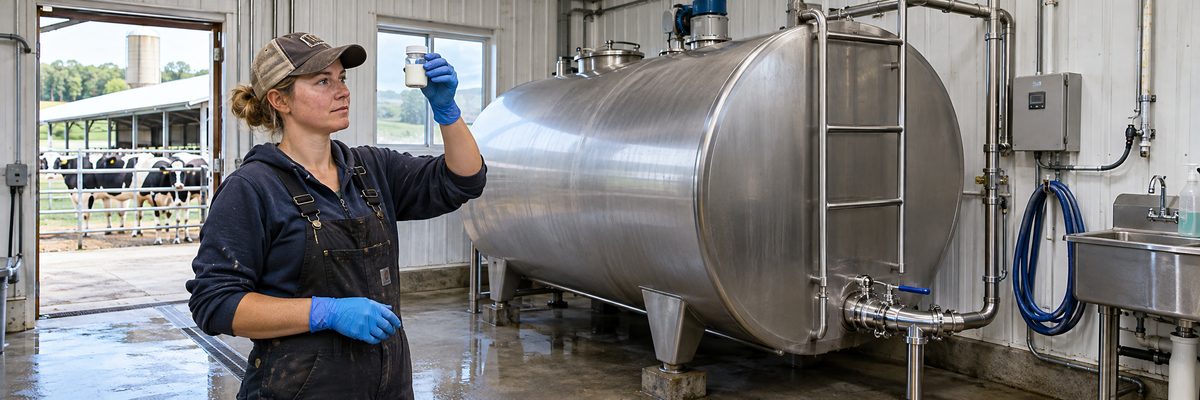
If your well water comes out of the ground carrying half a mountain range, your milking system is going to wear some of it. Hard water, meaning water loaded with calcium and magnesium, is common across the Mountain West, and it does two things to a dairy: it leaves scale on stainless steel and rubber, and it makes your alkaline detergent work harder than the label promised.
The fix is rarely one purchase. It starts with a water test that goes beyond "is it safe to drink," then moves to softening, the right chemical for your water, and a wash program that gets checked against what the pipeline actually looks like when you pull a fitting. A milkstone film you can feel with a fingernail is a bacteria hotel with a free breakfast buffet.
Below is how the problem shows up, what to test for, and what to change first.
Why hard water causes trouble in a milking system
Milk residue and hard minerals like to stick together. When hot wash water carrying calcium and magnesium meets a detergent, some of the detergent's strength gets used up tying up those minerals instead of lifting milk soil. Less cleaning power, then a thin film of milkstone left behind. Milkstone gives bacteria a rough surface to hide in, and that is how a pipeline that looks fine ends up behind a stubborn bacteria count.
Heat makes it worse. Scale forms fastest where water is hottest, so the water heater, the wash vat, the inside of the bulk tank wash line, and the liners and hoses closest to the hot-water source go first. If your water heater element is crusted like a coral reef, your milking equipment is probably telling the same story on a smaller scale.
Mountain West dairies often have a second wrinkle. Many run on private wells or irrigation-adjacent supplies, so hardness can swing with the season, the aquifer, and which well got switched on. The water you tested three summers ago may not be the water you are washing with now.
Test the water before you buy anything
Do not guess. A dairy equipment dealer, your milk plant fieldman, or a state-certified water lab can run the numbers, and the cheapest water test is still cheaper than the wrong detergent bought in bulk. A useful test for cleaning purposes covers:
- Hardness (calcium and magnesium, often reported as grains per gallon or ppm of calcium carbonate).
- Iron and manganese. One equipment adviser writing in Progressive Dairy notes these can cause trouble at fairly low levels, in the range of a part or two per million, and can leave a rusty or dark buildup.
- Barium and silica. Hard to test on the farm, so use an accredited lab. Barium can leave a white, chalky film inside the system that regular washing does not remove.
- pH and buffering. This tells you how much acid it takes to bring the acid rinse where it needs to be.
- Bacteria. Water that is fine to drink is not necessarily low in bacteria that matter in a milk line.
Pull a sample the way the lab asks, which usually means clean container, cold tap, no touching the inside of the lid. Then keep the report somewhere that is not the dash of a truck.
Softening, chemicals, and the wash program
A water softener, if the numbers justify it
Softening the wash water lets standard chloralkaline detergent do its job and usually costs less over time than buying more expensive scale-fighting products. The catch is upkeep. A softener that has run out of salt or is channeling is worse than none, because you think you are protected. Plan on checking the water coming out of it on a schedule, monthly being a common recommendation, rather than waiting for the milk to tell you.
Match the chemicals to the water
Detergents and acids are formulated differently for hard, moderate, and soft water. Tell your chemical supplier what your test says, not what you think it says. Ask whether your acid rinse is strong enough for your buffering, how often to run an acid wash, and whether your sanitizer fits your iron level, since chlorine can leave iron deposits behind in some water.
Hit the temperatures
Hard water scales faster when the wash cycle is sloppy. The first rinse goes to drain, warm but not hot, and it should run until the water comes out clear. That rinse alone removes most of the milk soil. For the detergent cycle, follow the label on your product for start temperature, and watch the temperature at the end of the cycle as well; detergent needs to stay hot enough to hold soil in suspension all the way to drain. More on how this works is in wash water temperature and chemical strength, or the walkthrough of a pipeline wash cycle.
Sizing matters too. A hot-water heater that has plenty of capacity on paper but is scaled up inside is a smaller heater in practice. Flush or descale it on the schedule the manufacturer gives.
Signs your hard water is winning
- Cloudy or white film on the inside of the bulk tank, even after a clean wash.
- Chalky or crusty buildup at fittings, elbows, and the receiver jar.
- Liners and hoses that look dull or feel slick-gritty rather than clean.
- Bacteria counts or preliminary incubation counts that creep up with no change in cow prep or cooling.
- Detergent use going up with nothing else changed.
- A water heater that takes longer to recover than it used to.
When the counts rise, scale and hard water are only one suspect. Troubleshooting a high bacteria count walks through the whole list, and it helps to rule out cooling and teat prep before you blame the water. The tank itself has its own routine, covered in the bulk tank cleaning routine.
A simple plan for the next month
- Get a full water test, including iron, manganese, and a barium and silica screen from an accredited lab.
- Take the report to your chemical supplier and your milking equipment dealer and ask for a wash program that fits it, in writing.
- Pull a few fittings and look inside. Take a photo for later comparison.
- If you have a softener, test its output and log it.
- Check wash temperatures at the start and end of the detergent cycle with a thermometer, not the dial.
- Descale the water heater if it has not been done on schedule.
- Recheck the fittings in a month and compare to the photo.
The National Mastitis Council resources page has milking-system and water guidance if you want a second opinion that does not sell detergent. If your well is also giving you sulfur or nitrate headaches for the cows, testing dairy water for nitrates and sulfur covers the drinking side of the same water.
Quick answers
Do I need a water softener for my milking system?
Not always. If your water test shows moderate to high hardness, a softener usually pays back in detergent savings and fewer scale problems. If the water is only mildly hard, adjusting your chemicals may be enough, so let the test and your chemical supplier decide.
What does milkstone look like?
It is a whitish, grayish, or yellowish film on stainless steel, tank walls, and rubber that you can feel as a rough or waxy layer. A properly cleaned surface should look and feel smooth, with water sheeting off rather than beading in odd patterns.
How often should I run an acid wash?
It depends on your water, your detergent, and your system. Many dairies run an acid rinse regularly and an acid wash on a longer schedule, but your chemical supplier and equipment dealer should set that based on your water test.