What Vacuum Level Should Your Milking Machine Run?
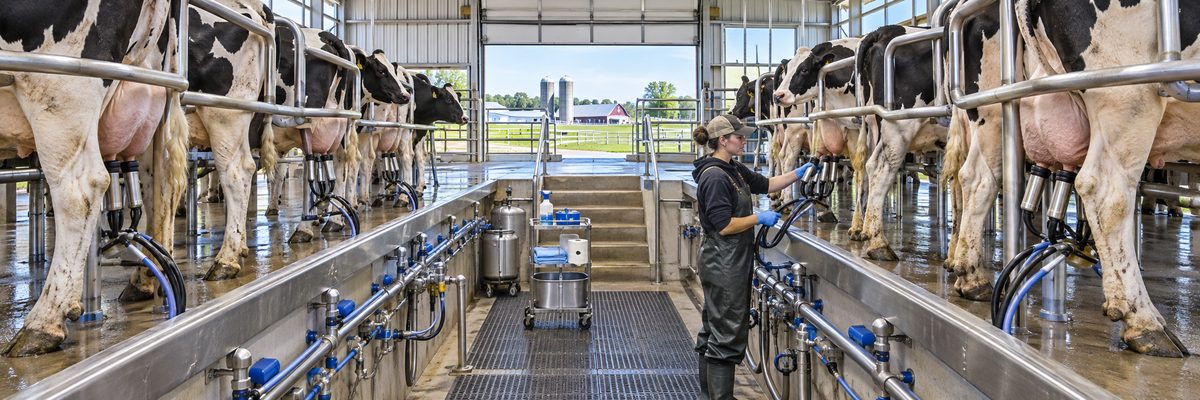
Ask five dairy farmers what vacuum their machine runs and you will get five answers, each delivered with total confidence. Ask five milking-system technicians and you will get a range, a question about your pipeline height, and a request to come back out with a gauge. That second answer is the better one.
Most milking systems in the United States run somewhere between about 12 and 15 inches of mercury (inHg) at the receiver or regulator, depending on whether the milk line is low or high. The more useful number is what the cow's teat actually sees at the claw during peak flow, which is typically a bit lower, often in the neighborhood of 10.5 to 12.5 inHg. Those numbers are from general industry guidance and from memory, so use them as a starting point and let your equipment dealer and the manufacturer's specifications settle the matter for your barn.
And one thing matters more than the target: the vacuum should be steady. A machine that sits at the right number on the gauge but swings up and down during milking is a worse machine than one that runs a little off target and holds still.
Why vacuum matters to the cow
Vacuum does two jobs. It opens the teat canal so milk can flow, and it holds the liner on the teat. Pulsation then massages the teat between milk phases. If the vacuum is too high, the teat end gets pulled hard into the liner and congested, and over time the teat end develops a rough ring. If it is too low, milk flows slowly, liners slip and climb, and units fall off at the worst possible time.
The effect is often small in a single milking and large across a thousand milkings. Teat end damage makes the canal harder to close and easier for bacteria to enter, which is one road to a higher cell count. If you want to see what the machine is doing to your cows, teat end scoring is a cheap way to find out.
Where the numbers come from
Different parts of the system carry different vacuum, and mixing them up is a good way to argue pointlessly with a neighbor.
| Where it is measured | What it tells you | Typical industry range |
|---|---|---|
| Receiver or regulator (system vacuum) | Vacuum the pump and regulator are set to hold | Roughly 12 to 15 inHg, lower for low-line, higher for high-line |
| Claw or short milk tube (teat-level vacuum) | What the teat actually experiences at peak flow | Often about 10.5 to 12.5 inHg |
| Vacuum reserve | Extra capacity so the level stays steady when units go on and off | Depends on number of units and equipment, set by the tester |
Low-line parlors and tiestall systems with milk lines at or below cow level generally run lower system vacuum than high-line setups where milk has to rise to a line above the cow. The difference is built into the design, which is one reason you cannot copy a number from another farm. Bucket and portable systems, common on small family dairies, usually run in a lower range and have their own specifications, so check with the manufacturer.
Stability beats the dial
The gauge on the wall is an average. What the cow feels is the minute-to-minute behavior of the vacuum at the claw. Three things drive stability:
- Pump capacity and reserve. The pump has to supply enough air flow for every unit, the pulsators, the washing system, and the odd leak, with room to spare.
- The regulator. A sticky or dirty regulator lets the vacuum hunt up and down.
- Leaks and plugged lines. Cracked hoses, worn gaskets, plugged air lines and clogged air vents in the claw all shift what the cow gets.
This is the territory of a milking system test, where a tech measures what the vacuum actually does during milking instead of what the dial claims. A static test with the system idle is useful, but it will not show the sag that happens when twelve units go on at once.
Signs your vacuum is off
Vacuum too high or unstable
- Teat ends that are red, swollen or ringed after the unit comes off.
- Cows that kick, stomp or shift during milking.
- Rough, hard teat ends over time, even with good dip.
- Units that run on dry teats after flow has dropped.
Vacuum too low or sagging
- Slow milking and long unit-on time.
- Liner slips, squawking and units falling off.
- Milk left behind and higher stripping yields.
- Cups that crawl up the teat, especially with a worn liner.
Many of these signs also have other causes: worn liners, bad attachment habits, stiff cows, or a milker in a hurry. Before assuming the machine is the culprit, check the basics in attaching and removing milking units the right way, and think about the age of your liners; the liner change schedule can explain a lot of mysterious problems.
What you can do yourself, and what you should not
You can check your vacuum gauge, listen for air leaks, look for cracked hoses, clean air vents on claws, and watch cows at the unit. You can log how often units fall off, how long milking takes, and what the teat ends look like. That information is gold when a technician comes out.
What you should not do is crank the regulator because the milk house seems slow. Raising vacuum to fix a problem that is really worn liners, plugged air vents or pulsation trouble just adds a new problem. Adjusting a regulator also does not fix a pump that cannot keep up. Settings should come from a qualified technician with the right gauges and the manufacturer's recommendations, and any change should be followed by a few weeks of watching teat ends.
Regional differences show up in practice. Large Southwest and West Coast dairies with big parlors and long pipelines put a lot of load on reserve capacity, while smaller Northeast and Upper Midwest tiestall barns may be running equipment that has been through three owners and a few remodels. Altitude also affects how vacuum pumps perform, which is something Mountain West dairies should mention to their dealer. For general reference on milking machine function and milk quality, the National Mastitis Council's protocols and guidelines page is a reliable place to look, and the University of Wisconsin Extension dairy program is another good starting point.
Quick answers
What is a normal vacuum for a pipeline milker?
Many pipeline systems run in the range of about 12 to 15 inHg at the system level, with low-line systems at the lower end. The vacuum at the claw during peak flow is usually lower, so have the tech measure both.
Can vacuum that is too high cause mastitis?
It can contribute. High or unstable vacuum can damage teat ends, which makes it easier for bacteria to get through the canal. It is rarely the only cause, so look at prep, liners, dip and bedding too.
How do I know if my vacuum is stable?
The only reliable way is to measure it during milking, which is what a dynamic system test does. If cups fall off, liners squawk or teat ends look rough, that is a good reason to schedule one sooner.