Pneumonia in Adult Dairy Cows Signs and Treatment
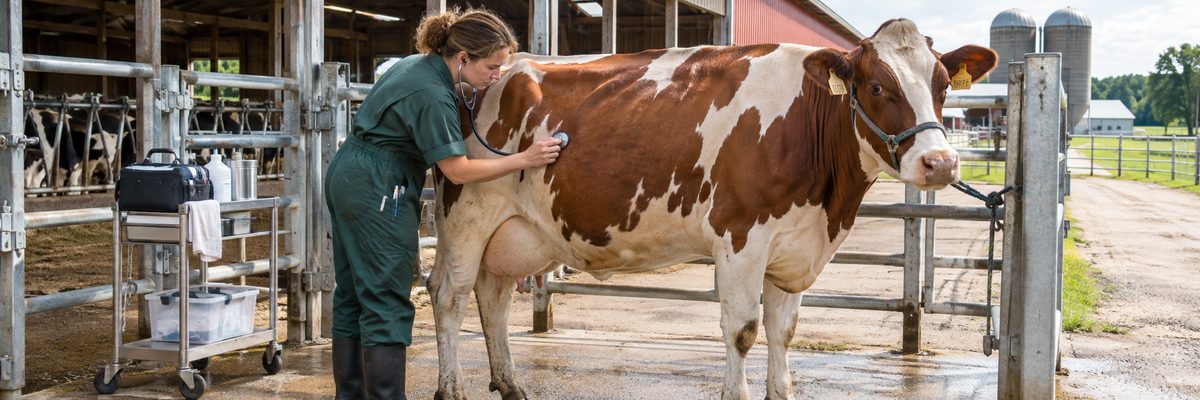
A lactating cow with pneumonia usually shows it as a fever, fast or labored breathing, a cough or nasal discharge, less feed and a drop in milk. Those same signs show up with other problems, though, including simple heat. So the first job is to take her temperature, count her breathing, and call the vet instead of guessing. Treatment is a veterinary decision, because the right drug, the milk discard time and the supportive care all depend on what is actually going on in her lungs.
Pneumonia in adult cows gets less attention than calf pneumonia, partly because it is less common and partly because the cause is often a barn problem that nobody wants to hear about. A cow that coughs in the stall when the barn is dusty is telling you something about the air. A cow that coughs from the next stall is telling you the same thing, only louder.
What respiratory disease looks like in a milking cow
Washington State University's veterinary teaching hospital describes bovine respiratory disease as a complex caused by a combination of stress, viruses, bacteria and environmental conditions that weaken immunity and allow infection. Signs listed there include fever, nasal discharge, coughing, rapid breathing, difficulty breathing, reduced appetite, lethargy and, in severe cases, pneumonia or death. In dairy practice, the first thing most herdspeople notice is a cow who walks to the bunk, picks, and walks away, with a head that hangs a little low.
Watch for
- Rectal temperature above normal. The veterinary literature typically uses a figure around 103 degrees F as the point where an adult cow is considered feverish.
- Breathing that is fast, shallow or labored, sometimes with an extended neck and open mouth when it is severe.
- Cough, either moist or dry, and nasal discharge.
- Drooping ears, dull eyes, reduced rumination and manure that gets scant.
- A sudden drop in milk and appetite.
Be careful about what you call pneumonia
A vet who wrote up the problem in a conference proceeding at dvm360, Pneumonia in adult dairy cattle, points out that fever, fast breathing and nasal discharge are not specific to pneumonia. An elevated body temperature in an adult dairy cow is not always a true fever, and it usually comes with a compensatory jump in respiratory rate. Together, those two findings can look like pneumonia, especially to non-veterinarians. Heat, humidity and exercise can raise temperature and breathing rate in a cow with healthy lungs. That is why the exam matters. The vet listens to the chest, checks the whole cow and may add tests such as ultrasound or sampling, depending on the case.
If your cows are panting in a heat wave, the explanation is more likely the weather than the lungs. If one cow is hot while pen mates are fine, the odds go up that she has a real problem. Thermometers are unpopular with cows and perfectly honest, which is a rare combination. Learn what normal looks like with the normal temperature, pulse and respiration guide so the numbers mean something when you need them.
Common risk factors
Respiratory disease rarely arrives on its own. WSU lists risks such as poor ventilation, overcrowding, weather changes, stress and sanitation problems, and lists several viruses and bacteria involved. For lactating cows, add the usual dairy suspects:
- Poor air quality. Ammonia, dust and humidity, especially in closed winter barns. See winter ventilation for how to open a barn without freezing the herd.
- Stress at fresh and during transition. A fresh cow has enough on her plate, and a respiratory bug takes advantage.
- Mixing groups and new animals. Purchased cows and returned cows bring new pathogens. A quarantine routine helps.
- Another illness. A cow already battling mastitis or metritis has less reserve.
- Aspiration. Drenching or tubing done wrong can put fluid in the lungs. Anyone who tubes cows should be trained by the vet.
- Vaccination gaps. Some viral respiratory pathogens are covered by common vaccines, but protection depends on the program. Talk to your vet about the vaccination schedule.
What to do when you spot a coughing, hot cow
- Isolate her if you can. Move her to the hospital pen or a clean box stall with good airflow and no drafts on her.
- Take a temperature and count breaths. Write both down. Look at her manure, her rumen fill and her attitude.
- Give water and good access to feed. Sick cows drink less than they should.
- Call the vet. Use the guidance in when to call the vet for a sick cow. Breathing trouble, a high fever or an open-mouth posture means call now.
- Follow the treatment plan exactly. Your vet chooses the drug, dose and length. Do not borrow leftovers from another cow, however convincing the half-empty bottle in the cooler looks.
- Mark and record the treatment. Write down the milk and meat withdrawal dates. The withdrawal times article explains how to keep treated milk out of the tank.
WSU's page lists the usual categories of treatment in a respiratory case: antibiotics for bacterial infections, anti-inflammatory medication, fluids and supportive care, less stress and better ventilation. The choice of products, and the discard periods that follow, are for the vet to decide, and in many cases extra-label use will be part of the plan, which requires a valid veterinarian-client-patient relationship.
When it is more than one cow
One cow with a cough is a case. Several cows with fever, cough and a milk drop in the same week is a herd issue and a reason to call the vet for a pen check, possibly with samples and lab work. Cluster signs should always get an immediate call, especially if the cows are ones who have recently arrived or who have a sudden drop in milk and appetite. Avian influenza in dairy cattle has been reported with reduced milk and appetite among other signs, so an unusual cluster is exactly the situation to describe to your vet and your state animal health officials. Read what farmers should know about avian influenza in dairy cattle for background.
Fixing the building is the long-term plan. Check airflow at cow level, bedding moisture, ammonia smell and stocking density, and compare it to what you see in a cold, still, humid week. In the Southeast and Southwest, heat load and dust may be the bigger stress. In the Upper Midwest and Northeast, the closed-up winter barn is the usual culprit.
Quick answers
How can I tell pneumonia from heat stress in a cow?
Both cause fast breathing and a higher temperature, so look at the whole picture. If many cows are panting in hot, humid weather, heat is the likelier cause, while a single cow with a fever, cough, discharge and off-feed behavior warrants a vet exam.
Can I treat a cow with pneumonia on my own?
You can start supportive care such as isolation, water and shade or shelter, but diagnosis and drug treatment belong with your vet. The vet also sets milk and meat withdrawal times.
Does pneumonia hurt milk production?
Yes, a sick cow usually eats less and gives less milk, and some lose condition. Early treatment and good supportive care give her the best chance of getting back in the string.