Normal Dairy Cow Temperature, Pulse and Respiration
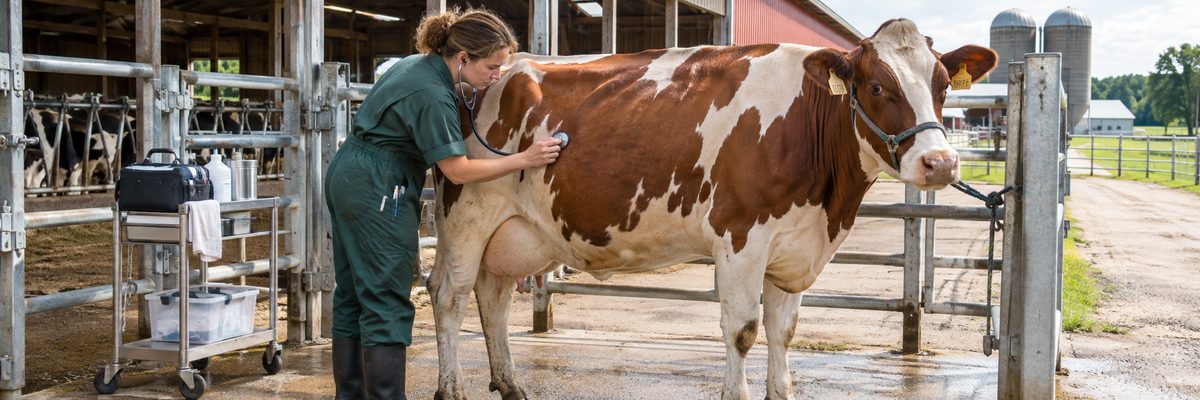
For an adult cow, normal rectal temperature runs roughly 100.4 to 103.1 degrees Fahrenheit, with 101.5 to 102.5 as the range many dairy herd exams treat as typical. Heart rate is about 40 to 70 beats per minute, and breathing is about 18 to 28 breaths per minute for dairy cattle at rest. Those are the numbers worth keeping on a card in the barn.
They are guides, not verdicts. A cow in a hot barn, a cow that just got chased, or one that just finished a hard fight with the headlock will read high. What matters most is how the numbers fit the cow: is she eating, chewing cud, giving her normal milk and standing with the herd? A 103 on a cow that is bright and eating is a different animal than a 103 on a cow that is dull and off feed.
A thermometer does not know what the cow is up to, but she will make it clear what she thinks of the process.
The numbers at a glance
| Measure | Typical adult range | Source note |
|---|---|---|
| Rectal temperature | 100.4 to 103.1 F | Virginia Tech Extension range for cattle |
| Typical dairy herd exam range | About 101.5 to 102.5 F | University of Wisconsin fresh cow exam |
| Heart rate | 40 to 70 beats per minute | Virginia Tech Extension |
| Respiration rate (dairy) | 18 to 28 breaths per minute | Virginia Tech Extension |
| Rumen contractions | 1 to 2 per minute | University of Wisconsin fresh cow exam |
Those ranges come from Virginia Tech Extension's cattle vital signs publication and the University of Wisconsin's fresh cow exam guide. Wisconsin's guide also notes that a temperature over 103.0 may indicate infection or inflammation. Calves have different normal values, which your vet can supply, and this article is about adult cows.
How to take a temperature
- Use a veterinary or digital thermometer made for animals. Tie a long string or clip to it so it can be pulled back out if it slips in.
- Restrain the cow safely in a headlock or stanchion, standing to one side of her hip, not directly behind.
- Lubricate the tip, lift the tail, and insert the thermometer into the rectum, resting it against the wall of the rectum.
- Leave it in for the time the manufacturer recommends. Virginia Tech suggests two to three minutes for conventional or digital thermometers where the manufacturer does not specify otherwise.
- Read it, record it, clean and disinfect the thermometer before the next cow.
Take the temperature at roughly the same time each day when you are monitoring a group, such as fresh cows. Afternoon heat and recent exercise raise readings. If you are tracking a fresh pen, the daily fresh cow check protocol shows where temperature fits among the other checks.
How to count heart rate
Virginia Tech suggests feeling the pulse at the external maxillary artery, which crosses the lower edge of the jaw just in front of the cheek muscle. Use gentle, steady pressure with your fingertips, not your thumb, so that you do not mistake your own pulse for hers. Count for a full minute with a watch. A stethoscope behind the left elbow also works if you have one and know what you are listening for.
A fast pulse can come from pain, fever, shock, dehydration or fear. A slow or weak pulse in a cow that is down is a reason to call at once.
How to count breathing
With the cow at rest, watch the flank rise and fall or watch the nostrils, and count for a full minute. Note the effort. Rapid, shallow breathing, grunting, open-mouth breathing, or a head and neck stretched out all mean trouble, even if the number is only a little high. In hot weather a cow that is panting may have a heat load, and cooling her is part of the answer. See reading cow behavior to spot heat stress for what to look for.
For a deeper chest problem, pneumonia in adult dairy cows covers the signs that go with a high respiration rate and fever.
Rumen contractions
Stand behind the left flank, in the triangle behind the last rib, and listen or press a fist into the hollow. In a healthy cow the rumen contracts about once or twice per minute. A rumen that is quiet and a cow that is off feed go together in a lot of conditions, from ketosis to a displaced abomasum. If rumen fill and contractions are poor, that is a reason for a closer exam, and it helps if you can describe what you found to the vet when you call.
Reading the numbers in context
Temperature
- Slightly high, cow bright and eating: Recheck in an hour after the cow has cooled and settled. Think about weather, stress and handling.
- High with off feed, dull attitude or a drop in milk: Call the vet. Fever and a sick cow go together.
- Low in a fresh cow: A cold cow can be a milk fever case or in circulatory trouble. This is a reason to call fast, not to wait.
Pulse and breathing
- High rates with a normal temperature often point to pain, fear or heat.
- High rates with a fever call for a vet.
- Labored breathing, whatever the number, is a call.
If you are deciding whether a particular cow needs a visit, when to call the vet for a sick cow breaks it down by sign. If you collect the numbers well, you will get a better answer from your vet on the phone.
Practical tips
- Keep a thermometer in a clean, marked spot, and a spare. They disappear into manure pits at an alarming rate.
- Write the baseline on the cow's record for cows you monitor often.
- Compare with the group. In hot weather, the Wisconsin guidance suggests looking at readings above the fresh cow group average rather than a fixed number alone.
- Be safe. Do not stand behind a cow that does not know you, and do not take a temperature on a loose cow in a pen.
- Keep the numbers with your treatment notes. Treatment records that hold up in an inspection explains what to write.
Quick answers
What temperature is a fever in a dairy cow?
University of Wisconsin Extension flags a reading over 103.0 degrees Fahrenheit as possible infection or inflammation. Heat stress and handling can raise it a little, so interpret the reading alongside appetite, milk and attitude.
What is a normal respiration rate for a dairy cow?
Virginia Tech Extension lists 18 to 28 breaths per minute for dairy cattle at rest. Hot weather and exercise raise it, and labored breathing is a concern at any rate.
Can I use a human thermometer on a cow?
A digital thermometer made for animals or a sturdy digital one that is dedicated to livestock use works if it is clean, has a string or clip, and is never used for people again. Many farms keep a few cheap digital veterinary thermometers on hand.