Setting Up a Hospital Pen for Sick Cows
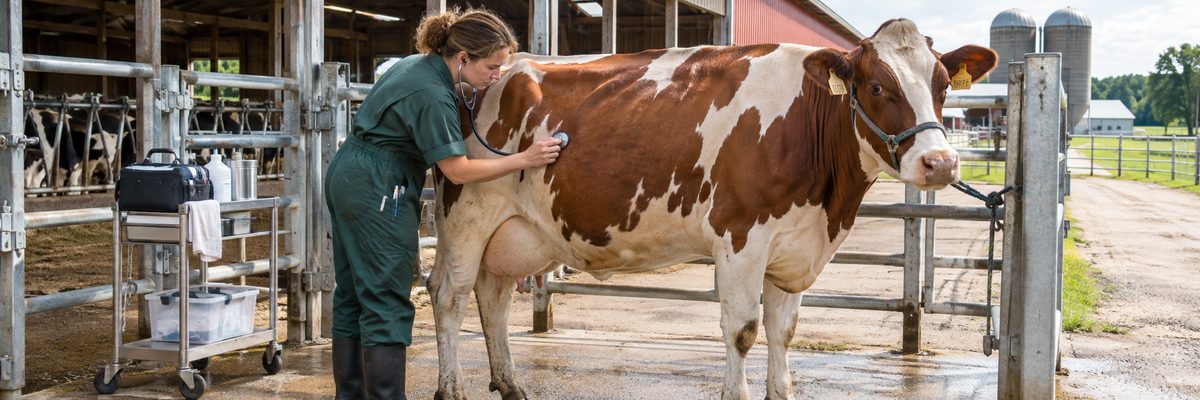
A good hospital pen is a small, comfortable, easy-to-work pen set apart from the main herd, with its own water, deep bedding, a way to restrain cows and a place to keep treatment supplies. It lets you watch sick cows closely, keep treated milk out of the tank and lower the chance that a sick cow shares more than a feed bunk with her pen mates. It also keeps you from treating cows in the alley with a bucket and a flashlight. Which is not a plan. It is a Tuesday.
The setup does not have to be fancy. A tidy corner of a freestall barn, a few tiestall spots or a bedded pack off the main traffic route can do the job if the basics are right. What matters is that a sick cow is better off in the pen than she would be in the high group, and that the crew actually uses it.
How big should it be
The University of Wisconsin-Madison's Dairyland Initiative has a useful page on the hospital pen and the numbers are worth knowing. In a survey of Wisconsin herds, an average of about 2.5 percent of the herd was in the hospital pen at any given time, and the pen contained a mix of fresh cows, mastitis cows and lame cows, since many farms house fresh and sick cows together to keep milk withdrawal simple. Based on that, the group recommends sizing a pen for sick cows only to roughly 1.5 to 2 percent of herd size, with fresh cows kept in their own transition pen rather than blended into the sick pen.
A 400-cow herd would therefore plan on a sick pen of roughly 6 to 8 places. Smaller herds will find that arithmetic gives them one or two stalls, which is a fine place to start. Larger herds, or herds with a lot of fresh-cow problems, may need more. Size it for your worst week, not your best.
What goes into a pen that works
Bedding and footing
A sick cow often does not want to stand and often cannot eat well, so comfort matters even more than in the main herd. Deep, dry, soft bedding, whether sand, straw or a bedded pack, helps her lie down comfortably and get up again. Good footing keeps weak cows from slipping. Concrete alone, in a pen with a weak or lame cow, is a problem waiting for a vet bill. The same footing lessons that apply in the main barn apply here, more so.
Water and feed
The Dairyland Initiative recommends a separate waterer used only by the sick cow group, cleaned out daily, to lower the risk of spreading fecal-oral pathogens. Sick cows often drink less, so make water easy to reach. Feed space should allow each cow plenty of room, and the ration usually is adjusted with your nutritionist's input. A cow that is off feed may need a different plan than the milking string.
Handling and treatment
Have a headlock or a chute nearby so one person can treat a cow safely. Put the pen close to where drugs and supplies are kept. The Dairyland Initiative suggests locating it adjacent to the storage area and a handling chute, which saves steps and time. A cow who can be restrained easily will be treated on schedule. A cow that takes three people and a long walk may not be.
Manure flow and location
Place the pen at the end of the manure removal route, so sick-cow manure does not travel through healthy cow pens. That one design choice reduces the spread of manure-borne disease, and it is easy to miss when a pen gets squeezed into whatever space was left.
A quick setup checklist
- Sized for sick cows only, at around 1.5 to 2 percent of the herd as a starting point, adjusted for your herd.
- Deep, clean, dry bedding and good footing.
- Dedicated waterer, scrubbed every day.
- Feed access with enough bunk space and room to lie down without being bullied.
- Headlock or chute close by, with good lighting.
- Drug and supply storage, with a thermometer, record sheet and marking supplies within reach.
- Downwind or downstream of healthy pens for manure flow.
- A way to milk treated cows last, or with a separate unit, and a plan for diverting milk.
Running the pen day to day
The pen is only as good as the rules around it. Write them down and share them.
- Entry criteria. Decide with your vet which cows go in: fever, off feed, treated cows with discards, cows needing close observation. Skip the "well, she might be sick" cows or you end up with half the herd in there.
- Exit criteria. A cow leaves when she eats, her temperature and attitude are normal, and any withdrawal period is under control. Do not shift her back to the high group because the pen got crowded.
- Order of work. Healthy cows first, sick pen last, and a boot wash or a change of gloves between. See the milking order advice for fresh and treated cows.
- Records. Every treatment gets written down, with withdrawal dates. The treatment records article shows what to include, and the notes on withdrawal and discard explain why the clear date matters.
- Cleaning. Strip, clean and rebed between uses, and take extra care when an infectious disease like salmonella is suspected. Ask your vet about disinfection and quarantine steps for those cases.
Variations by region and herd size
In cold Upper Midwest and Mountain West barns, the pen should be out of drafts but still ventilated, because pneumonia and frostbite do not do cows any favors. In the Southeast and Southwest, shade, fans and soakers matter, because a sick cow cannot shed heat as well. Grazing herds can use a small paddock near the barn with shelter and shade, as long as the cow can be handled and monitored closely. A small family dairy may use a box stall, and that is perfectly fine if it is clean and she can be milked and checked easily.
If your hospital pen has turned into a place where cows go to disappear, take a look at what is happening. Sometimes the answer is calling the vet sooner. Other times the kindest call is the hard one covered in humane euthanasia on a dairy farm.
Quick answers
Can fresh cows share the hospital pen?
Many farms do it to simplify milk withdrawal, but the Dairyland Initiative suggests sizing a true sick pen for sick cows only, so fresh cows are not exposed to sick ones. Talk to your vet about what fits your layout.
Does a small herd need a separate hospital pen?
You need some way to separate and watch a sick cow, even if it is one box stall or a tiestall at the end of the barn. It does not have to be big, just clean, comfortable and easy to work in.
How do I keep a hospital pen from spreading disease?
Give it its own waterer, put it downstream for manure, milk it last and clean it between cows. Ask your vet about added precautions if you suspect something contagious.