Barns, Cow Comfort & Equipment
Winter Ventilation: Keeping Barns Open and Dry
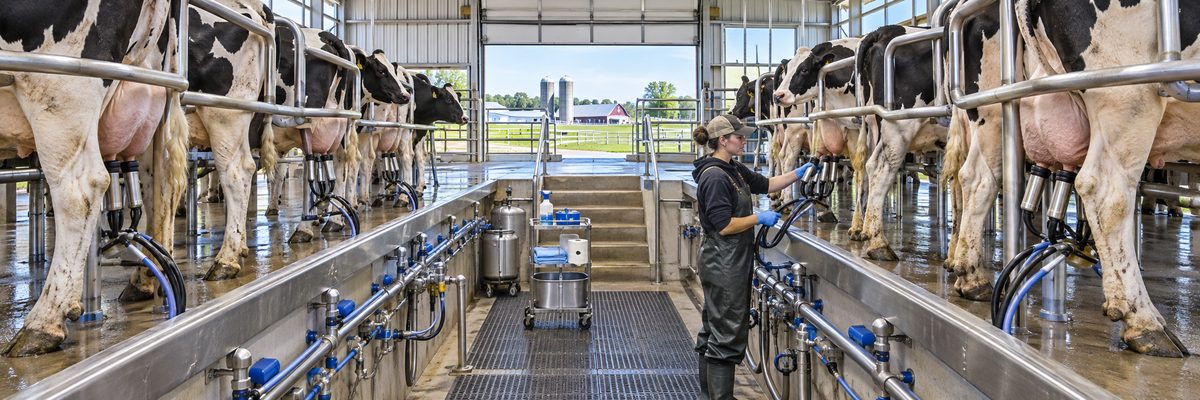
Most winter barn problems come from too little fresh air, not too much cold. Dripping rafters, a sharp ammonia bite in your nose, frost on the roof and bedding that never dries all point the same direction: moisture has nowhere to go. The answer for nearly every naturally ventilated dairy barn is to keep more openings working than feels comfortable to you.
As a rule of thumb, set curtains so the barn stays only a little warmer than outside. If you could hang a coat in the barn and not want to put it on, you are probably close. If the barn feels like a greenhouse, the cows are breathing wet air.
Cows have a thick coat, a rumen that works like a space heater and a comfort range that starts far below where people shiver. They would rather be cold than damp.
Where winter moisture comes from
A dairy barn full of cows makes a surprising amount of water vapor. Cows breathe it out, manure and wet alleys give it off, and bedding holds it. When warm, humid air hits a cold roof, it condenses and drips back down. That drip lands on stalls, feed and cow backs, and it keeps going until you let the humid air out.
Ammonia comes from manure and urine breaking down, and it builds when air stands still. High ammonia irritates cow lungs and your own, and it tells you the barn is not exchanging air. What the barn smell is telling you about ventilation covers what to do with that clue.
The parts of a naturally ventilated barn
Most freestall barns use two openings. Fresh air enters through the sidewalls and eaves. Warm, moist air rises and leaves through the ridge. The barn works because warm air is lighter, and the stack effect pulls fresh air in at the bottom. Wind helps when it blows, but you should not need a gale to keep the barn dry.
- Sidewall curtains or doors. These control how much air enters at cow level.
- Eave openings. A gap under the roofline lets air flow in even when curtains are partly closed.
- Ridge opening. This lets the warm, wet air out. It should stay open in winter. Designers commonly size ridge openings in proportion to the barn width, so your barn builder or an extension engineer should confirm what is right for your building.
- Roof pitch and insulation. Steeper roofs move air better, and an uninsulated roof that is cold on the inside is a condensation trap. Ask a barn designer what suits your building.
The full explanation is in natural ventilation in freestall barns explained, and mechanical barns that use fans and controlled inlets are covered in tunnel ventilation for dairy barns.
Setting curtains by weather
There is no single setting, but the pattern holds up across the Upper Midwest, the Northeast and the Mountain West.
| Weather | Curtain and opening approach |
|---|---|
| Cold and calm | Open the ridge fully, leave a meaningful sidewall gap and watch for condensation |
| Cold and windy | Close the windward side partly to stop drafts on cows, open the leeward side, keep the ridge open |
| Snow or freezing rain | Close just enough to keep precipitation out and reopen when it stops |
| Mild, wet days | Open wider than you think, since humidity is the problem more than cold |
| Hard cold snap | Reduce openings gradually, not all at once, and check cows and bedding often |
Automatic curtain controllers with temperature and wind sensors save a lot of trips to the barn. Check that sensors are clean, calibrated and placed in the right location. A sensor in a sunny corner will tell the curtain it is 60 degrees when it is not.
Warning signs the barn is too tight
- Frost or beads of water on the underside of the roof or the rafters.
- A strong ammonia smell that hits you at the door.
- Bedding that is damp even after fresh additions.
- Cows coughing or breathing harder than the weather would explain.
- Rust on metal, rotting wood and peeling paint above the stalls.
- Calves with runny noses and a wet-looking room. Ventilating a calf barn without chilling the calves has specifics.
A simple test is a smoke or fog stick on a calm day. Watch whether it drifts up and out or hangs. Hanging smoke means dead air. You can also stand at cow level for a few minutes and note whether there is a draft across the stall surface, which would suggest the curtains are open on the wrong side.
Common mistakes
- Closing the ridge. This is the biggest culprit. It traps the exact air you need to remove.
- Closing everything at night and forgetting. Check settings at evening chores.
- Blocking openings with stored hay, equipment or snow banks. Piles outside the sidewalls can cut airflow right where it is needed.
- Treating a wet barn with heat. Heating a leaky, humid barn costs a lot and does not fix condensation.
- Ignoring the manure. Frequent scraping and dry alleys reduce the moisture the barn has to handle.
Tiestall and older barns
Older tiestall and bank barns often have small windows, low ceilings and cows packed in close. Use window and door openings, add exhaust or circulation fans and consider a ridge vent when the roof allows it. Manure gutters and wet bedding add moisture, so fixing those pays off. More ideas are in updating a Northeast tiestall barn without rebuilding.
Where to get design help
Barn ventilation depends on your building width, orientation, surrounding structures and local wind. Dairy extension engineers and barn designers can evaluate it on site. The Penn State dairy team has a good collection of housing information at Penn State Extension dairy, and the University of Wisconsin posts practical material at UW dairy extension.
Quick answers
How open should barn curtains be in winter?
Open enough that the barn runs only slightly warmer than outside and shows no condensation or ammonia. In practice that is more open than most people expect. Adjust gradually when the weather turns.
Is condensation on the roof really a problem?
Yes. It means warm, humid air is meeting a cold surface and dripping back onto the stalls, feed and cows. More air exchange and a working ridge opening are the usual fixes.
Do I need fans in winter?
Not in most naturally ventilated freestall barns, but mechanically ventilated or tiestall barns usually do. If air hangs in one corner, ask a ventilation specialist whether a few circulation fans would help.