Pre-Milking Teat Prep, Step by Step
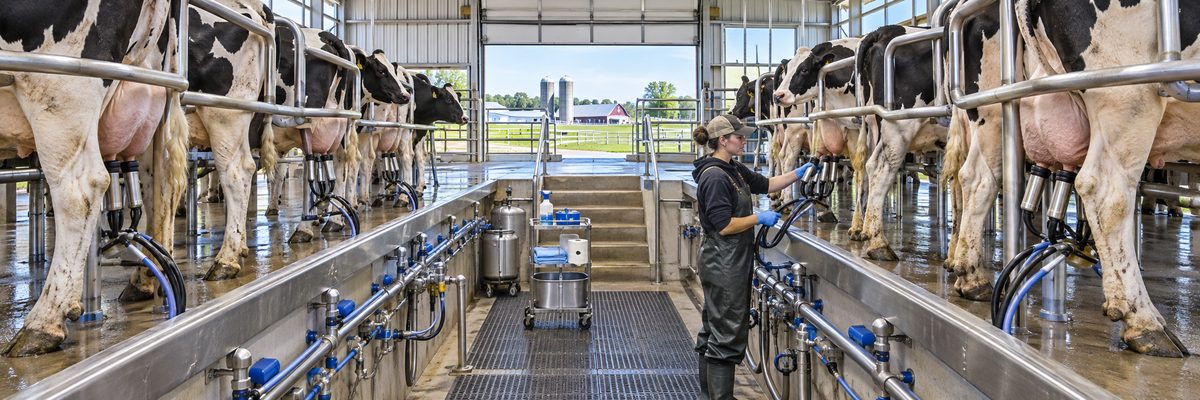
Teat prep is the ten or fifteen seconds per cow that decides whether the milk going into the unit is clean and whether the cow lets it down properly. Done well, it cleans the teat end, kills what is on the skin, stimulates the cow and leaves a dry teat for the liner. Done badly, it moves dirt around and gives the liner a very wet start.
The order that most programs use is straightforward: forestrip, apply pre-dip, wait for contact time, wipe dry, attach. The details that trip people up are how long the dip sits, how well the teat ends are dried and how soon the unit goes on afterward.
Below is the sequence, what each step does, and how to adjust for muddy cows, cold weather and crews that keep inventing their own shortcuts. Nobody has ever won an argument with a cow's teat end, but plenty of people have tried.
The standard sequence
1. Gloves on, clean hands
Milkers should wear clean gloves and keep them clean. If a glove gets covered in manure, rinse it or change it. Hands that touch the udder are the first link in the chain of bacteria moving from cow to cow.
2. Forestrip each quarter
Squirt a few streams of milk from each teat into a cup or onto a dark surface, depending on your barn rules. This checks for clots, flakes or watery milk that suggest mastitis, and it helps trigger let-down. See why forestripping before milking still matters. Milk from abnormal quarters should be handled according to your herd health protocols and your veterinarian's advice, including withholding milk from the tank.
3. Apply the pre-dip
Cover the teat skin with an approved pre-milking teat dip, using a dip cup or a spray, so that the whole teat is wetted, including the end. The label gives the required contact time. Pre-dip versus post-dip explains why the two products have different jobs, and how to choose a teat dip covers product options.
4. Let it sit for the contact time
This is the step crews skip when they are behind. Many pre-dips need around 20 to 30 seconds of contact to do their job, but the label and your supplier set the real number. While the dip works, move to the next cow and do the same, which gives you a natural rhythm.
5. Wipe and dry thoroughly
Use a clean single-use towel for each cow, or a clean cloth that has been laundered properly. Wipe the teat end and the sides, using a gentle twisting motion on the end if your program calls for it. The teat should be visibly dry. Residual dip or dirt left on the teat can end up in the milk, and wet teats make liner slips more likely.
6. Attach the unit
Many milk quality programs aim to have the unit on roughly a minute or so after stimulation begins, and not much later, but exact targets vary with the system and your advisor's recommendation. Consistency matters more than the precise number. The attachment technique is in attaching and removing milking units the right way.
Timing guide
| Step | Typical purpose | Common mistake |
|---|---|---|
| Forestrip | Check milk, start let-down | Only two or three squirts, or skipped entirely when behind |
| Pre-dip | Reduce bacteria on teat skin | Only dipping the end, or not covering the sides |
| Contact time | Let the dip work | Wiping right after applying |
| Wipe dry | Remove dirt and dip | One towel for several cows, or a damp teat left behind |
| Attach | Milk during let-down | Attaching too early or letting cows stand too long |
Why stimulation counts as much as cleaning
A cow lets milk down in response to the right physical stimulation, which includes forestripping, dipping and wiping. Those steps together provide the touch she needs. Too little and the unit goes on before the cow is ready, which can lead to slow, uneven milking and more unit-on time. Too much delay and the let-down window can close. If you see milk flow starting and stopping, consider milk let-down problems and how to fix them.
Adjusting for conditions
- Muddy or dirty cows. Heavily soiled teats may need to be washed first, but wet teats must be dried well afterward. Fixing the pen or lot is usually better than washing every cow forever. This is a regular problem in wet seasons in the Northeast and on some grazing dairies.
- Cold weather. In freezing weather, dip and wipe carefully so teats do not stay wet when cows go outside. Winter milking in the Upper Midwest and protecting teats is worth a read.
- Dry lots and dust. Dust can build up on teats in dry regions; a good wipe still matters. See dust and milk quality on Southwest dry lot dairies.
- Robots. Robotic milkers do teat prep with brushes, cups or sprays, so the manager's job is cleaning, maintenance and monitoring.
Mistakes to avoid
- Reusing a wet or dirty towel on several cows.
- Skipping the contact time because the barn is behind.
- Letting a dirty glove touch the next cow's teats.
- Putting the unit on before the teat is dry and stimulated.
- Treating each shift's routine as optional.
Teat prep is also the easiest thing in the barn to teach wrong, since a new milker will copy whoever trained them. If the trainer is a skipper, you have a new skipper by Thursday. Our consistent milking routine piece covers how to keep the whole crew on the same page.
The National Mastitis Council resource library has material on milking procedures and mastitis prevention, and your veterinarian or milk quality advisor can fit the details to your parlor and cows.
Quick answers
Do I have to wash teats before every milking?
Not always. Many programs use dry wiping or a pre-dip and wipe on moderately clean cows, and reserve washing for heavily soiled teats. Whatever you choose, teats must be dry before the unit goes on, and your veterinarian or milk quality advisor can help match the method to your herd.
How long should pre-dip stay on?
Follow the product label. Many pre-dips need roughly 20 to 30 seconds of contact, but the manufacturer's directions rule, and wiping off early reduces the benefit.
Can I skip prep on a clean cow in a hurry?
It is tempting, but stimulation and cleaning both matter for let-down and milk quality, even on a clean cow. A consistent routine for every cow is safer than deciding on the fly.