Weaning Dairy Calves: When and How
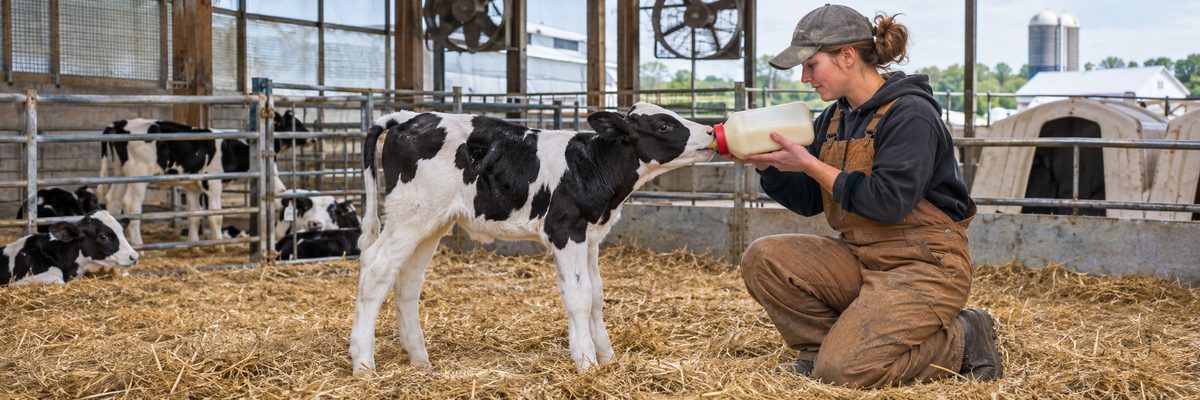
Wean a dairy calf when she's eating enough starter to carry herself, not when the calendar says so. A common benchmark is about 1.5 to 2 pounds of starter a day for a few days in a row. Age usually lands somewhere between 6 and 10 weeks, but a calf that hasn't hit the intake target is not ready, no matter what the schedule on the wall says.
The goal is to take milk away without the calf noticing her growth has stalled. That means a rumen that's already developed, a gradual step-down and a pen that doesn't change on her at the same time. Do that, and weaning is a Tuesday. Do it badly, and it's a week of bawling and a month of calves that look like they've been through a wringer.
Why starter intake is the real signal
Milk feeds the calf, but starter builds the rumen. When milk is reduced, the calf must get her energy from starter and forage. If she isn't eating enough, she goes hungry, loses weight and becomes sick-prone. Intake is the one number that tells you the rumen is ready.
That's why the groundwork happens weeks before weaning: clean water from the first days, fresh starter in a clean pan and a milk program that doesn't leave her too full to try it. When to start calf starter and how much to offer and fresh water from day one are the two pieces that determine how easy weaning will be.
Typical age ranges
| Program | Typical weaning age | Notes |
|---|---|---|
| Conventional lower-milk program | Around 6 to 8 weeks | Often abrupt or a short step-down |
| Higher-milk program | Around 8 to 10 weeks | Longer, gradual step-down is the norm |
| Automatic feeder, group pen | Per feeder program, commonly 8 to 10 weeks | Computer steps milk down per calf |
| Smaller breeds (Jersey, etc.) | Similar timing, assess by intake and weight | Smaller frame, smaller intake numbers |
These are common ranges, not rules. Your herd vet or calf nutritionist can tune them to your program. The calf isn't reading the chart.
Weaning readiness checklist
- Starter intake: roughly 1.5 to 2 pounds a day for several days in a row. Measure it, don't eyeball it, by weighing what you put in and what's left.
- Health: no scours, pneumonia, fever or ongoing treatment. Weaning a sick calf is asking for a setback. Early signs of pneumonia are easy to miss in a calf that's also stressed by feed changes.
- Weight and frame: typically at least double her birth weight, a common rule of thumb. A weight tape helps; see weighing and measuring heifers.
- Water: she's drinking it regularly.
- Weather and stress: avoid weaning during extreme heat or cold, right before regrouping, moving, disbudding or shipping if you can help it.
How to wean
Step-down is gentler than abrupt
Dropping milk all at once works for some farms, especially on lower-milk programs where calves already eat starter well. Higher-milk calves usually do better with a gradual step-down over one to two weeks, so intake can climb as milk comes down. A step-down weaning schedule that keeps calves growing lays out one way to do it, and your nutritionist can adjust it to your milk volumes.
Common ways to step down
- Cut volume: reduce each feeding by a set amount every few days.
- Drop a feeding: go from two feedings to one, then to none, over about a week.
- Dilute: some farms thin the milk gradually, though this can be less reliable than reducing volume.
Whatever method you choose, watch starter intake at every step. If it stalls, hold the milk level for a few days instead of pushing on.
Keep everything else the same
Weaning is stressful enough without moving her. Keep her in the same hutch or pen, with the same bedding, the same feeding times and the same person feeding her if possible, for at least several days after the last milk. Moving calves to a group pen is a separate step best done after weaning is settled; moving weaned calves to group pens without the setback covers how.
Forage also changes after weaning. Starter keeps the rumen going, and many farms add a bit of good, clean, chopped hay or straw once calves are eating enough grain, though recommendations differ, especially with textured starters that already include fiber. Ask your nutritionist how it fits your program.
Signs it's going well and signs it isn't
Going well
- Starter intake rises as milk drops.
- Manure firms up but isn't dry or pasty.
- She keeps gaining, even if more slowly for a few days.
- She's quieter after the first couple of days of bawling.
Going badly
- Intake stalls or drops.
- She looks gaunt, with a tucked-up flank and rough hair.
- Scours or coughing appear.
- She keeps bawling at the feeding spot long after the other calves quit. Calves know where the buffet used to be.
If intake isn't there, go back to the last milk level that worked. Delaying weaning by a few days costs far less than a calf that stops growing for a month.
Regional notes
Cold stress in the Upper Midwest, Northern Plains and Mountain West makes weaning harder, since calves burn more energy keeping warm. Many farms there avoid weaning in the worst of winter or provide extra energy. In the Southeast and Southwest, heat can suppress starter intake, so cool water, shade and early-morning feeding help. In grazing regions, calves may wean onto pasture, which is a different management plan with parasite and water concerns.
For general weaning guidance, the Dairy Calf and Heifer Association and UW-Madison dairy extension publish calf program resources, and your vet should weigh in if a calf stalls.
Quick answers
What age should dairy calves be weaned?
Commonly around 6 to 10 weeks, depending on the milk program. Starter intake and health matter more than the exact week.
How much starter should a calf eat before weaning?
A common benchmark is roughly 1.5 to 2 pounds a day for several days in a row. Ask your nutritionist to confirm the target for your herd.
Is it better to wean abruptly or gradually?
Gradual usually causes less stress, especially for calves fed higher volumes of milk. Abrupt weaning can work on low-milk programs where starter intake is already strong.