When to Start Calf Starter and How Much to Offer
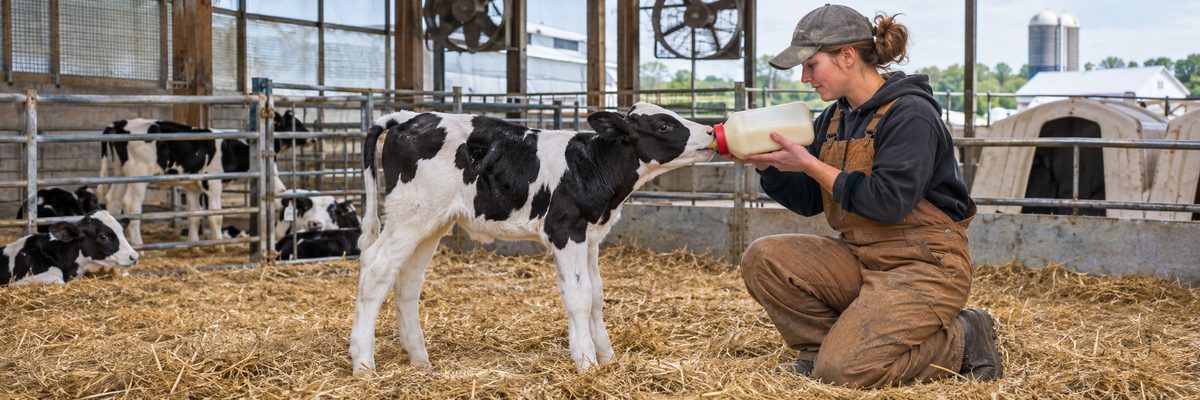
Offer calf starter in the first few days of life, in a small clean pan, with water next to it. That's the short answer. She won't eat much at first, and a calf that sniffs it and wanders off isn't failing. She's checking the menu.
The reason to bother early is the rumen. A newborn calf is a single-stomached animal in practice, running on milk that bypasses the rumen. The rumen only develops when fermentable feed and water reach it, and the bacteria that eat starter produce the fatty acids that grow the rumen wall. Milk alone won't do that. That's why a calf that eats starter well before weaning generally comes through it without the growth stall that scares everybody.
When to start
Many farms put starter in front of calves somewhere between day 1 and day 5, typically once the calf is past the early colostrum feedings and is steady on her feet. Waiting until a week or two is common too, but earlier exposure tends to get calves eating sooner. There's no magic day. What matters is that starter is available, fresh, and that she can find it without a treasure map.
Water goes with it. Dry feed without water is hard for a calf to eat and ferment. If you haven't read it yet, why newborn calves need fresh water from day one covers the link between water and starter intake in detail.
How much to offer
Start small. A handful or a couple of ounces in a clean pan is plenty to begin with. Calves eat tiny amounts the first week or two, sometimes just a few mouthfuls. Replace it daily, or more often if it gets wet, because stale, caked or moldy starter puts her off the feed fast. Better to throw out a handful every morning than to leave a week's worth to go musty.
Intake climbs as she gets older and as milk is held steady and then reduced. Typical benchmarks you'll see in calf programs:
| Calf age (typical) | Starter intake you'd hope to see |
|---|---|
| First week | Tasting, a few ounces at most |
| Weeks 2 to 3 | Small but steady, often under a half pound |
| Weeks 4 to 5 | Climbing toward a pound |
| Around weaning | Roughly 1.5 to 2 pounds a day for several days in a row |
Those numbers vary with milk feeding level. Calves fed larger volumes of milk often eat less starter early on because they aren't hungry, then catch up when milk is reduced. That's normal. The trick is not to drop the milk before starter intake can carry her. Weaning dairy calves: when and how explains the intake-based criteria many farms use, and a step-down weaning schedule shows how to ease milk down while starter intake builds.
What kind of starter
Texture and form matter. Starters are sold as textured (a mix of whole and processed grains with pellets and molasses), pelleted, or sometimes with forage added. Calf specialists often favor textured or coarse mixes because they tend to promote healthy rumen development and are less dusty than fine pellets. Dusty starter is a common reason calves turn their noses up, and a fine meal hanging in the air isn't doing the lungs any favors either. Protein levels are commonly in the high teens to around 20 percent, depending on milk program and product. Ask your nutritionist or feed rep what fits your milk volumes and read the tag, just like you would with milk replacer.
Medicated or non-medicated is a vet and nutritionist conversation. Some starters contain additives such as coccidiostats. Follow label directions, and don't switch them around without checking.
Keeping starter fresh and attractive
- Use a shallow pan or bucket the calf can reach easily, and keep it clean and dry.
- Remove wet or moldy feed every day. Wet starter in a hutch ends up as a science project.
- Raise the pan out of the bedding or use a bracket so she isn't wearing it.
- Place it where she'll see it, ideally near where she rests but away from where she dungs.
- Rub a little on her muzzle after a milk feeding if she isn't getting it. A calf that tastes it once often goes back.
- Offer it fresh at regular times so it becomes part of her routine.
In hot, humid parts of the Southeast, feed spoils faster, and flies find it. Smaller, more frequent top-ups help, and fly and humidity control for calf hutches is worth a read. In the Upper Midwest and Northeast winters, starter can freeze into a brick, so use a smaller amount and keep it dry.
What if she won't eat it?
Check the basics before blaming the calf. Is the starter fresh? Is there clean water, and is she drinking? Is the milk volume so high she's full? Is she sick, with a fever or scours? A calf not interested in anything may be telling you more than a feed problem, so look at her whole picture. If she's dull, scouring or not eating at all, call the vet rather than adjusting feed. Otherwise be patient, keep the pan fresh and keep the water clean. Calves, like people, tend to try what's around them eventually, even if it takes longer than your schedule allows.
A few mistakes come up often: starting too late, leaving old feed in the pan, no water nearby, and cutting milk when the starter graph still looks like a flat line. For more on calf nutrition programs, the Dairy Calf and Heifer Association and UW-Madison dairy extension publish practical resources.
Quick answers
How early can I start calf starter?
Many farms offer it within the first few days. Early exposure encourages intake, but make sure clean water is available alongside it.
How much starter should a calf eat before weaning?
A common benchmark is roughly 1.5 to 2 pounds a day for several consecutive days before milk is cut. Your nutritionist can set the target for your herd and feeding program.
Why is my calf not eating starter?
Common causes are stale or wet feed, no water, too much milk, or illness. Fix the basics first, and call your vet if she seems dull or is scouring.