A Step-Down Weaning Schedule That Keeps Calves Growing
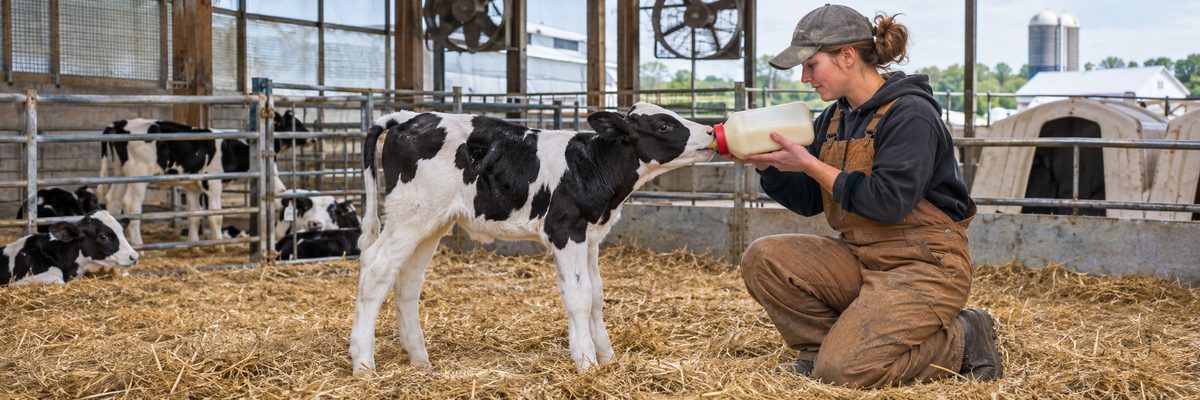
A step-down weaning schedule trims milk in small, planned steps while starter intake climbs to take its place. The calf's gut and her appetite get time to adjust, and you get a chance to catch a stall before it becomes a setback. What follows is a sample plan, not a law. Adjust it to your milk program, your calves and your vet's advice.
The principle is simple: milk goes down only as fast as starter goes up. If starter doesn't rise, the schedule waits. Calves don't know what week it is, and neither does their rumen.
Before you start
A step-down only works if the groundwork is done. Check these before you cut a drop of milk:
- Clean water is available at all times. See why newborn calves need fresh water from day one.
- Starter is fresh, dry and eaten daily; when to start calf starter covers the early weeks.
- The calf is healthy, with no scours, fever or cough.
- You know her current milk volume and starter intake. Weigh starter offered and refused for a few days. Without numbers, you're weaning on a hunch.
- No big stress is scheduled for the same week: moving pens, disbudding, shipping or vaccinations. Disbudding is best kept apart from weaning when you can.
A sample step-down over about two weeks
This example assumes a Holstein calf on a higher-milk program, around 6 to 8 quarts a day in two feedings, who is eating starter well. Smaller breeds and different programs will have different volumes. Treat the amounts as a pattern, not a prescription.
| Phase | Milk | Starter intake to see before moving on |
|---|---|---|
| Holding period | Full milk allowance, steady | Roughly 1 pound a day or more and rising |
| Step 1 (about 3 to 4 days) | Cut daily milk by about a quarter | Holding steady or climbing |
| Step 2 (about 3 to 4 days) | Cut to about half the original | Around 1.5 pounds a day |
| Step 3 (about 3 to 4 days) | Down to a single small feeding or a quarter of the original | Approaching 2 pounds a day |
| Final | Milk stops | About 2 pounds a day, several days running |
Some farms stretch the whole thing over three weeks for calves fed more milk, others compress it to a week for lower-milk calves. The right length is the one where starter intake keeps pace. Automatic feeders do this by software, with a curve set by age; the pros and cons of automatic calf feeders include how that programming works and where it goes wrong.
Hold or advance: the decision rule
At each step, check the calf before moving on.
- Advance if starter intake is rising or steady at target, manure is normal, she's bright and eating, and weather isn't extreme.
- Hold for a few days if intake dipped, she had a rough night of weather or the pen got moved. Repeat the same milk level until she catches up.
- Back up one step if intake fell and she looks hungry or unthrifty.
- Call the vet if she's scouring, coughing, off feed or has a fever. Illness changes the plan. Calf scours: what to do in the first hours and early signs of pneumonia help you decide how fast to act.
Tracking what matters
You don't need a lot of paperwork, but a short record helps you see patterns and keeps three different feeders on the same page. A pen card or phone note with date, milk volume, starter offered, starter refused and any health notes does the job. A weekly weight tape reading catches calves that lose ground in the transition, and weighing and measuring heifers shows how. Over time, calf records that pay off will tell you which weaning age and schedule suits your farm.
Keep the environment steady
- Don't move the calf during step-down. Leave her in the same hutch or pen until she's through it and settled for at least several days after the last milk.
- Keep feeding times the same. She will still show up at the old feeding time, looking offended.
- Keep bedding dry and the pen free of drafts.
- In cold weather, calves need extra energy, so consider a slower step-down. In heat, make sure water is cool and starter is fresh.
Common mistakes
- Weaning by the calendar. A calf at 56 days who eats half a pound of starter isn't weaned, she's underfed.
- Cutting milk and moving pens in the same week. Two stresses at once is where setbacks come from.
- Letting starter go stale. If the calf is cutting milk, she needs the starter at its best.
- Ignoring water. No water means no starter, which means no weaning.
- Forgetting the group. Calves in a group pen eat at different rates. The shy one at the edge needs individual checks.
- Skipping the post-weaning check. The slump often shows up a week or two after milk ends. Keep weighing, and have a plan for the move; moving weaned calves to group pens picks up there.
Where this fits in your wider program
The step-down is the last act of a program that started at birth: colostrum, a clean hutch, steady milk, early starter and water. When those pieces are in place, weaning feels uneventful, and that's the goal. If you're weaning on a program that feeds less milk, shorten the steps, but keep the hold-or-advance rule. For the broader decision on age and criteria, weaning dairy calves: when and how is the companion piece.
Your herd vet and calf nutritionist can adjust volumes and timing, especially for sick calves, small breeds or unusual weather. Reference material on calf programs is available from the Dairy Calf and Heifer Association and UW-Madison dairy extension.
Quick answers
How long should a step-down weaning take?
About one to two weeks is common, and up to three for calves on very high milk levels. The length matters less than keeping starter intake rising as milk comes down.
What if starter intake drops during step-down?
Hold milk at the current level, or go back a step, until intake recovers. Check water, starter freshness and calf health in the meantime.
Can I wean calves in winter?
Yes, but cold calves need more energy, so many farms slow the step-down or choose a milder stretch. Keep bedding dry and calves out of drafts.