Weighing and Measuring Heifers With a Tape or Scale
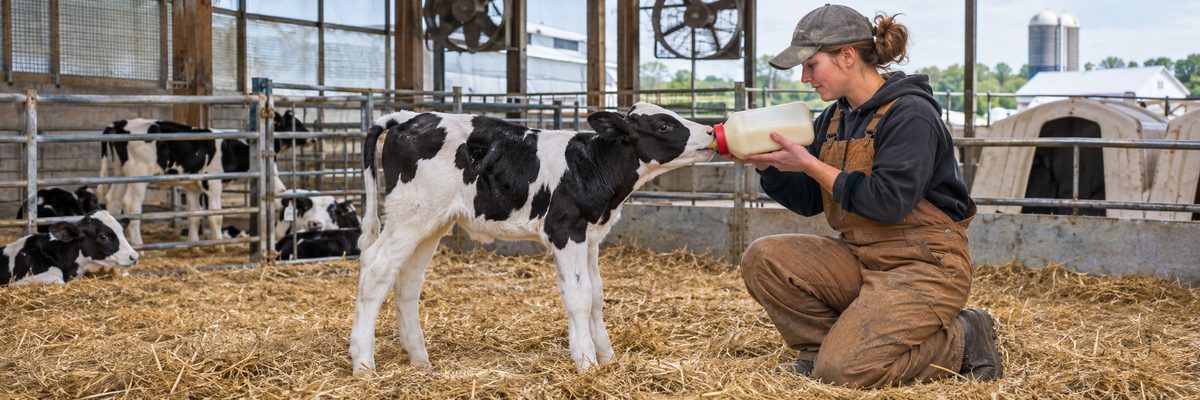
Eyeballing heifers works about as well as guessing the weight of a hay bale by looking at it. You will be close sometimes. But the heifer that is quietly a hundred pounds light at nine months looks identical from the fence line, and you only find out when she will not settle on schedule.
You do not need a fancy setup to fix that. A platform scale is the most accurate option, but a weight tape and a measuring stick get you most of the way for a few dollars, and what matters most is measuring the same way at set ages and writing the numbers down.
Here is how the options compare, how often to check, and how to turn raw numbers into decisions.
Why bother
Growth is the thing you are paying for. Penn State Extension's heifer economics paper says the main goal for managing replacement heifers is freshening them between 22 and 24 months of age, and that age at first calving and replacement rate are the largest factors in heifer cost. If you cannot tell whether a group is on track at six months, you cannot fix it by twelve. Weights and heights give you an early warning that nothing else does, and they tell you whether a ration change or a calf health problem actually showed up in the animals.
There is also a record-keeping payoff. Numbers on paper settle the argument over whether the group-three heifers are really behind, or whether it just feels that way because the new hire fed them last month.
The three tools
Platform or chute scale
A scale gives you the actual weight, and with load bars and an indicator it can fit into a chute or head gate. It is the most accurate and the most expensive. If you do not own one, ask whether your extension office, nutritionist, AI technician, DHIA field staff or a neighboring dairy has one you can borrow or rent. Some custom heifer growers weigh as part of their service, which is worth asking about in the contract; see using a custom heifer grower.
A scale works best if heifers are handled calmly and the platform is not slick. Weigh before feeding when you can, or at the same time of day each round, because a heifer full of water and feed weighs more than an empty one.
Weight tape (heart girth)
A weight tape wraps around the chest just behind the front legs and converts circumference into an estimated weight. It is cheap and easy, and it works for tracking trends. Accuracy for any single animal is limited, and tapes are made for particular breeds or types, so use one meant for dairy heifers and, for Jerseys and Brown Swiss, check what the tape was built for. I am describing tapes from general practice; the manufacturer's directions and your nutritionist's experience should guide how you read yours.
Tips for using a tape well:
- Stand the heifer square, head up and relaxed, on level ground.
- Run the tape snug around the chest just behind the front legs and over the withers, flat against the hair and not tight enough to dent it.
- Have the same person do the reading every time.
- Take it at the end of an exhale if you can, and take two readings. If they differ by a lot, take a third.
Height stick or tape
Height measures frame growth, which weight alone can hide. A heifer can add weight in fat without growing frame. A measuring stick, or a simple tape against a wall marked in inches, works for withers height (top of the shoulder) or hip height (top of the hip). Pick one site and stick to it. Penn State's growth charts for dairy heifers list both withers height and a separate hip height range, and the numbers differ a bit, so compare like with like.
How often and how many
You do not have to weigh every heifer every month. A practical routine is to check at the key ages:
| Check | Why it matters |
|---|---|
| Birth or first week | Baseline, and a sign of dam and pregnancy health |
| Weaning | Shows whether the calf program is working |
| Six months | Catches setbacks while there is time to fix them |
| Twelve months | Mid-point check before breeding age |
| Before breeding | Confirms heifers are big enough to breed on schedule |
| Close to calving | Checks size and condition before the first calving |
If the group is large, weigh or measure a sample and also check the smallest and largest heifers by eye. A sample that is taken only from the heifers that walk up to you gives you the friendly ones, which are not necessarily the typical ones. Many people aim for at least a dozen animals per group when they can, which is my rule of thumb, not a published standard, so ask your nutritionist what fits your numbers.
Turning the numbers into decisions
Compare the group average against a chart for your breed. For Holsteins, Penn State's recommended range at 12 months is about 760 to 843 pounds, and the target at 24 months is roughly 1,300 to 1,545; heifer growth targets by age has the full tables. If the group average is below the range, ask why before you change anything.
- If the whole group is behind, look at ration, forage quality, health history and weaning.
- If a few heifers are behind, sort and regroup. Small heifers lose the bunk fight every time.
- If heifers are heavy for their height, they may be getting more energy than they need; talk to your nutritionist.
- If they are on track, leave the ration alone and keep recording.
Pair weights with a body condition score for a fuller picture; how to body condition score your cows covers the method, and it works on heifers too. Use the numbers to decide breeding readiness with when to breed dairy heifers by age and weight.
Keep records you will actually read
A spiral notebook that lives in the truck is better than a spreadsheet nobody opens. A simple format: date, group, animal ID, weight or girth, height, and any notes. Transfer it to your herd software or a spreadsheet when you get a chance. For ideas on what else to track, see calf records that pay off. And when you want to know what your heifers cost, those same weights feed into what it costs to raise a dairy heifer to calving.
Safety and handling
A heifer that weighs 700 pounds and does not want to be measured can hurt you. Use a head gate or a good chute for weighing, keep the working area free of loose gear, and move quietly. Handle heifers calmly and often, since the ones used to people tend to behave better in the parlor later. If you are building handling facilities, getting first-calf heifers used to the parlor before calving has a few ideas that overlap.
Regional notes
In hot regions such as the Southeast and Southwest, weigh early in the morning, since heat-stressed heifers are cranky and hard to handle in the afternoon. In the Upper Midwest and Northeast winters, a heated or at least wind-protected working area makes the job tolerable for both of you, and a heifer in a thick winter coat can fool a tape or an eye.
Quick answers
Are weight tapes accurate for dairy heifers?
They are good for tracking trends in a group but are less exact than a scale for any one animal. Use the same tape, same person and same method each time, and use a scale now and then to check.
How do I measure hip height on a heifer?
Stand her square on level ground and measure from the ground to the top of the hip bone with a stick or tape. Use the same spot every time, and compare against a chart that uses the same measurement.
How often should I weigh heifers?
At key ages such as weaning, six months, twelve months and before breeding is a practical routine for most herds. More often is fine if you are chasing a problem.