Early Signs of Pneumonia in Dairy Calves
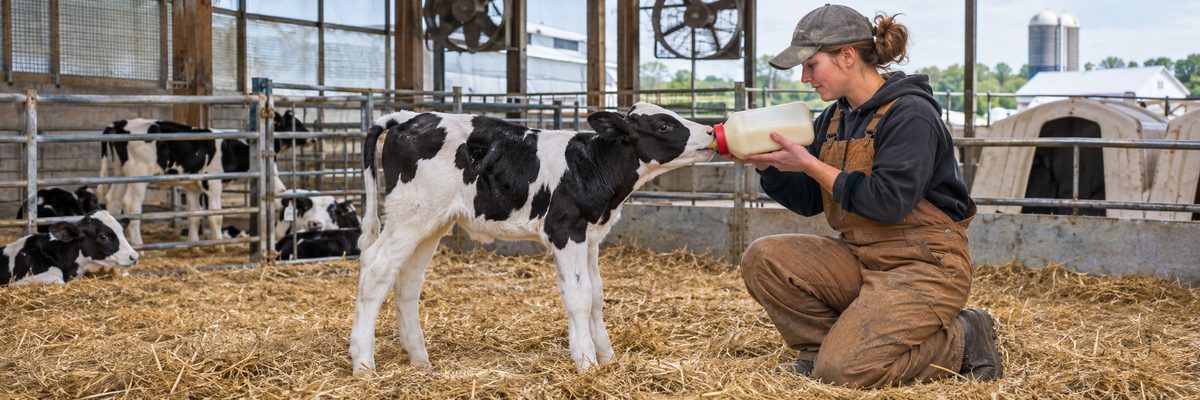
By the time a calf is coughing hard and standing with her neck stretched out, pneumonia has already taken a bite out of her growth. The trick is to catch it earlier: a calf that leaves some milk, hangs back at the gate, droops an ear or runs a fever is often the first sign, a day or two before the cough.
Respiratory disease is among the most common and costly calf problems on dairies. Calves that get it and survive can still grow slower, calve later and milk less, so early detection pays. The fix starts with a daily routine, not with a bottle of something from the vet's truck.
Calves are not great at complaining. The ones that look a little off at the bunk are the ones to watch, and the one that eats like a vacuum cleaner every day is the one whose silence should concern you.
What early pneumonia looks like
The classic cough and thick nasal discharge usually show up in an animal that has been sick for a bit. Earlier signs are subtler. Walk the pens at feeding time, when calves are most alert and easiest to compare.
- Slow or incomplete feeding. A calf that normally slams her bottle and now leaves a splash is telling you something.
- Dull attitude. She hangs back, lies down more, or is slow to get up when you approach.
- Drooping ears or a head tilt. This can be from pneumonia, ear infection or both, and either needs attention.
- Fever. A temperature over the normal range is one of the earliest signs. Normal for a calf is typically around 101 to 102.5 degrees Fahrenheit, and many protocols treat a temperature at or above about 103 as a flag. Confirm the thresholds with your vet.
- Fast or labored breathing. Count the breaths, or watch for the belly working hard, a calf breathing through her mouth, or an extended neck.
- Cough. Often later than you would like, and sometimes only after you move the calf.
- Nasal and eye discharge. Clear, watery discharge can happen with mild irritation. Thick, yellow or green discharge usually points to something more serious.
Use a score, not a hunch
Many farms use a simple scoring chart, such as the respiratory scoring system developed at the University of Wisconsin School of Veterinary Medicine. From memory, it gives points for rectal temperature, cough, nasal discharge, eye discharge and ear droop or head tilt, and a calf whose total reaches a set cut-off is flagged as likely sick. Ask your vet for the current chart and the cut-off they prefer.
A score takes the guesswork out of the discussion. It also lets different workers talk about the same calf in the same terms, which is handy when the person who found the calf is not the person who calls the vet. Pair it with the habit of writing things down, as covered in which calf records pay off, so you can see patterns by pen, week or feeder.
Why calves get pneumonia
Pneumonia is rarely just one bug. Viruses and bacteria are in the barn all the time, and disease appears when something tips the balance toward the germs. The usual tippers are:
- Low antibodies from colostrum. Calves that did not absorb enough are more vulnerable. Check with the blood test for failure of passive transfer if you have a pattern.
- Poor air quality. Ammonia, dust, humidity and stale air irritate the lungs and weaken defenses. See ventilating a calf barn without chilling the calves.
- Cold, wet or drafty housing. Not enough bedding, wet bedding, or direct drafts at calf level.
- Heat and humidity. A problem in the Southeast and Southwest, where hot, still, damp air is hard on small lungs.
- Stress at transitions. Weaning, regrouping, shipping, dehorning and other changes can open the door.
- Overcrowding and mixed ages. Older calves can carry germs that younger ones lack protection against.
- Other illness. A calf with scours or a poor start is already behind.
Look at your own barn and ask which of these fits. Pneumonia is usually a message about housing, air or timing, more than about any single calf.
Check calves every day
The routine is boring, which is why it works.
- Observe calves before you feed. They are standing and active when they expect a bottle, so any calf that does not get up is a flag.
- Watch feeding. Note who leaves milk or starter.
- Look at ears, noses, eyes and breathing.
- Take temperatures on any calf that looks off, and on calves that are flagged by your scoring.
- Write it down, even if it is a quick tally on a whiteboard.
- Call the vet when a calf reaches your threshold, rather than waiting for her to worsen.
Some herds with automatic feeders use the feeder data to spot calves that drink less than usual. That is the same principle, and it works well. The costs and trade-offs of those systems are covered in automatic calf feeders: pros, cons and costs.
What to do when you suspect pneumonia
Separate the calf from the others if you can, keep her warm and dry, offer fluids and feed, and call your vet. Treatment of pneumonia is a veterinary job. The vet decides whether it calls for medication, which drug, how long and how to handle withdrawal times and milk or calf discard if applicable. Do not use leftover drugs from another calf or another disease, and do not stop early because she looks better.
Some vets use ultrasound on the chest to find lung damage that is not obvious from outside, and it can be useful when a herd has recurring problems. Ask whether it is worth it for your herd.
For background on the viruses and bacteria involved, the Merck Veterinary Manual's page on bovine respiratory disease complex is a clear professional reference. Your vaccination plan matters too; a sample is outlined in a calf vaccination schedule from birth to weaning, though your vet sets the program for your herd.
Quick answers
What is the very first sign of pneumonia in a calf?
Often it is a change in behavior and appetite, such as leaving milk, hanging back or being slow to stand, along with a fever. Cough and nasal discharge usually come later, so do not wait for them.
What temperature means a calf may have pneumonia?
Normal is typically around 101 to 102.5 degrees Fahrenheit, and a reading at or above roughly 103 is commonly treated as a warning sign. Your vet may set a slightly different threshold for your herd, and weather and recent activity can nudge readings.
Can I prevent calf pneumonia with ventilation alone?
Good air quality helps a lot, but it is only part of the picture. Colostrum, clean dry bedding, sensible stocking density, vaccination and low-stress handling all work together.