Ventilating a Calf Barn Without Chilling the Calves
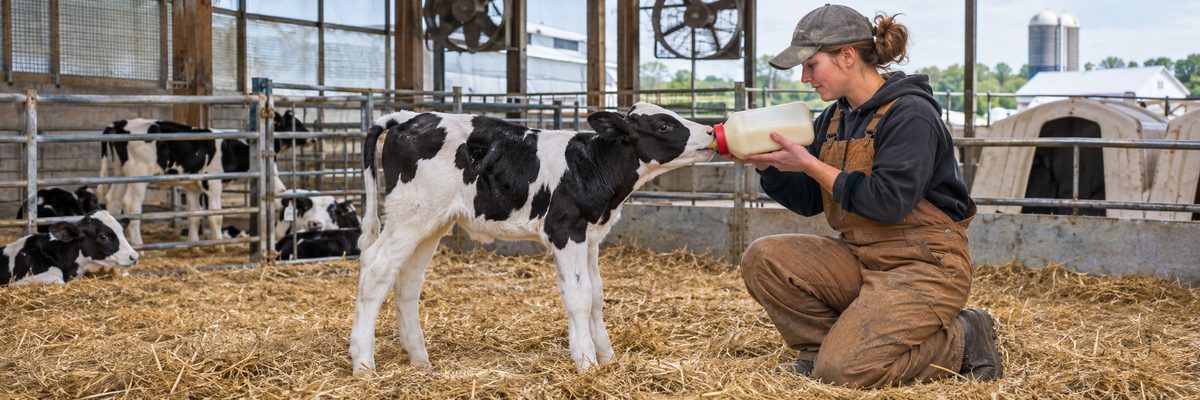
The calf barn is the one building on the farm where "keep it warm" and "keep it fresh" seem to argue with each other. Shut the doors and the calves are cozy and breathing ammonia. Open everything up and the air is clean and your cold-natured calves are shivering. The trick is to let a steady trickle of fresh air through without drafting anyone, and to resist the urge to treat the barn like a living room.
Here's the short version. Calves in a closed building need constant air exchange, even in the dead of winter. Calves don't give off enough heat to warm a barn the way a pen of cows does, so the usual cow-barn tricks don't carry over. Most research-based extension advice leans toward a naturally ventilated building with a small, steady supply of outside air delivered at calf level, not a sealed building with a thermostat.
And yes, the barn will feel colder than you'd like. The calves, in a dry, deep bed, will be fine with that.
Why calves are different from cows
A herd of mature cows is a furnace. Each one throws off a lot of heat, the warm air rises, and that rising air pulls fresh air in behind it. That's the engine behind a lot of natural ventilation in freestall barns.
Calves don't have that engine. The Dairyland Initiative at UW-Madison explains that calves don't produce enough heat to warm the air around them well enough for thermal buoyancy to work, so when the wind is still, a naturally ventilated calf barn can stall out. Add the hours each day when the sun warms the outside air faster than the inside, and incoming air can slide across the ceiling and out again without ever reaching the floor where the calves are.
If you're also sorting out ventilation for the cow side, how natural ventilation works in freestall barns is a good companion read, but treat the calf side as its own problem.
Natural, mechanical or tubes?
The Dairyland Initiative's guidance, written with Wisconsin-type winters in mind, boils down to this:
- Natural ventilation is the preferred base. Open ridge, open eaves, adjustable sidewalls, no fans or electricity to fail on the coldest night.
- Fully mechanical negative-pressure systems are hard to get right. The page calls them not recommended for calves in climates like Wisconsin's, mostly because the inlets get tiny at winter rates, and tiny inlets don't deliver air evenly. Poorly placed inlets can also chill the youngest calves, or push the oldest calves' air across the youngest.
- Positive pressure tube ventilation can fill the gaps. A fan on an outside wall pushes fresh air through a perforated tube that runs along the barn, delivering small amounts of outside air into the calf zone without a draft.
The tube systems are sized to supply roughly four complete air changes per hour, which the Dairyland Initiative cites as the minimum winter rate for a normally stocked barn. The tube fan runs around the clock, all year, and it exits through the ridge and eaves like any other air in the building. In the coldest weather the sidewalls are closed except the ridge and eave openings, and as it warms, you open them up. In summer, they're opened fully.
Setting up a tube is not a weekend job with a tape measure. The hole sizes, tube diameter and fan have to be matched so air hits "still air" (less than about 60 feet per minute) by the time it reaches the calves. That calculation is why you want a trained consultant or a PPTV-trained designer involved, not a neighbor with a fan and a roll of poly.
Warm barns versus fresh barns
One thing worth repeating: a barn doesn't have to be warm for calves to do well. The Dairyland Initiative's testing compared two identical naturally ventilated calf barns on one dairy, one with a tube and one without, and over two weeks both averaged the same temperature. The tubed barn ran a couple of degrees colder at the coldest part of the night and a couple warmer in midday. That means the tube mostly makes the barn follow the weather a bit more closely. It doesn't turn the barn into a freezer.
Heating a calf barn, on the other hand, tends to make things worse. The site notes that warming the building releases gases from manure and urine and encourages bacterial growth, which then calls for even more ventilation. The calf's own nest, a dry deep bed and maybe a coat, does the work of staying warm. The air's job is to carry out moisture, gas and germs.
A walk-through to judge your air
You don't need instruments for a first pass. Try this once a week, and once whenever calves start coughing.
- Stand at calf level. Crouch or kneel. Cow-height air isn't calf-height air.
- Smell it. A sharp ammonia sting in your eyes or nose means air isn't moving. If you're uncomfortable, the calves are too.
- Look for condensation. Wet walls, dripping ceilings or fogged windows suggest more moisture than the barn is getting rid of.
- Check for drafts. A ribbon or a smoke stick near the calf's head shows whether air is hitting her directly. Fast, cold air on a wet calf is a recipe for a cough.
- Listen. Several calves coughing at feeding is a sign to call the herd vet and re-check the air.
Pneumonia has several causes, and air quality is just one of them. Spotting pneumonia early matters whatever the barn looks like, since a good ventilation system doesn't replace catching sick calves quickly.
Common mistakes
- Closing everything on the first cold night. The barn gets warm, wet and smelly in a day. Leave the ridge and eaves open.
- Shutting off the tube fan to save heat. The Dairyland Initiative's advice is to leave it running continuously; stopping and starting it with the weather is what causes problems.
- Putting the exhaust where the newborns live. Air should not travel from older calves to the youngest.
- Trusting the thermometer more than your nose. A barn can read a perfect 45 degrees and still be stale.
- Stocking too tight. No ventilation scheme will fix too many calves in too little space.
Winter barn management for adult cows has its own rules, and keeping barns open and dry in winter covers that side. For the calves, a deep dry bed, a draft-free microclimate and a bit of cold are a better bet than a heater.
Where to read more
The Dairyland Initiative's calf barn ventilation page goes into sizing, tube design and curtain management. Climate matters: what works in Wisconsin may need adjusting in a hot, humid or dry region, so ask your extension office or a certified consultant to look at your building.
Quick answers
How many air changes per hour does a calf barn need?
The Dairyland Initiative cites about four air changes per hour as the minimum winter rate for a normally stocked barn, and the rate goes much higher in warm weather. Exact numbers depend on stocking density, your climate and your building, so have a designer check them.
Should I put a heater in my calf barn?
Generally no. Heating tends to raise gas and moisture and reduces the air exchange you need. Keep calves warm with dry bedding, adequate feed and coats if needed, and let the building stay cool and fresh.
How do I know if my calf barn has a ventilation problem?
Strong ammonia smell at calf level, wet walls, condensation on the ceiling and calves coughing are the usual flags. If you see them, talk to your vet and an extension or ventilation specialist before you add fans or close curtains.