Moving Weaned Calves to Group Pens Without the Setback
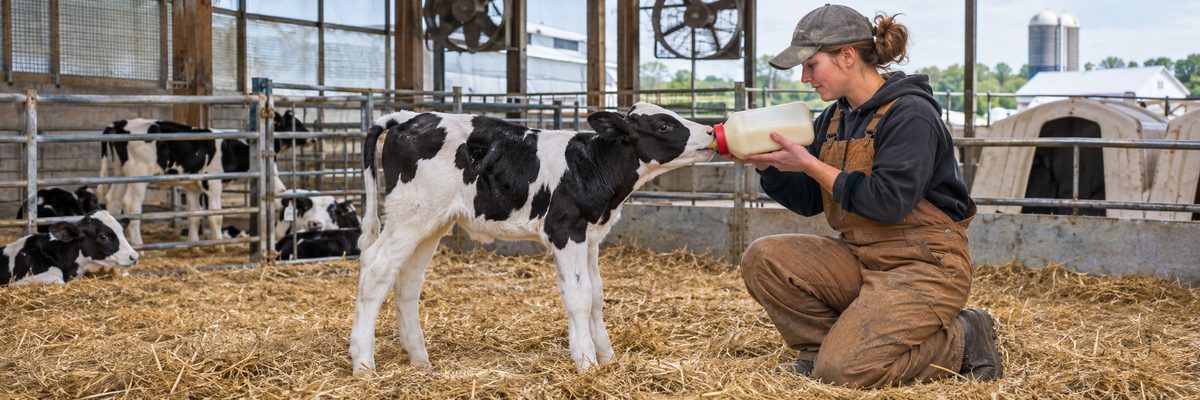
The calf that was perfectly happy in her hutch on Monday will stand in the corner of a group pen on Friday and look at you like you sold her house. A few of them quit eating, a few pick up a cough, and a few get pushed off the bunk by a bigger pen mate. The good news is that most of the setback is avoidable, and almost all of it comes down to timing and not doing too much at once.
The short version: wean first, wait, then move. Let calves sit in their old pen for about a week after the last milk, make sure they are eating starter well, keep the diet the same for the first few days in the new pen, and put calves together that are close in age and size. Stack as few stressors as you can on any one week.
Below is how that plays out on a working dairy, from the last bottle to the first week in the group pen.
Wait until the calf is actually weaned and eating
Penn State Extension's advice on a healthy weaning transition is to leave calves in the same environment for at least a week after weaning so you can watch grain intake and general health. Calves eating at least two pounds of grain a day after weaning should handle the next move well. Calves eating less than that are telling you the rumen is not ready, and a new pen will not fix it.
That means the move is tied to starter intake, not to a date on the calendar or an empty hutch you need for the next heifer. If space is tight, the better lever is starting the step-down earlier, which is covered in a step-down weaning schedule that keeps calves growing. And if you are wondering how much starter is enough before the first milk cut, when to start calf starter and how much to offer goes through it.
Do not stack the stressors
Weaning, a new pen, a new diet, a timed vaccination, and dehorning follow-up all land on a calf in about the same ten days if nobody is watching the calendar. The same Penn State article says it plainly: do not make an environment change, a timed vaccination and a nutritional change all at once. Space them out.
A workable order on most farms looks like this:
- Finish weaning and keep the calf in her own pen for about a week.
- Move the group into the new pen on the same ration and same starter she was already eating.
- Hold the diet steady for a few days while pen mates sort out who eats where.
- Change the ration after that, and schedule vaccines for a time when the calves are settled, working it out with your vet. A sample calf vaccination schedule gives you the shape to talk over.
Yes, it takes longer. So does a pneumonia outbreak, and that one comes with a vet bill and a bad mood.
Sort the groups before you move them
The University of Wisconsin Extension series on pair and group housing is aimed at preweaned calves, but the logic holds up after weaning. Their grouping strategies article recommends keeping the age gap between the youngest and oldest calf in a group to no more than 14 days, and ideally a week or less. It also favors stable, all-in, all-out groups over a trickle-in, trickle-out setup where calves are constantly pulled out and replaced, because stable groups mean fewer disruptions and better gains.
The best groups are the ones that already know each other. The same Wisconsin article suggests keeping original pairs together when you move them, and, for calves raised in larger groups, keeping preferred partners together when that is easy to spot. The calf that has been sharing a super hutch with the same buddy for six weeks is not looking for new friends.
Sort by size, too
Age is the starting point, but size matters once calves are on the bunk together. A runt grouped with calves a month older will spend the first week getting shoved. If you only have a few calves a week, see whether you can pair a small one with a calf close to her age or hold her back a week so she goes in with the next batch. Check the little ones for pneumonia and scours while you are at it; early signs of pneumonia in dairy calves is worth a look before you load the pen.
Pen size, bunk space and the basics
I am working from general calf-raising guidance here, not a single study, so check your own numbers against your vet, your nutritionist and the Dairy Calf and Heifer Association's Gold Standards (members can request them). The rules of thumb that most people end up with:
- Space: weaned calves need more room than they had in a hutch, and more again as they grow. A dry, bedded pack that never turns to soup is the goal, and it is easier to keep that way if you stock a little light.
- Feed space: enough bunk length that every calf can eat at the same time. The calf that eats last in a crowded pen eats the least.
- Water: more than one source, in a spot the shy calf can reach without crossing the boss.
- Group size: small groups are easier to watch. Wisconsin's work on preweaned calves points to better health outcomes in groups of up to six to eight than in groups of 15 or more, and you will notice a sick calf faster in a pen of eight than in a pen of thirty.
Airflow and bedding matter as much as square footage. If you want to compare hutch and group setups before you build anything, calf hutches versus group pens sets out the tradeoffs.
Watch the first two weeks like a hawk
The first few days are when you find out who is not eating. Walk the pen at feeding and look at who comes to the bunk, who hangs back, whose hair coat looks rough, and who is coughing. A calf with a fever or a runny nose in week one of a new pen is easier to catch than one you find in week three.
Things to check every day:
- Starter and hay intake, pen by pen. A pen that suddenly leaves feed is a flag.
- Manure consistency and wet spots in the bedding.
- Calves lying apart from the group, drooped ears, or a hollow flank.
- Cross-sucking on navels or ears, which tends to show up when calves are bored or hungry.
Write down what you see. A pen that goes sideways every time you move calves in July tells you something about July, and you cannot see that pattern from memory.
Regional notes
In the Upper Midwest and Northeast, the risk is cold, wet bedding and drafts in the first week after the move; keep bedding deep and dry. In the Southeast and Southwest, heat and flies are the bigger worry, so put the group where there is shade and airflow and watch water intake closely. Large Western dairies often move calves in bigger cohorts with calf ranches doing the grouping, which makes age spread and arrival health something to ask about up front.
Quick answers
How long should calves stay in their hutch after weaning?
About a week is a common recommendation, long enough to confirm they are eating starter without milk and to spot trouble before it follows them into a pen of strangers. Some farms stretch that if calves are eating poorly.
Is it better to move calves in pairs or alone?
Pairs and original groups are easier on calves. Keeping partners together reduces the social stress of a new pen, and a calf with a familiar face tends to find the bunk faster.
Can I vaccinate calves the day I group them?
You can, but it is usually better not to. Doing it the same week as weaning and a diet change stacks stress, and a stressed calf may not respond as well. Talk timing over with your herd vet.