Why Newborn Calves Need Fresh Water From Day One
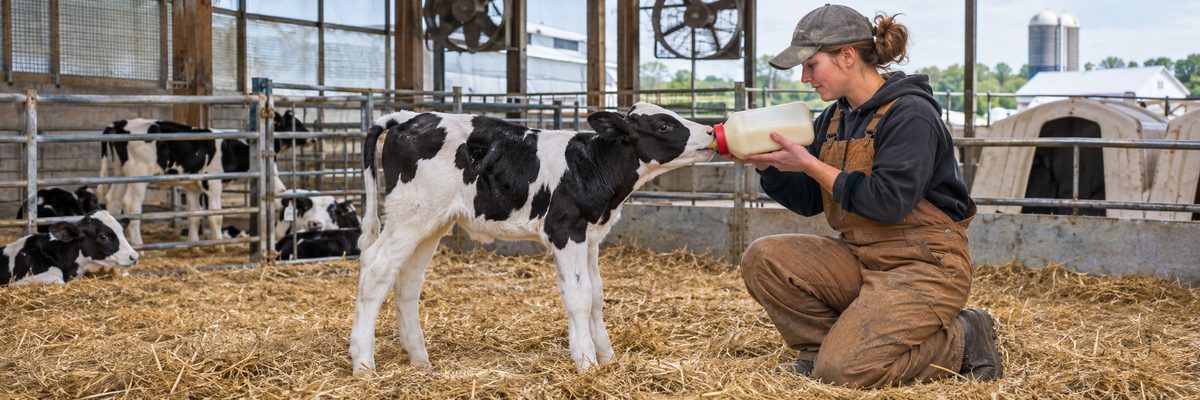
Calves need clean water available from the first days of life, even while they're drinking milk twice a day. Milk is food. Water is water. A calf that has both drinks more, eats more starter and grows faster than one waiting for the next bottle to wet her whistle.
The old line, "she's getting plenty of liquid in the milk," has cost a lot of calves a lot of gain. The reasons are mostly about the rumen and starter, but they come down to a simple fact: dry feed without water just sits there.
Why milk doesn't count
When a calf drinks milk from a bottle or nipple, a reflex called the esophageal groove closes and sends the milk straight to the abomasum, the true stomach. It bypasses the rumen. That's good for digesting milk. It also means the rumen, where starter ferments, gets no help from milk's water content.
Water, on the other hand, drops into the rumen, where it helps bacteria break down starter and supports the fermentation that grows rumen tissue. No water, less starter eaten, slower rumen development and a harder weaning later. It's a chain reaction that starts with an empty water bucket.
What research and practice show
Calf specialists have long recommended free-choice water from the first days, and calves with early access to water tend to eat more starter and gain faster in the preweaning period. You'll see this advice repeated in calf-raising materials from extension programs and groups like the Dairy Calf and Heifer Association. The effect is usually described as meaningful rather than dramatic, so you aren't going to double your gains with a pail of water, but it's one of the cheapest improvements on the farm. A hose, a bucket and a few minutes a day.
How much do they drink?
Water intake is small at first, a quart or less a day in the first week, and rises as starter intake grows. By weaning, a calf may drink a gallon or more a day, depending on weather and diet. Hot weather can push this much higher. A calf eating 2 pounds of starter wants a lot more water than the calf eating a handful.
That tracks with the milk feeding program, too. Calves on higher volumes of milk may drink less water early on, but it's still worth providing. For milk amounts, see how much milk to feed a dairy calf each day.
Setting it up so it works
Clean, fresh, and reachable
- Offer water in a bucket or small tub that the calf can reach easily and cannot tip over or get stuck in.
- Dump and refill daily. Water sitting overnight in a calf hutch picks up bedding, feed and manure, and it does it fast.
- Scrub buckets often. Biofilm builds up the same way it does on milk equipment; see cleaning calf bottles and buckets for a routine you can adapt.
- Place the water near the starter but not directly over it, so splashing doesn't turn the pan to paste.
- Check it twice a day if you can. A water bucket the dog knocked over at 5 a.m. is a long day for the calf.
Cold weather
In the Upper Midwest, Northern Plains and Mountain West, water freezes. Don't use that as a reason to skip it. Offer lukewarm water after milk feeding and remove it before it freezes, or use insulated buckets and heated options where safe. Many farms find that calves drink more when the water is slightly warm. It's a nuisance, but it's cheaper than a calf that eats half her starter. Keeping newborn calves warm in winter covers other cold-weather tactics worth pairing with it.
Hot weather
Calves in the Southwest and Southeast need cool, shaded water and plenty of it. Heat stress raises intake, and water that's baking in the sun can be too warm to drink. Put buckets in the shade, refill often and watch for algae. Calf care in desert heat goes into shade and airflow, and the same principle works for humid areas of the Southeast.
Mistakes to avoid
- Waiting until weaning to offer water. By then, starter intake should already be well established.
- Letting buckets get slimy. A dirty bucket is worse than no bucket, because calves avoid it and then get thirsty.
- Putting water where calves can't reach, such as a hanging bucket at cow height.
- Assuming a calf in a group pen will find the waterer on her own. Show her once or twice.
- Using water treated with something you didn't check. If you add anything to calf water, confirm with your vet or nutritionist first.
- Skipping water because the calf has scours. Scouring calves lose a lot of fluid, and your vet may recommend oral electrolytes in addition to water. Choosing and using oral electrolytes explains how they fit in.
Connecting water to a smooth weaning
When you reduce milk at weaning, the calf's rumen has to carry more of the load. That requires starter, and starter requires water. A calf that has been drinking water all along has a rumen ready for the change. One that hasn't is more likely to stall. If you want the timing and intake targets, when to start calf starter and how much to offer picks up where this leaves off.
Water quality matters as well. If your water has a high mineral load, a bad smell or a history of bacterial problems, get it tested through your vet or state lab. For general reference, UW-Madison dairy extension publishes material on calf and heifer management.
Quick answers
Do newborn calves really need water if they drink milk?
Yes. Milk bypasses the rumen, so water is what helps starter ferment and the rumen develop. Offering water from the first days is widely recommended.
How often should I change calf water?
At least once a day, and more often if it gets dirty. Scrub the bucket regularly so slime doesn't build up.
Should calf water be warm in winter?
Slightly warm water encourages calves to drink in cold weather. Offer it, then remove or protect it from freezing so it doesn't turn into ice.