Disbudding Calves: Age, Method and Pain Control
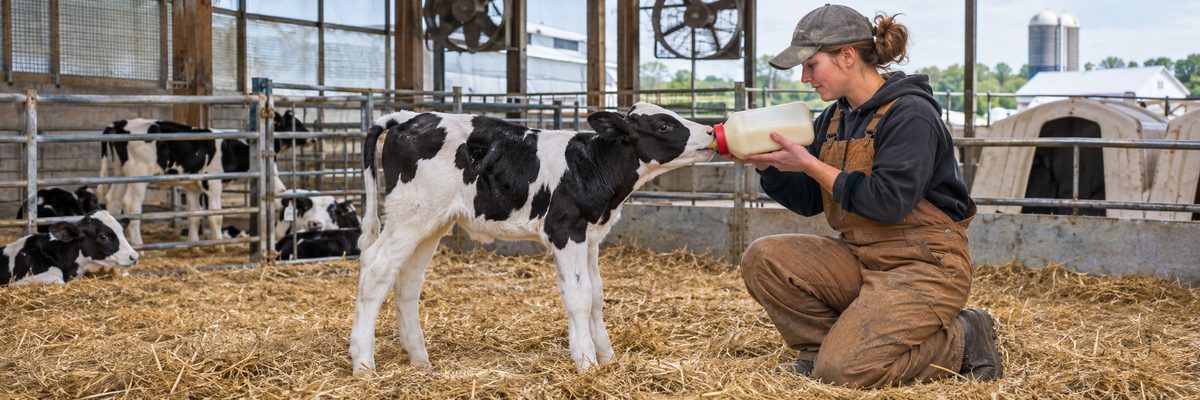
Nobody has ever said "I really miss having horned cows in the freestall barn." Horns hook headlocks, bruise herdmates, and find the one soft spot on the herdsman. Removing them while the calf is young is the kind thing and the safe thing, and doing it with pain control is now the expected way to do it.
The short version: disbud early, before the horn bud attaches to the skull, which is around eight weeks. Use caustic paste only in the first days of life, or a hot iron on calves under eight weeks, and ideally well before six. Pain relief, meaning a local nerve block plus an anti-inflammatory prescribed by your vet, is the standard of care. Anything later than eight weeks is surgery and belongs with the vet.
This is general education. Drugs, doses and withdrawal times are decisions for your herd vet under a valid veterinarian-client-patient relationship, so use this to prepare for that conversation, not to skip it.
Why age matters so much
Newborn horn buds float free under the skin. By roughly eight weeks they attach to the skull. The University of Wisconsin Extension piece on disbudding and dehorning considerations puts it this way: disbud before six weeks if you can and no later than eight, because after that the procedure is more painful and risks opening the sinuses to infection. Dehorning after eight weeks is considered surgical and should be done by a licensed veterinarian.
The same article notes that in a Wisconsin survey many producers who do the job themselves were doing it at eight weeks or older. That is the main place to improve. Check calves for buds in the first weeks and disbud when you find them, not when you have a free Saturday.
Or skip the whole thing with polled genetics
The cleanest way to avoid horns is a polled sire. Wisconsin's extension team calls polled genetics the best way to avoid removing horns, and notes dairy breeds are typically not polled the way many beef breeds are. If you are picking sires anyway, polled is worth a line in your selection criteria alongside the traits that actually pay the bills. For calving traits, see choosing calving ease sires for first-calf heifers.
Caustic paste or hot iron
Both methods destroy the horn-producing cells, and both need proper training. Here is how they compare in general terms.
| Item | Caustic paste | Hot iron |
|---|---|---|
| Age window | First few days of life; less effective and discouraged after about 2 weeks | Under 8 weeks, preferably earlier |
| Labor and restraint | Less than an iron on a young calf | More restraint needed; hot-hair smell |
| Main risks | Eye and skin damage, runoff, incomplete disbudding | Burns if left on too long, incomplete ring |
| After-care | Keep pasted calves apart for at least an hour and out of rain for about six hours | Bud sloughs off in about three weeks |
Wisconsin's guidance on paste is to apply a ring of petroleum jelly around the bud so the paste stays where it belongs, use gloves, and keep calves from smearing it on one another. Vinegar can neutralize paste that lands on a calf or on you. On a farm that pairs or groups calves, that last point is why many people disbud while calves are still in individual pens.
If you are using an iron, you are looking for a copper-colored ring around the bud, usually within about five to twenty seconds, with minimal pressure and a gentle rocking motion. Leaving it on longer than needed is how you hurt a young calf. Loose, movable skin around the site after the procedure is a good sign there is little chance of regrowth.
Pain control is part of the job
Pain relief is now the standard, and the dairy industry's animal care program expects farms to have a protocol. Per the Wisconsin article, the American Association of Bovine Practitioners considers pain control the standard of care for disbudding and dehorning, and farms in the national FARM Animal Care program without a pain control protocol, or not following the one they have, get a corrective plan with a multi-year deadline. Farms not routinely disbudding by eight weeks are also expected to fix that within months.
What a typical vet-built protocol includes, in general terms:
- A local anesthetic nerve block before the procedure, with enough waiting time for it to work. Your vet will show you where to place it and how to check it took.
- An anti-inflammatory given around the time of disbudding to take the edge off the soreness that follows.
- Proper head restraint, usually a halter or a head restraint, so the calf is not flailing and you are not guessing.
- In some groups, a sedative, if loose calves are interfering with the work.
These products are prescription drugs, and some carry meat withholding times even in calves. Organic dairies need to confirm which products their certifier allows. For the organic side, see treating sick cows on an organic dairy. Whatever you use, write it down; calf records that pay off has a short list of what to log.
What to expect afterward
A normal healing course goes like this, per the Wisconsin extension account: the bud sloughs off in around three weeks, and the site takes about nine weeks to heal completely. In the meantime, keep bedding clean and dry, keep an eye out for flies in warm months, and look at the sites. Swelling, discharge or a calf that stops eating means a call to the vet.
Regional note: fly pressure in the Southeast and Southwest can complicate healing in summer, and in the Upper Midwest the problem is usually frozen ears and wet bedding in winter. Neither is a reason to skip the job, only a reason to think about timing. A few farms schedule it around the weather for exactly this reason, as long as it still happens well before eight weeks.
Mistakes to avoid
- Waiting for "a good day." The window is short, and the calf does not care what day it is.
- Using paste on a calf that is well past two weeks old.
- Letting pasted calves lick each other or lie in wet bedding.
- Skipping the nerve block because the calf is small. Small calves feel it too.
- Doing it without your vet's input on drugs, then wondering what the withholding time was.
Quick answers
How old can a calf be to disbud with a hot iron?
Under eight weeks, with earlier being better. Extension guidance says ideally before six weeks, since the horn bud attaches to the skull at about eight weeks. After that it is a surgical dehorning for the vet.
Do dairy calves really need pain relief for disbudding?
Yes. Pain control is considered the standard of care, and the national FARM program expects a documented protocol. Your vet can set one up for your farm, including products and timing.
How long does it take for disbudding sites to heal?
The bud usually sloughs off in about three weeks, and complete healing takes around nine weeks. Watch for swelling or discharge and call the vet if you see either.