Internal Parasites in Dairy Cattle
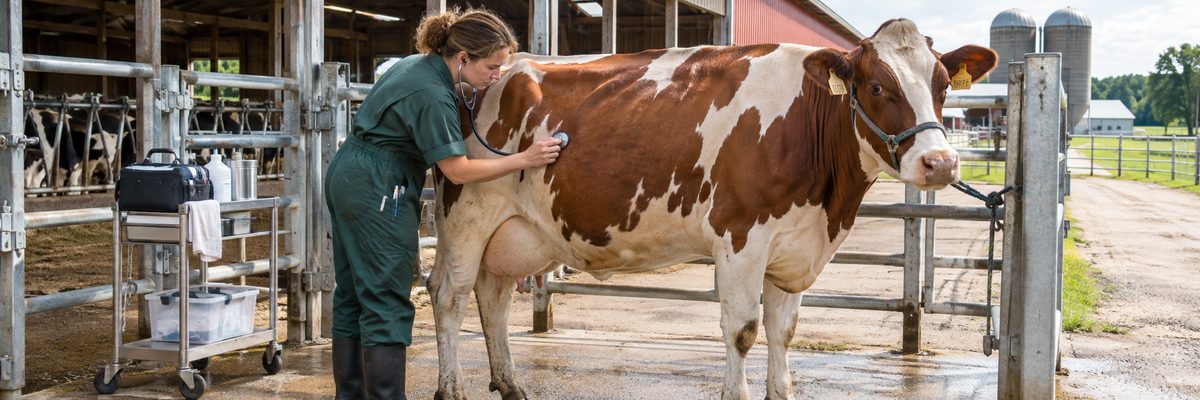
Walk through the average freestall dairy and you will find very few worm problems. Walk through a grazing herd's heifer paddock in late summer and you may find a different story: rough hair, poor gains, a few loose animals. Same species, completely different exposure.
That is the first thing to know about internal parasites in dairy cattle. Where the animals live and what they eat drives the risk far more than a calendar does. The second is that dewormer resistance is real, so blanket treatment of everything on the farm is no longer a good habit.
This article covers who is at risk, which parasites matter, how testing helps you decide, and what changes when the animal is milking.
Who actually gets worms
The University of Wisconsin-Madison Division of Extension, in its fact sheet on managing internal parasites in cattle, explains that infective larvae live on growing forage, so cattle are exposed when they graze. Young and high-producing cattle grazing pasture benefit most from parasite control. Cattle build resistance as they age, and with good nutrition they can often overcome parasite levels. According to the same piece, most cows in third lactation or older do not need deworming, while first- and second-lactation animals may benefit before or after calving. Cattle kept on dry lots typically stay parasite-free.
That gives you a rough map of risk:
| Group | Typical risk | Why |
|---|---|---|
| Calves in hutches | Low for worms, though coccidia and other problems are separate | Little contact with pasture |
| Heifers on pasture | Highest | Young, still building immunity, and grazing infective larvae |
| First and second lactation cows on pasture | Moderate | Still developing immunity and under production stress |
| Mature cows, third lactation and up | Usually low | Older animals tend to handle parasite loads |
| Dry-lot or freestall cows | Low | Little exposure to infective larvae |
| Purchased animals with unknown history | Unknown | Worm status and dewormer history are a mystery |
For the heifer side, heifer parasite control on pasture goes deeper.
The worms that matter
Which ones occur on your farm depends on region and grazing system, so your vet is the right person to narrow the list.
- Stomach worms. The brown or medium stomach worm (Ostertagia) is the economically important one in cattle in many regions. The University of Maryland Extension notes it is among the parasites beginning to show some resistance to available dewormers. In warm, humid areas such as the Southeast, the barber pole worm (Haemonchus) can also be a problem, and it feeds on blood.
- Intestinal worms. Species such as Cooperia are common and tend to cause lower-grade production losses in young cattle.
- Lungworm. Seen on pastures in cooler, wetter climates, particularly in young stock.
- Liver flukes. Regional, found where snails live in wet pastures and standing water, such as parts of the Gulf Coast, Pacific Northwest and some Mountain West irrigated ground.
- Coccidia. A protozoan rather than a worm, and mostly a problem in young animals in crowded or wet conditions. See coccidiosis in heifers and cows.
Mild loads often show nothing at all. Heavier ones can cause poor growth, rough hair coat, loose manure, reduced milk and lower feed efficiency. Wisconsin says parasites deprive cattle of nutrients and can reduce milk production and daily gain.
Why you do not deworm everyone
This is the point where the old habit of treating every animal on a calendar runs into trouble. The Wisconsin fact sheet explains that relying only on dewormers is not enough because of resistance. It describes leaving some animals untreated, called refugia, so that susceptible parasites keep reproducing and dilute the resistant ones. The practical version is to maintain untreated mature cows, which are the animals best able to carry a parasite population, and to treat the groups that benefit.
The University of Maryland Extension says routine and frequent deworming is likely contributing to parasite resistance, and that it can mean treating animals that do not need it or using a product that does not work well on your farm. Either one is wasted money. Wasting money on the barn is a long tradition, but this one is easy to cut.
How to decide: test, do not guess
Fecal egg counts are the main tool, and they are covered in detail in fecal egg counts for dairy herds explained. Wisconsin recommends measuring FEC in dairy calves as they leave the hutch or at their first co-mingling, and for newly purchased cattle or groups with unknown histories. It pairs the count with body condition, health and production. A heifer group that is growing well on a low count is not a candidate. A heifer group that is thin, scruffy and carrying a high count is.
A fecal test counts eggs, but it does not tell which worm laid them, and seasons matter. Egg counts can run falsely low in winter when larvae are inhibited, and can be inflated when low fecal output concentrates the eggs. Your vet can help read the results alongside what the animals look like.
Pasture management does a lot of the work
You cannot deworm a pasture, so how you graze matters. The Wisconsin fact sheet recommends putting the next grazing group, after recently dewormed animals, onto older and more resistant animals. It also suggests weaning on dry lots or on pasture that has not recently been grazed or has regrown after hay making. For rotational systems, resting paddocks and avoiding grazing too short both help; see rotational grazing for dairy cows and pasture rest periods for regrowth. A sensible default is to put the youngest animals on the cleanest ground, such as pasture regrown after a hay cut, and not on the paddock the whole herd ground down last month. Worms do not read the rotation chart, but they do notice when the ground has been empty for a while.
Good nutrition helps too. Well-fed animals with good body condition handle worms better than thin ones.
What changes when the animal is milking
Milk is the catch. Many dewormers carry restrictions or are not labeled for use in lactating dairy cows, which is why timing around dry-off and before calving is common. Any product you use should be one your vet has chosen for your class of animal, with the label checked for milk and meat withdrawal. If you are not sure, do not guess: ask your vet, and hold milk until you get an answer. Keep records of what was given and when, in the same system as your other treatments; milk withholding times and records walks through the paperwork.
Organic dairies have additional limits on which parasite products are allowed and when. If you ship organic milk, bring your certifier in on the plan.
A simple parasite plan for a dairy
- Sort your groups by exposure: pastured heifers and young cows first, dry-lot cows last.
- Test purchased animals with fecal counts before they join the herd; see buying replacement heifers for the rest of that list.
- Sample key groups at set points, such as heifers before turnout and again in fall, and compare them against body condition and gain.
- Treat the groups that need it, with products and timing chosen by your vet.
- Check that it worked with a follow-up count.
- Rotate pastures, rest paddocks and keep some older cows untreated.
Regional notes
Season length and moisture shape the risk. Humid Southeast pastures keep larvae active for months, and warm-season worms such as Haemonchus are more of a concern there. Northern herds get a shorter pasture season but parasites can overwinter, so fall and spring counts help. Dry Southwest and West Coast dry-lot herds usually have little exposure, apart from irrigated pasture. Liver fluke is a regional issue, so ask your local vet if it occurs near you.
Quick answers
Do dairy cows need to be dewormed?
Not routinely. Most mature, confined cows do not, while first-calf heifers and animals on pasture sometimes do. A fecal test and your vet's advice should decide.
Can I deworm a lactating cow?
Only with a product your vet confirms is appropriate for lactating dairy cattle, and only after checking the label for milk restrictions. Many herds time treatment around dry-off or before freshening for this reason.
Why did my dewormer stop working?
Resistance can develop when the same products are used often on the whole herd. A fecal egg count reduction test run with your vet will show whether the product is still working on your farm.