Milk Withholding Times and Discard Records
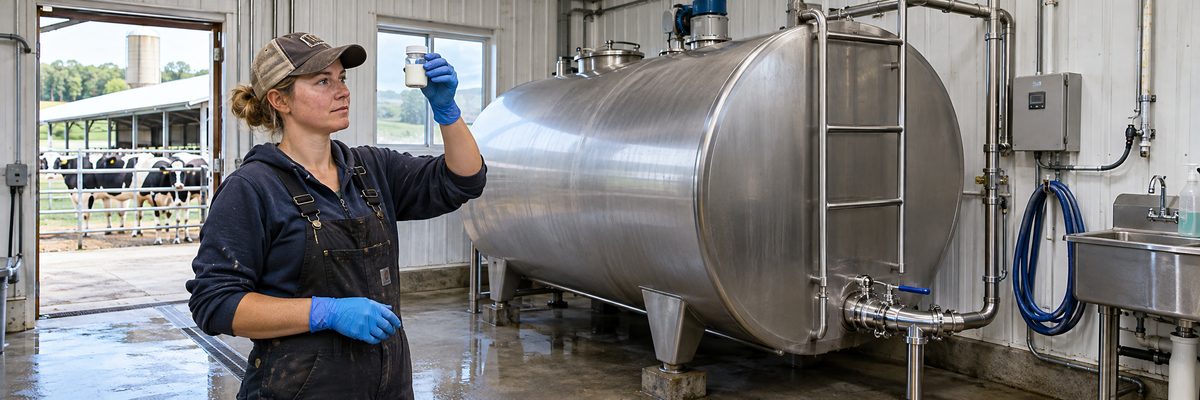
A cow gets treated at six in the evening. The label says her milk stays out of the tank for a set number of milkings. By morning, three people have walked past her stall, one of them with a clipboard, and not one can say for certain when she clears. That gap between the treatment and the record is where most dumped loads begin.
A good tracking system does three jobs. It tells the milker, at the cow, that her milk is not going in the tank. It tells whoever is in charge exactly when she clears and who confirmed it. And it leaves a paper or electronic trail you can show a milk inspector, a buyer or your vet without scrambling. None of that needs fancy software. It needs a habit that survives a bad week.
As always, the product label and your herd veterinarian set the actual withholding time for any drug. This page covers record keeping and process, not dosing or drug choice.
Withholding time versus withdrawal time
The two terms get swapped constantly, so pin them down. Milk withholding (or discard) time is how long a treated cow's milk must be kept out of the human food supply. Meat withdrawal is the separate period before she can go to slaughter. A product can carry a short milk time and a long meat time, and a cow culled for the wrong reason at the wrong moment can turn that difference into a problem. Both clocks go in the record. The background on how these numbers work is in antibiotic withdrawal times and milk discard rules.
Times are usually counted from the last treatment and often stated in hours or in a number of milkings, which is why twice-a-day, three-times-a-day and robot herds need a little extra care to translate a label into a real clearing time. If the arithmetic is not obvious, ask the vet to write the clearing date and milking on the treatment sheet. They would rather do that than explain the tanker.
What a useful treated-cow record contains
Whatever format you pick, every entry should answer the same questions without anyone having to remember anything.
- Which cow (ID and pen or stall), and which quarter or site if relevant.
- Date and time of each treatment, not just the first.
- The product and route, copied from the label or the vet's instruction.
- When milk can return to the tank: date and which milking.
- When meat withdrawal ends.
- Who treated her, and who verified she was clear.
- Where her milk goes in the meantime.
The "who cleared her" line is the one people skip, and it is the one that saves you. A second set of eyes on the clearing date catches arithmetic errors, wrong-cow mix-ups and the cow who got a second treatment nobody wrote down.
Three setups that work
The wall chart and the cow marker
For tiestall and small herds, a whiteboard or laminated chart at the milking station plus a visible marker on the cow works fine, as long as there is also a permanent written log somewhere else. Boards get wiped. Take a photo at the end of each milking or copy the treated list into a notebook. The marker (leg band, tail ribbon) goes on at treatment and comes off only when the record says she is clear.
The pocket card
Some farms hang a card on the cow's stall or pen gate with the clearing time on it, and then the milker needs to look at the card, not at their memory. It is cheap and quite hard to fool. The disadvantage is that cards get lost, so pair them with a main record.
Herd software and parlor alerts
In a parlor or robot herd, enter the treatment in the software the same day so the milking system can flag or divert the cow automatically. The extension dairy team at UW-Madison notes in its article on fresh cow management in automatic milking systems that farms must make sure milking settings are programmed so the system identifies treated cows and discards their milk, and that doing so typically requires additional wash cycles. Software helps only when someone enters the data, and it fails quietly when they do not. Spot check it by picking a treated cow and watching where her milk actually goes.
Where the milk goes while she is withheld
Decide this before you need it. Options include a bucket unit for treated cows, a dedicated hose to a discard container, a dump valve in the pipeline, or milking treated cows last and keeping them on a separate line. Each has trade-offs in labor and wash time. Whatever you choose, the discard milk is milk too: it should not be fed to calves without thought, and anything you do with it should follow your vet's advice and your state's rules. Our article on feeding waste milk to calves goes through why that is its own decision.
Milking order matters here too. We lay out the options in milking order for fresh and treated cows, and the tradeoff is usually between convenience for the milker and fewer chances for contamination.
Tracking dry cows and fresh cows
Dry-off treatments need the same discipline as clinical treatments, because the clearing date is weeks away and everyone forgets. Write the dry-off date and product in the record, and note what happens if the cow calves early. Fresh cows get a built-in discard period for colostrum and transition milk handled according to your plan, so add them to the same visible system so they are not mixed with the treated cows list. The cow who calved a week early and is already in the milking string is a favorite way to catch an unlucky farm out.
Keeping the records long enough
How long you need to keep treatment records depends on your state regulator, your milk handler and any quality or organic program you belong to. Ask them rather than guessing. Many dairies keep treatment logs for years anyway, because they answer questions later about culling, repeat mastitis cases and which sire families struggle. If you are building the wider system, dairy record keeping: what to track and where covers how treatment data fits with the rest.
A weekly five-minute audit
- Pull the list of cows currently withheld.
- Walk the barn and find each one. Check that the marker is on, the record matches and her milk is going where it should.
- Check the cows that cleared this week against the dates, and take off markers only when the record says so.
- Ask one milker, unprompted, to explain how a treated cow is handled. Their answer tells you more than the binder does.
Do this on a day that is not a hauler day, so a surprise has time to be fixed. And when someone catches a mistake, thank them. A farm where people hide near-misses is a farm that eventually ships one.
Quick answers
When does the withholding time start counting?
It generally runs from the last treatment, not the first, and the product label or your vet gives the exact period. If the cow gets extended or extra-label treatment, only your veterinarian can set the new time.
Can I use a test kit to shorten the withholding time?
No. A test kit checks for certain residues but does not change the label time, and a negative result does not authorize shipping milk the label says to discard. Ask your vet and your handler how kits fit into your protocol.
What is the easiest record system for a small herd?
A bound notebook kept at the milking station, plus a visible marker on every treated cow. Add a weekly check that the notebook and the markers match.