How Many Replacement Heifers Does Your Herd Need
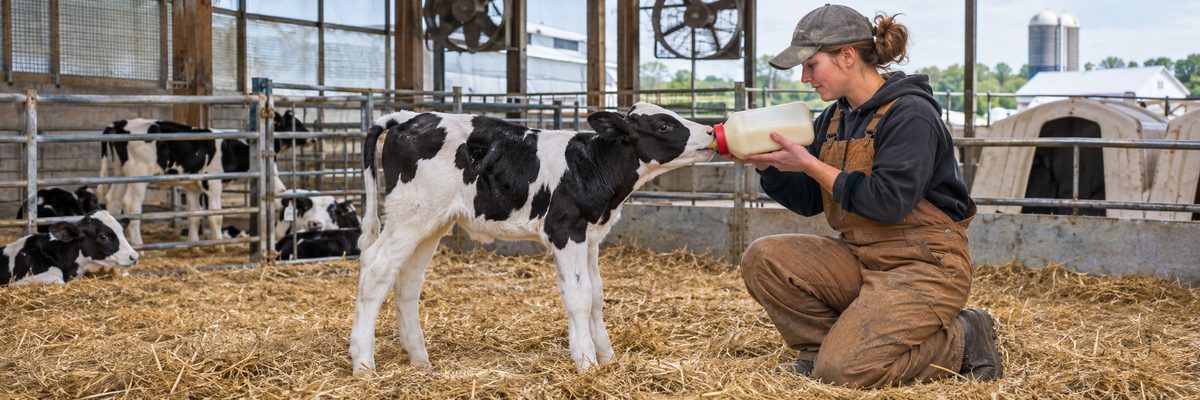
Too few heifers and you are stuck keeping a cow you would rather ship because there is nothing to put in her stall. Too many and the heifer pens are packed, the feed bunk is a contact sport, and you are paying to feed animals that will not earn anything for another year. The target is somewhere in the middle, and it is a number you can actually work out.
The short method: take your herd size, multiply by your annual replacement (cull) rate, then add a cushion for heifers that do not make it to the milking string. Then check how long your heifers take to calve, because a late-calving heifer sits in the pen and counts against you the whole time.
Penn State Extension offers a heifer inventory spreadsheet for this, and the framework below follows the same logic. I will show the arithmetic so you can run it on a napkin.
Start with your replacement rate
Your replacement rate is the share of the milking herd that leaves each year, whether through sales, deaths or culls for fertility, mastitis, lameness or low production. Pull the number from your herd management software or your DHIA records, and use the last couple of years, not the best one. Many herds fall somewhere in the 30s to 40s percent, but I am giving that range from general experience, not a source, so check yours.
If you are not sure how to define a cull cow or you have never counted them, start with dairy record keeping: what to track and pull a twelve-month list of exits.
A worked example
This is my arithmetic with made-up round numbers, not a benchmark.
- Milking herd: 200 cows.
- Annual turnover: 35 percent, which is 70 cows leaving a year.
- You need about 70 heifers freshening each year to hold the herd steady.
- Not every heifer calf makes it. Say you lose or sell some to open heifers, health problems or poor growth, and about 85 of every 100 reach freshening. You would need around 82 heifer calves a year (70 divided by 0.85).
- To grow the herd, add the extra heifers on top.
Change the loss rate and the answer moves. Farms with a strong calf program and few losses need fewer heifer calves to hit the same freshening number. That is one reason calf records that pay off are worth the effort.
How many heifers are on the place at any time
Annual freshening is not the same as the number of heifers standing in your pens, because heifers stay for roughly two years. Penn State Extension's heifer economics paper gives a table of heifer herd size for a 100-cow herd at different cull rates and ages at first calving, assuming a 10 percent heifer cull rate. A few rows:
| Herd cull rate | Calving at 22 months | Calving at 24 months | Calving at 28 months |
|---|---|---|---|
| 26% | 53 | 58 | 67 |
| 30% | 61 | 66 | 78 |
| 34% | 69 | 76 | 88 |
| 38% | 77 | 84 | 99 |
| 42% | 86 | 93 | 109 |
Read it as heifers on hand per 100 cows. The same paper compares a farm with a 26 percent turnover and 22-month calving, needing 53 heifers per 100 cows, to one at 38 percent and 30 months, needing 106, or about twice as many to hold the same herd size. Two numbers you control, culling and calving age, can double the heifer pen.
The calving age part is a management lever. Getting heifers bred and growing on schedule matters as much as the number of calves you keep; see heifer growth targets by age and when to breed dairy heifers by age and weight.
What too many and too few cost you
Penn State's heifer inventory article lays out both sides. Raising too many leads to overcrowding, bunk competition, more social stress, more bedding and manure, and slower gains for the less aggressive animals, which delays when they enter the milking herd. The article ties the extra moisture and manure to higher respiratory and lameness risk. Mostly it is an economic problem, since each unneeded heifer is a cost with no return.
Too few has its own price. A shortage of replacements can leave stalls empty and cut production, and it may keep you from culling economically unproductive cows because there is no one to take their place. Buying in replacements costs money and brings biosecurity risk, since animals can get sick after trucking and a new diet, and can carry disease into the herd. For the buying side, see buying replacement heifers: what to check before you pay.
One more thing from the same article: from the time a cow is bred to the day her calf enters the lactating barn, it takes about three years. Decisions you make about semen this spring show up in the parlor long after the semen tank has been refilled twice.
Tools to adjust the number
If you have too many heifers, you have options before the calves are even born:
- Beef semen on your lower-ranking cows. Penn State notes that inventory corrections can be made with beef semen, with genetic rankings used to pick which cows to breed to beef. See breeding dairy cows to beef bulls for crossbred calves.
- Sexed semen only where it pays. Use it on your best cows and heifers and not on every breeding. Is sexed semen worth it for dairy heifers? goes through the tradeoffs.
- Genomic testing. It helps rank heifers so you keep the best and move the rest; see using genomics to pick which heifers to keep.
- Sell surplus heifers early. A healthy heifer with a good record sells better than one that has been eating for a year.
If you are short, you can use sexed semen on top cows to get more heifer calves, cut back on beef breeding, improve calf survival, or pull heifers forward with better growth. And if all else fails, buy carefully.
Regional notes
Expanding herds in Western and Southwest dairies often want more heifers than their own cows can produce, while stable Upper Midwest and Northeast herds may be trimming. Seasonal-calving grazing herds work the numbers on a tighter calendar, since all the heifers need to be ready in the same few weeks. Dairies in hot climates should factor in lower conception and slower growth in summer.
The cows at farm.FM's page on dairy cows as the prima donnas of the farm world demand the best, and the heifers waiting to replace them are apparently in training for the same attitude, so count them carefully.
Quick answers
How many replacement heifers do I need per 100 cows?
It depends on your cull rate and age at first calving. Penn State's table shows roughly 53 heifers on hand for a 26 percent turnover and 22-month calving, up to over 100 for high turnover and late calving.
What happens if I raise too many heifers?
Overcrowding, more disease risk, slower gains and a lot of feed cost for animals you do not need. It is mostly a financial drain, and it can also hurt the health of the heifers you do keep.
Can I fix a heifer surplus with beef semen?
Yes, that is one common tool. Use genetic rankings to choose which cows go to beef sires, and pick sires with calving ease in mind. Your AI rep or vet can help with the plan.